
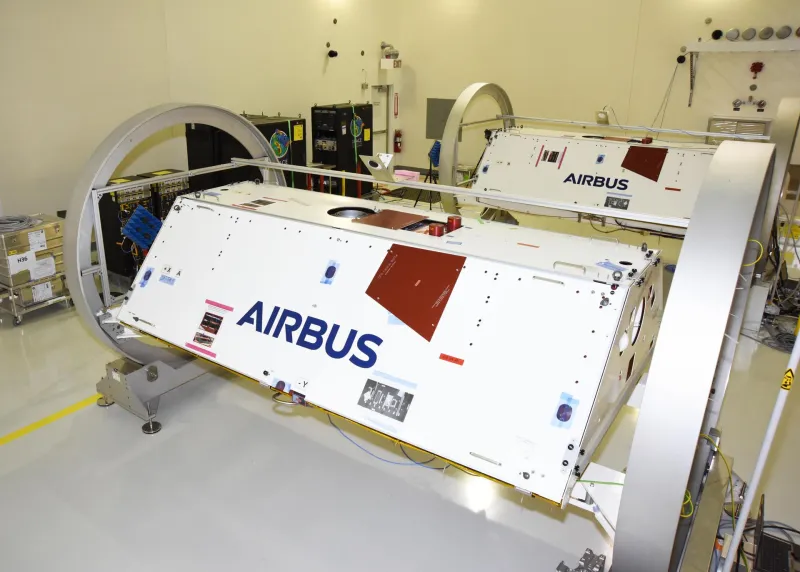
20 of >500
SDA optical terminals delivered by Jan 2025
Tranche 1 Transport (GAO); one of four qualified suppliers since acquired
Setcoin Intelligence · Space Infrastructure · Supply Chain · Updated October 2026
Which parts cap how fast the space economy can grow, who supplies them, and where must capacity be built? Fifty-nine chapters on eighteen critical parts, the minerals beneath them, factories, test, launch, workforce, export control and defence demand, built on filings, government data and Setcoin's own satellite-catalogue analysis.
Open to everyone: the first 3 chapters in full, with exhibits and models; a free account adds their Excel models. Space subscription: all 62 chapters, every model and Excel file, 7-day free trial, then €199 a month. Already a reader? Sign in.
In short
Satellites are no longer scarce: the world launched 4,492 payloads in 2025, ten times the 2019 figure, and SpaceX builds about 70 a week. What is scarce is a short list of parts with few qualified suppliers. Setcoin's bottleneck scorecard ranks five as critical: merchant optical terminals (83 of 100), solid rocket motors, launch slots, rad-hard processors and III-V solar cells. The US defence constellation needed more than 500 optical terminals and had 20 by January 2025. China produces 99% of primary gallium, and its suspension of a ban on gallium and germanium exports to the US ends on 27 November 2026. Closing the gaps to 2030 needs roughly $2–5 billion of targeted capacity.
01 · The answer
The world launched 4,492 payloads in 2025, against 453 in 2019 (Setcoin catalogue analysis). SpaceX's factory averaged about 70 Starlink satellites a week in early 2026; Amazon says it builds about 30 a week. Satellite assembly is no longer the constraint: Amazon had about 300 satellites in orbit in June 2026 because it could not launch them faster.
The constraint is a short list of parts made by a handful of qualified suppliers, with lead times of a year or more and no drop-in substitutes. Setcoin's scorecard ranks five as critical: optical terminals bought on the open market, solid rocket motors, launch slots, radiation-hardened processors and III-V solar cells. The US Space Development Agency needed more than 500 optical terminals for one layer and had 20 by January 2025; tracking satellites later flew with three terminals instead of four.
Beneath the solar cells and radio chips sit two minerals. China produces 99% of the world's primary gallium and leads in germanium; germanium's average price roughly doubled in 2025. China's suspension of its ban on exports to the United States ends on 27 November 2026. On Setcoin's arithmetic, the price effect on cells is a few per cent; the availability effect is the risk.
The largest builders escaped most limits by making parts themselves, which moves the bottleneck onto defence, sovereign and smaller programmes. Setcoin estimates that roughly $2–5 billion of targeted capacity, mostly in terminals, rad-hard electronics, cells and refining outside China, would close the gaps to 2030.
59 chapters + 3 appendices · 180 min · updated 2026-10-22
02 · The evidence
20 of >500
Tranche 1 Transport (GAO); one of four qualified suppliers since acquired
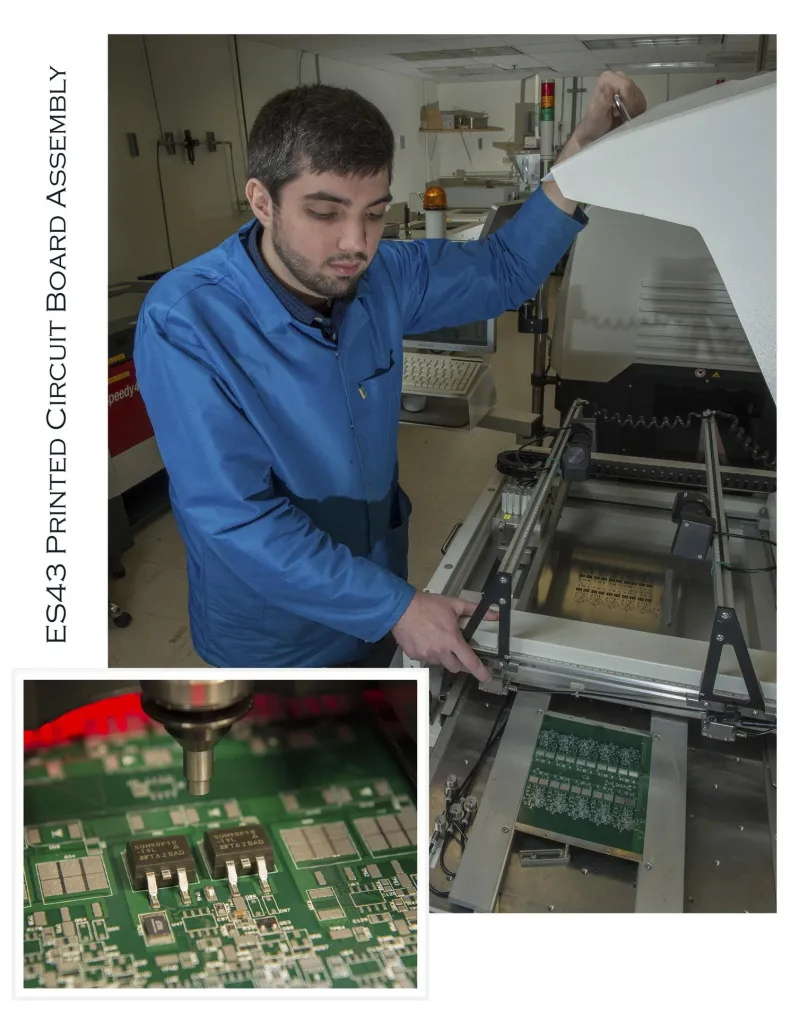
27 months
Space-grade switchgear (PwC/AIA study, March 2026, as reported)

$4,100/kg
Up from $1,991 in 2024 (USGS); China's exports fell by four-fifths
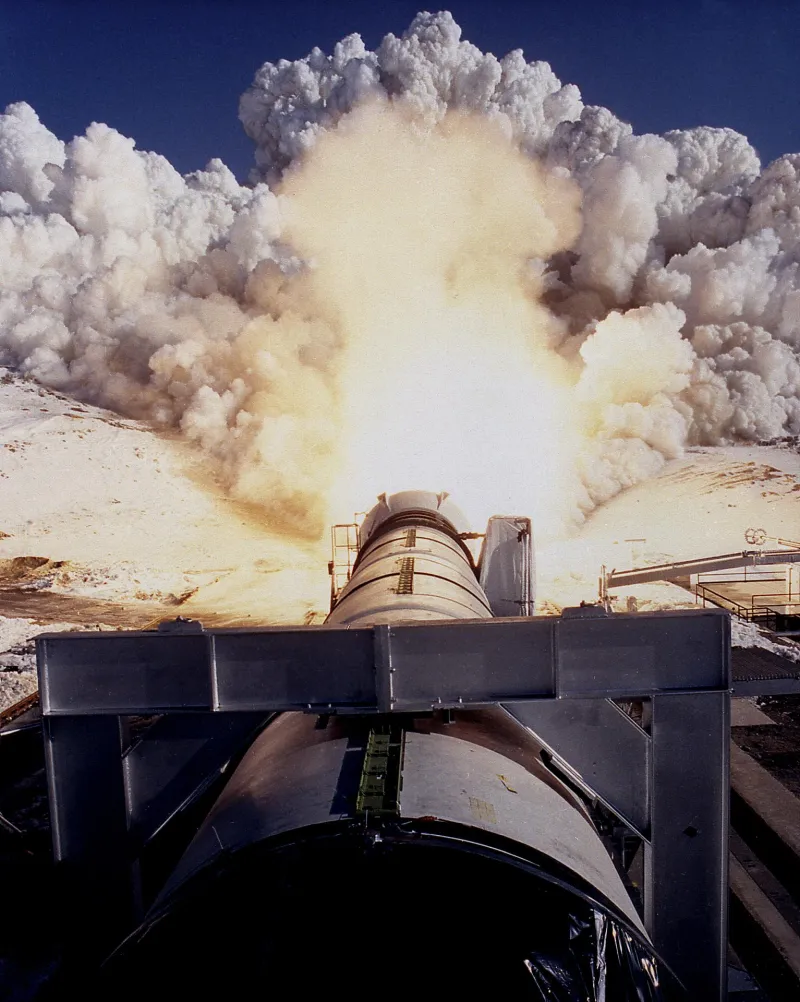
2×
L3Harris Camden, opened 20 Oct 2026; missiles first in line
03 · The scorecard
Setcoin scores each part 1–5 on lead time, supplier concentration, demand growth, difficulty of substitution and geographic exposure, weighted 25/25/20/15/15 and scaled to 100. Seventy-five and above is critical.
score, 0–100
Setcoin scorecard, October 2026; evidence in the component chapters.
Try the model
Change the five weights and watch the ranking move. Put exposure first and III-V solar cells lead; put lead time first and solid rocket motors lead. Optical terminals and rad-hard processors stay in the top five under every weighting Setcoin tested.
Interactive model
How do eighteen critical parts rank when you weight lead time, concentration, demand growth, substitution and exposure your way?
| Rank | Part | Lead time | Concentration | Demand growth | Substitution | Exposure | Score | Tier |
|---|---|---|---|---|---|---|---|---|
| 1 | Optical inter-satellite terminals (merchant) | 4 | 5 | 5 | 4 | 2 | 83 | Critical |
| 2 | Solid rocket motors | 5 | 5 | 4 | 4 | 1 | 81 | Critical |
| 3 | Launch slots | 4 | 5 | 5 | 3 | 1 | 77 | Critical |
| 4 | Rad-hard processors and FPGAs | 5 | 4 | 3 | 3 | 3 | 75 | Critical |
| 5 | III-V multi-junction solar cells | 4 | 3 | 4 | 3 | 5 | 75 | Critical |
| 6 | Space-grade power switchgear | 5 | 3 | 4 | 3 | 2 | 71 | Serious |
| 7 | Infrared focal plane arrays | 4 | 4 | 3 | 4 | 2 | 70 | Serious |
| 8 | Connectors and harnesses | 4 | 4 | 4 | 3 | 1 | 68 | Serious |
| 9 | GaN and GaAs RF parts | 3 | 3 | 4 | 3 | 4 | 67 | Serious |
| 10 | Actuators and nozzles | 4 | 4 | 3 | 3 | 1 | 64 | Serious |
| 11 | Carbon fibre and composites | 3 | 4 | 3 | 3 | 2 | 62 | Watch |
| 12 | Space-qualified Li-ion cells | 3 | 3 | 3 | 2 | 4 | 60 | Watch |
| 13 | Reaction wheels | 3 | 3 | 4 | 2 | 2 | 58 | Watch |
| 14 | Star trackers | 3 | 3 | 4 | 2 | 2 | 58 | Watch |
| 15 | Hall thrusters | 3 | 3 | 4 | 2 | 2 | 58 | Watch |
| 16 | Xenon propellant | 2 | 4 | 3 | 1 | 4 | 57 | Watch |
| 17 | Test facility time | 3 | 3 | 4 | 2 | 1 | 55 | Watch |
| 18 | Hydrazine | 2 | 5 | 1 | 2 | 2 | 51 | Watch |
What moves “Its score (0–100)” most: each input 20% lower (left of a pair) and 20% higher
This is one of 5 interactive models in the report. The first 3 chapters of the report are open to everyone; a Space subscription, with a 7-day free trial, opens every model and its Excel file.
04 · Three findings
Counts from Setcoin's catalogue analysis; capacity and lead times as cited in the study.
Amazon builds about 30 satellites a week but had about 300 in orbit in June 2026 against a milestone of 1,616. Only SpaceX launches roughly what it builds.
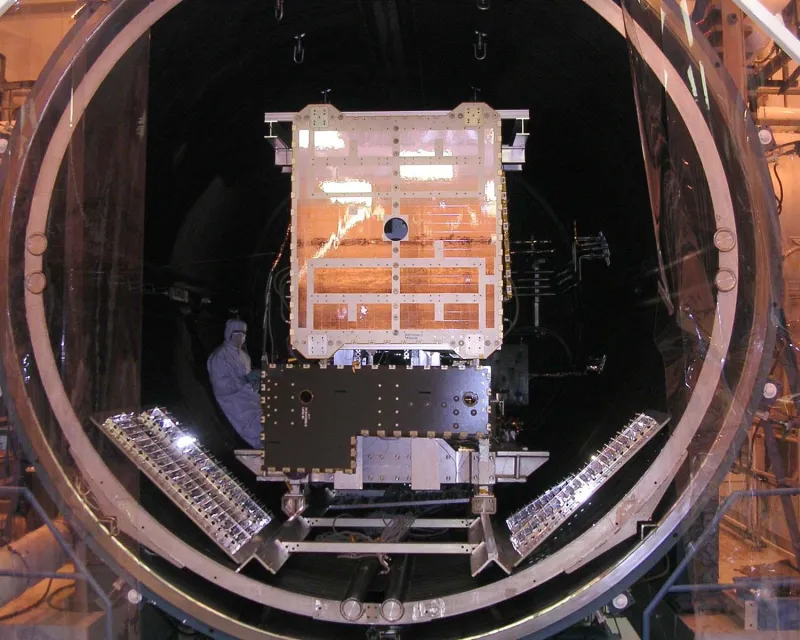
Switchgear and connectors share factories with grids and data centres. Test chambers cap component output. The cheapest parts often set the launch date.
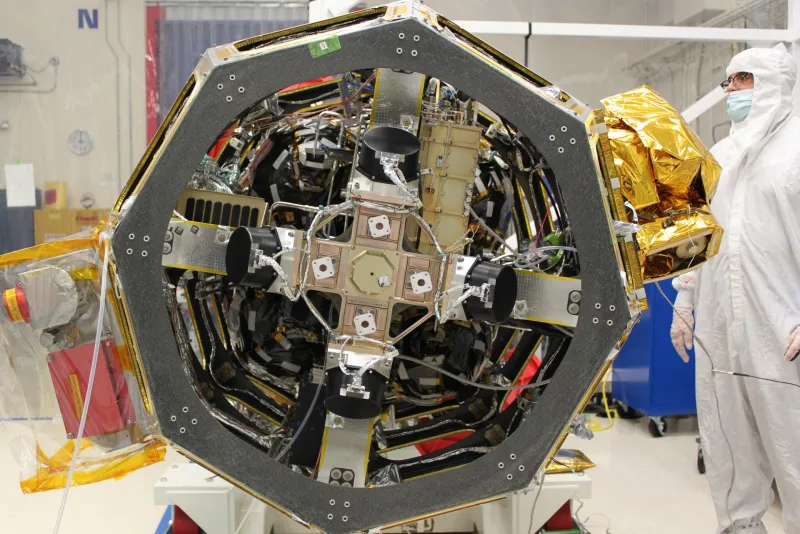
SpaceX makes most of its parts; Rocket Lab bought cells, wheels, trackers, terminals and agreed to buy Iridium. Everyone else has fewer independent suppliers.
Try the model
Start 30 months from launch with eight months of integration and test. With switchgear at 24 months, the programme is four months late on day one. Pre-order it, add a new terminal supplier, or go back to 2023 lead times.
Interactive model
Working back from launch, when must each long-lead part be ordered, and does any of them push the launch out?
| Part | Lead time (months) | Latest order (month) | Slack (months) |
|---|---|---|---|
| Space-grade switchgear | 24 | -4 | -4 |
| Rad-hard processors | 18 | 2 | 2 |
| Optical terminals | 15 | 5 | 5 |
| III-V solar cells | 12 | 8 | 8 |
| Connectors | 9 | 11 | 11 |
| Reaction wheels | 9 | 11 | 11 |
| Parts needed by (month) | 20 | ||
| Achievable launch (month) | 34 |
What moves “Achievable launch” most: each input 20% lower (left of a pair) and 20% higher
This is one of 5 interactive models in the report. The first 3 chapters of the report are open to everyone; a Space subscription, with a 7-day free trial, opens every model and its Excel file.
05 · Geography
Examples of the sites behind the scorecard, by part family. Ringed: single points of failure, where a six-month loss would delay programmes across the industry. Switch between world, North America, Europe and East Asia.
Single point of failure (Setcoin) · hover or tap a site for detail
Electronics, optics and sensors
Power, propulsion and motors
Materials and minerals
Company statements, USGS and reporting; examples, not a complete list.
Try the model
Satellites that buy parts on the open market, times parts per satellite, against Setcoin's capacity estimates. In 2026 optical terminals run at about 130% of capacity; at 3,000 satellites a year in 2030 every part is over.
Interactive model
For the satellites that buy parts on the open market, does component capacity cover demand?
| Part | Demand a year | Capacity a year | Utilisation |
|---|---|---|---|
| Optical terminals | 1,170 | 900 | 130% |
| Rad-hard processors | 650 | 800 | 81% |
| Reaction wheels | 4,160 | 6,000 | 69% |
| Star trackers | 2,080 | 3,000 | 69% |
| III-V solar cells | 1.95 | 3 | 65% |
What moves “Its utilisation” most: each input 20% lower (left of a pair) and 20% higher
This is one of 5 interactive models in the report. The first 3 chapters of the report are open to everyone; a Space subscription, with a 7-day free trial, opens every model and its Excel file.
06 · Signals to watch
07 · Check it yourself
Every figure in this study comes from the public record. These Setcoin services let you check the companies, contracts and constraints behind it yourself.
Cited R&D awards and prime contracts in space and aerospace, by organisation and readiness gate, from public procurement and grant records.
Open the space sector record →The switchgear and electrical shortages that slow satellites also slow grids and data centres. See categories, suppliers and pressure across sectors.
Open the Equipment Map →Registrations, ownership, sanctions listings and court records on a supplier, cross-referenced and scored in one report the same day.
See what Verify checks →08 · The full study
Eighteen critical parts scored on lead time, supplier concentration, demand growth, substitution and exposure, with weights you can change.
Working back from launch to the latest order date for each long-lead part, and the part that sets the launch date.
Merchant demand for terminals, processors, wheels, trackers and III-V cells against estimated capacity, 2026 and 2030.
Free data tools
The study's findings move with launches, contracts and filings. These free Setcoin tools show the current public record behind them, refreshed from the catalogues and procurement registers.
607 new US federal space awards and European tenders from the last twelve months, by part or service bought, buyer, country and stage, with the tenders still open.
See which parts and services agencies are buying, from propulsion and power to avionics, and who the buyers are.
Open the radar →8 large constellations against what they are licensed or filed for: satellites launched, re-entered and net pace over twelve months, and the date each milestone is reached at that pace.
Constellation pace drives component demand: see how many satellites each fleet still needs and how fast it is launching.
Open the monitor →Type an operator’s name and see what the public satellite catalogues record: satellites launched, in orbit, operating and re-entered. The full check adds US contracts, SBIR awards, UK and NOAA licences and list screening.
Check a supplier’s or customer’s satellite record before you sign.
Check an operator →Questions
Setcoin's scorecard ranks five parts as critical in October 2026: optical inter-satellite terminals bought on the open market (83 of 100), solid rocket motors (81), launch slots (77), radiation-hardened processors and FPGAs (75) and III-V multi-junction solar cells (75). Space-grade switchgear, infrared focal planes, connectors, GaN and GaAs RF parts and actuators follow as serious.
No. The world launched 4,492 payloads in 2025, ten times the 2019 figure, on Setcoin's analysis of the public satellite catalogue. SpaceX built about 70 Starlink satellites a week in early 2026 and Amazon says it builds about 30 a week. Launch and a short list of parts, not satellite factories, limit deployment.
Demand jumped from dozens to hundreds a year when the US Space Development Agency built its proliferated constellation around laser links, while only four merchant suppliers were qualified. GAO reported that Tranche 1 Transport needed more than 500 terminals and had 20 by January 2025. SpaceX makes its own and does not sell them.
Highly in materials, modestly in cost. China produces 99% of primary gallium and leads in germanium; both sit beneath III-V solar cells and RF chips. Setcoin estimates germanium adds about 2–10% to III-V cell cost across 2024 prices and a doubling shock. The risk is availability: China's suspension of its US export ban ends on 27 November 2026.
Because III-V cell capacity is counted in megawatts a year worldwide, while a constellation launching thousands of satellites a year needs tens of megawatts. Silicon is cheaper, made at vast scale and adequate for five-year missions in low orbit. Defence, geostationary and long-life satellites still need III-V cells.
Reported lead times run up to 27 months for space-grade switchgear, one to two years for rad-hard processors and a year or more for III-V solar cells; the median stated lead time in one small-satellite parts catalogue was six months. Setcoin's lead-time model shows how a cheap part can set a programme's launch date.
For a large constellation using xenon alone, yes: world output is a few tens of tonnes a year and a fleet of 1,500 satellites at 10 kg each would take about a quarter. The largest builders switched to krypton and argon, which cost far less but need more power and larger tanks.
Two US incumbents produce most motors, and missile and interceptor demand after the wars in Ukraine and the Middle East takes priority. Capacity is expanding: L3Harris opened a plant in Arkansas on 20 October 2026 that it says doubles capacity, and Northrop Grumman reports large increases. Space launch is a small, lower-priority customer.
Setcoin estimates roughly $2–5 billion of targeted capacity to 2030, excluding solid motors and launch: optical terminal lines, rad-hard electronics, III-V cells, gallium and germanium refining outside China, attitude-control lines, test facilities and qualified small parts. Multi-year purchase commitments matter as much as capital.
The first three chapters are open to everyone in full, with no account; the rest can be previewed. A space sector subscription, with a free trial, opens all 59 chapters, the five interactive models and their Excel files.
Setcoin Research analyses public markets, filings and programmes for information only. It is not investment advice and does not recommend any security.
1. Read the first 3 chapters in full, no account needed. 2. Create a free account (two minutes, no card) to download their Excel models. 3. Subscribe to Space for every chapter, model and Excel download: 7-day free trial, then €199 a month or €1,490 a year.