
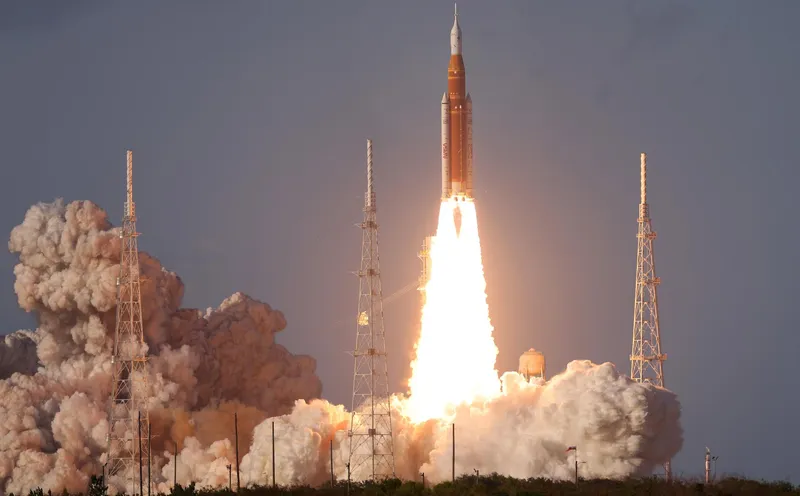
$4.1B
SLS and Orion per launch
NASA Inspector General estimate for Artemis I–IV, before the lander
Setcoin Intelligence · Space Infrastructure · Moon and Cislunar · Updated October 2026
What does each layer of the lunar economy cost, who pays for it, and what would it take to go from short visits to a permanent settlement? Sixty chapters on Artemis, landers, refuelling, cargo prices, power, communications, resources, law, China, and the cost of living on the Moon, built on NASA budgets and audits, contract records and Setcoin's own models.
Open to everyone: the first 3 chapters in full, with exhibits and models; a free account adds their Excel models. Space subscription: all 63 chapters, every model and Excel file, 7-day free trial, then €199 a month. Already a reader? Sign in.
In short
The Moon is still a government market priced per kilogram. Small commercial landers deliver payloads for about $0.7–1 million per kilogram, and only one of six commercial landing attempts since 2023 was a clean success. Starship- and Blue Moon-class landers could cut the cost floor to $3,800–100,000 per kilogram, but only once orbital refuelling works, which had not been demonstrated by October 2026. NASA flew Artemis II in April 2026, moved the first landing to Artemis IV in early 2028, paused Gateway and set out a $20 billion Moon Base with a reactor by 2030. Lunar propellant pays only above about 100 tonnes a year; a person-year in an early base costs about $1 billion.
01 · The answer
Artemis II flew four astronauts around the Moon between 1 and 10 April 2026, the first crewed lunar flight since 1972. In February NASA restructured the programme: the first landing moved to Artemis IV in early 2028, Artemis III became a docking test in Earth orbit (third quarter of 2027), and in March Gateway was paused in favour of a $20 billion, seven-year Moon Base near the south pole with a reactor by 2030.
Cargo is bought by the kilogram. NASA's commercial landers cost $47–322 million per mission for tens to hundreds of kilograms, about $0.7–1 million per kilogram. Only one of six commercial landing attempts since 2023 was a clean success, so the price of a kilogram that actually works is about twice the contract price on Setcoin's portfolio model.
Heavy landers change the arithmetic. On Setcoin's delivery cost model, a Starship-class cargo lander has a cost floor of about $13,000 per kilogram at today's launch prices and $3,800 at mature reuse, against $733,000 for a small lander. Both crewed landers depend on orbital refuelling, which had not been tried at scale by October 2026: it is the single largest schedule risk.
Living there is a transport problem. An early four-person base costs about $1 billion per person-year, two-thirds of it crew seats; a 100-person settlement would need seats near $20 million, cargo near $2,000 per kilogram and 98% recycling to reach about $40 million. Lunar propellant pays only above about 100 tonnes a year and while Earth delivery stays above about $3,000 per kilogram.
60 chapters + 3 appendices · 180 min · updated 2026-10-22
02 · The evidence
$4.1B
NASA Inspector General estimate for Artemis I–IV, before the lander
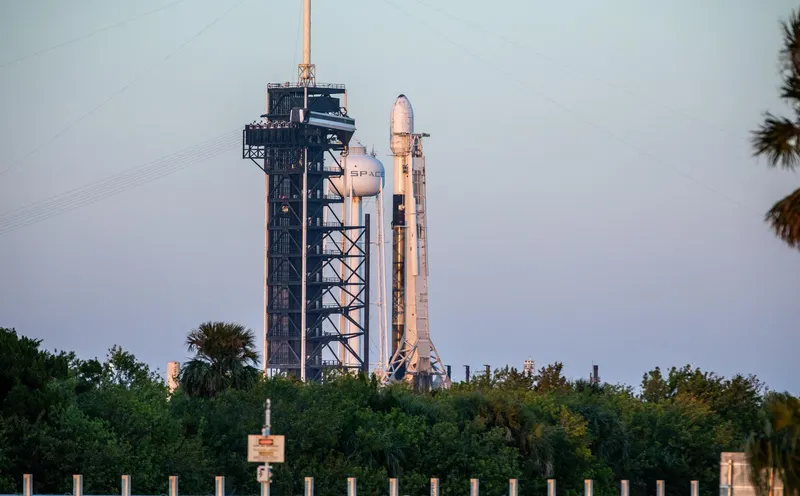
$590M
Four deliveries in late 2028 to Astrobotic, Firefly and Intuitive Machines
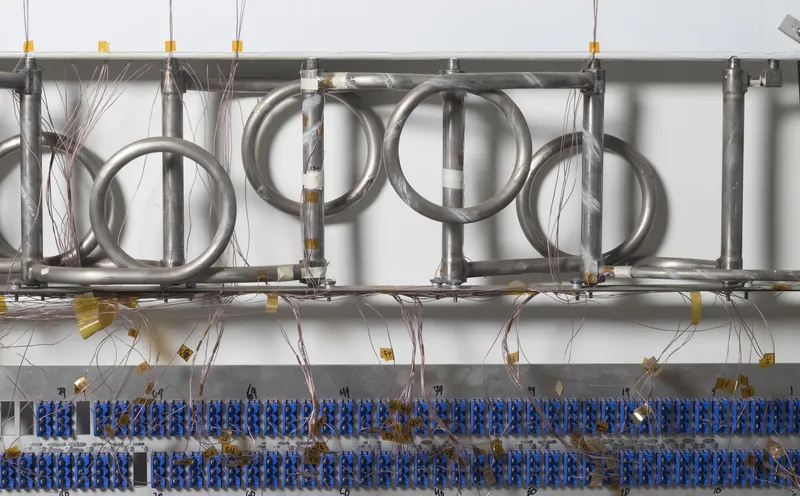
354 h
5 kW through it needs ~15 t of batteries or ~0.75 t of reactor (Setcoin model)
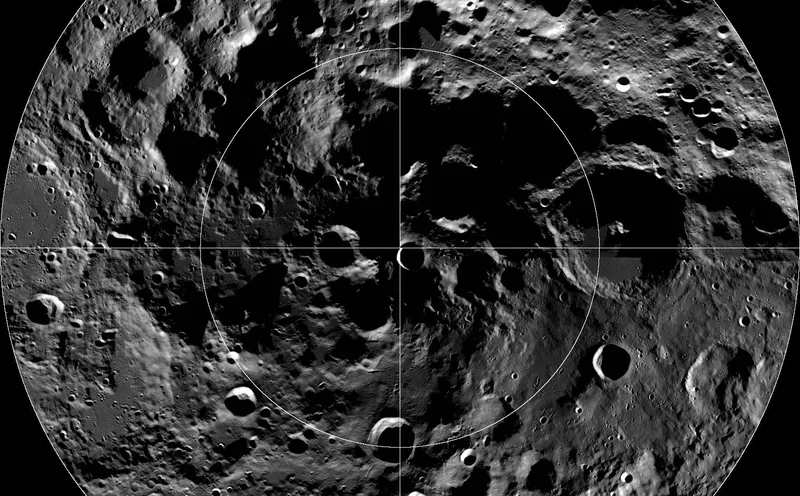
76
September 2026; China's ILRS has 13–17 members
03 · The price of a kilogram
Setcoin's delivery cost model: payload and lander mass times the rocket-equation gear ratio (about 5.3 from low Earth orbit with methane engines), times the launch price, plus the lander and operations. A cost floor, not a price.
$ per kg landed, log scale
Setcoin delivery cost model; inputs in the study's Appendix C.
Try the model
Start from a small commercial lander and switch to heavier landers, cheaper launch, hydrogen engines or reuse. On a small lander launch is about a tenth of the cost; on a Starship-class lander it is most of it.
Interactive model
From launch price, lander mass, engine efficiency and reuse, what does one kilogram of payload landed on the lunar surface cost?
| Item | Value |
|---|---|
| Gear ratio | 5.319 |
| Mass in LEO (kg) | 3,989 |
| Launch cost ($M) | 10 |
| Lander cost per flight ($M) | 70 |
| Operations ($M) | 30 |
| Total per mission ($M) | 110 |
| Cost per kg landed ($) | 733,149 |
What moves “Cost per kg landed” most: each input 20% lower (left of a pair) and 20% higher
This is one of 5 interactive models in the report. The first 3 chapters of the report are open to everyone; a Space subscription, with a 7-day free trial, opens every model and its Excel file.
04 · Three findings
From NASA budgets and audits, contract records and mission outcomes, October 2026.
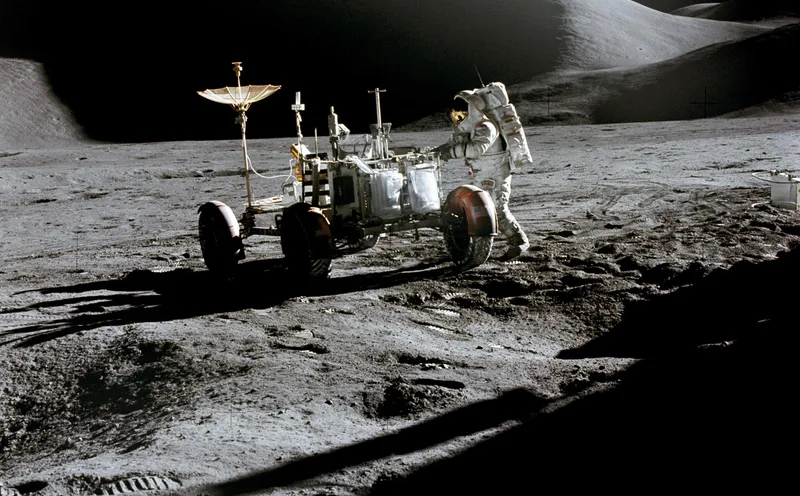
Since 2023 two commercial landers tipped, three failed and one landed cleanly. Most failures began with navigation sensors. Governments landed six of eight attempts since 2013; China landed every one.
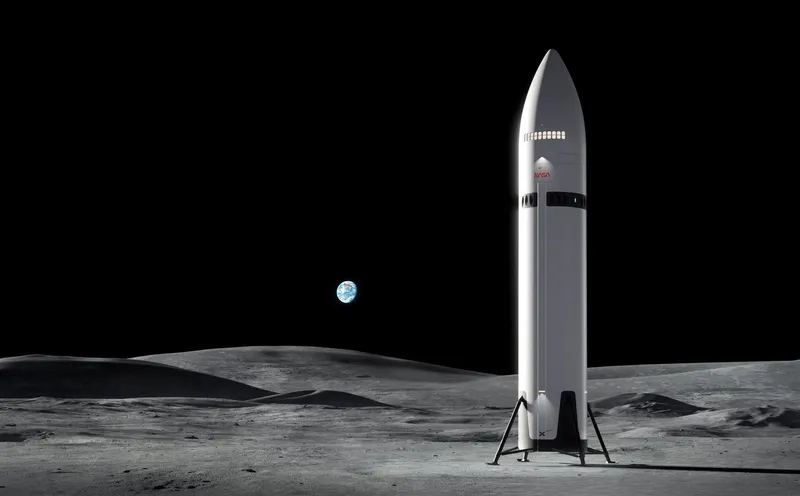
Both crewed landers must be refuelled in orbit. SpaceX's ship-to-ship transfer had not been attempted after Flight 13 in July 2026; every quarter it slips moves the first landing.
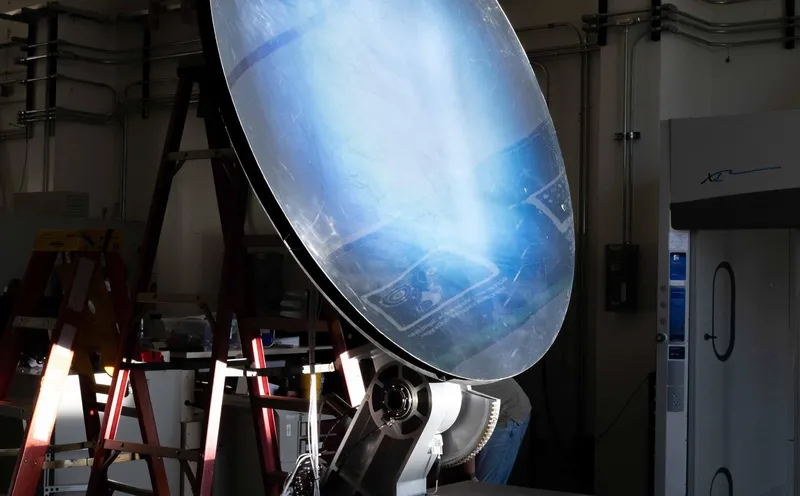
Water ice sits in polar craters at 0.5–5% grades. On Setcoin's model, a lunar propellant plant beats shipping only above about 100 tonnes a year and while cargo costs more than about $3,000 per kilogram.
Try the model
Keep 5 kW alive through a 354-hour equatorial night: about 15 tonnes of solar arrays and batteries, or about 0.75 tonnes of reactor. Move to a polar ridge with 100 hours of darkness, scale to 40 kW, or try better batteries.
Interactive model
What mass must be landed to keep a base powered through the lunar night with solar arrays and batteries, and with fission?
| Item | Value |
|---|---|
| Energy stored per night (kWh) | 1,770 |
| Battery mass (kg) | 14,750 |
| Array size (kW) | 10 |
| Array mass (kg) | 200 |
| Solar + batteries (kg) | 14,950 |
| Fission (kg) | 750 |
| Delivery, solar + batteries ($M) | 747.5 |
| Delivery, fission ($M) | 37.5 |
What moves “Solar + batteries mass” most: each input 20% lower (left of a pair) and 20% higher
This is one of 5 interactive models in the report. The first 3 chapters of the report are open to everyone; a Space subscription, with a 7-day free trial, opens every model and its Excel file.
05 · Who builds it
Agencies, lander and rover makers and launch sites behind the missions in this study. Ringed: builders of a crewed lander or crew programme. Switch between world, North America, Europe and Asia.
Crewed lander or crew programme · hover or tap a site for detail
Agencies and state programmes
Lander and rover makers
Launch sites for lunar missions
Agency and company statements; examples, not a complete list.
Try the model
An early four-person base: about $976 million per person-year, two-thirds of it seats. Switch to the mid-2030s Moon Base, a 40-person research town or a 100-person settlement to see which levers matter: seats, stay length and crew size first; recycling above 90% least.
Interactive model
What does it cost to keep one person on the lunar surface for a year, and which lever lowers it most?
| Item | Value |
|---|---|
| Shipped kg per person-day | 4.18 |
| Shipped kg per person-year | 1,527 |
| Resupply ($M) | 76.4 |
| Base capital share ($M) | 166.7 |
| Ground share ($M) | 125 |
| Round trips per person-year | 2.03 |
| Crew transport ($M) | 608.3 |
| Total per person-year ($M) | 976.4 |
What moves “Cost per person-year” most: each input 20% lower (left of a pair) and 20% higher
This is one of 5 interactive models in the report. The first 3 chapters of the report are open to everyone; a Space subscription, with a 7-day free trial, opens every model and its Excel file.
06 · Signals to watch
07 · Check it yourself
The lunar economy runs on contracts and the companies that hold them. These Setcoin services let you check them yourself.
Registrations, ownership, charges, sanctions listings and court records on a lander maker, supplier or partner, in one cited report.
See what Verify checks →Capital groups that back space and deep-tech infrastructure, by sector, stage, structure and ticket size.
Explore Capital Map →Cited R&D awards and prime contracts in space and aerospace, by organisation and readiness gate, from public procurement and grant records.
Open the space sector record →08 · The full study
Launch price, lander mass, engine efficiency and reuse turned into the cost of a kilogram on the lunar surface.
Batteries or a reactor: the landed mass needed to keep a base alive through up to 354 hours of darkness.
Seats, rotations, recycling, cargo price and base cost combined into the cost of one person living on the Moon for a year.
Free data tools
The study's findings move with launches, contracts and filings. These free Setcoin tools show the current public record behind them, refreshed from the catalogues and procurement registers.
607 new US federal space awards and European tenders from the last twelve months, by part or service bought, buyer, country and stage, with the tenders still open.
See new exploration & lunar awards, most of them from NASA.
Open the radar →Type an operator’s name and see what the public satellite catalogues record: satellites launched, in orbit, operating and re-entered. The full check adds US contracts, SBIR awards, UK and NOAA licences and list screening.
Check a lander or spacecraft company’s flight record in the catalogues.
Check an operator →Questions
NASA targets Artemis IV in early 2028 for the first crewed landing since 1972, after a crewed docking test with prototype landers in Earth orbit (Artemis III) in the third quarter of 2027. China targets a crewed landing before 2030. Setcoin puts the chance of a US landing by the end of 2028 at about 35% and by 2030 at about 75%.
In February 2026 NASA moved the first landing from Artemis III to Artemis IV. Artemis III became a crewed Orion flight in Earth orbit that docks with test versions of SpaceX's and Blue Origin's landers; NASA's October 2026 chart shows it in the third quarter of 2027.
On NASA's small commercial landers, about $0.7–1 million per kilogram of payload, based on task orders of $47–322 million per mission. Setcoin's delivery cost model gives a cost floor of about $99,000 per kilogram for a 3-tonne cargo lander and $3,800–13,200 for a Starship-class lander, depending on launch price.
NASA paused Gateway in March 2026 and its FY2027 budget request asks for no discretionary Gateway funding, moving the money to a lunar base. Hardware is being reused: HALO's power and avionics for three surface demonstrations, and the Power and Propulsion Element for a nuclear-electric Mars demonstrator.
Announced in March 2026: about $20 billion over seven years for a base near the lunar south pole, in three phases. Phase 1 (to 2029) is robotic, with about 25 launches and 21 landings; phase 2 (about 2029–2032) adds habitats and crews about twice a year; phase 3 (from 2032) aims at permanent presence with heavy deliveries of about 150 tonnes.
Most places on the Moon have about 354 hours of darkness at a stretch, below −170 °C. On Setcoin's model, keeping 5 kW running through it takes about 15 tonnes of solar arrays and batteries, or about 0.75 tonnes of fission reactor. That is why NASA chose the south pole, where some ridges are lit 80–90% of the time, and a reactor by 2030.
Published estimates range from about 100 million to 1 billion tonnes per pole, held in permanently shadowed craters. LCROSS measured about 5.6% water by mass in one impact plume, but local grades of 0.5–4% are more common, and no mission has yet drilled into ice-rich ground. The resource is real; minable deposits are unproven.
There are real buyers at small scale: one company, Interlune, reports about $500 million of purchase orders, including up to 10,000 litres a year from 2028 for quantum-computer cooling, at about $3,000 per litre (roughly $20 million per kilogram). Its target is 10 kg a year in the 2030s, which needs about a million tonnes of regolith a year.
On Setcoin's model, about $1 billion per person-year for an early four-person base with $300 million seats and six-month rotations, close to the ISS. About $540 million for an eight-person base in the mid-2030s, and about $40 million for a 100-person settlement with $20 million seats, two-year stays, 98% recycling and $2,000-per-kilogram cargo.
The first three chapters are open to everyone in full, with no account; the rest can be previewed. A space sector subscription, with a free trial, opens all 60 chapters, the five interactive models and their Excel files.
Setcoin Research analyses public markets, filings and programmes for information only. It is not investment advice and does not recommend any security.
1. Read the first 3 chapters in full, no account needed. 2. Create a free account (two minutes, no card) to download their Excel models. 3. Subscribe to Space for every chapter, model and Excel download: 7-day free trial, then €199 a month or €1,490 a year.