
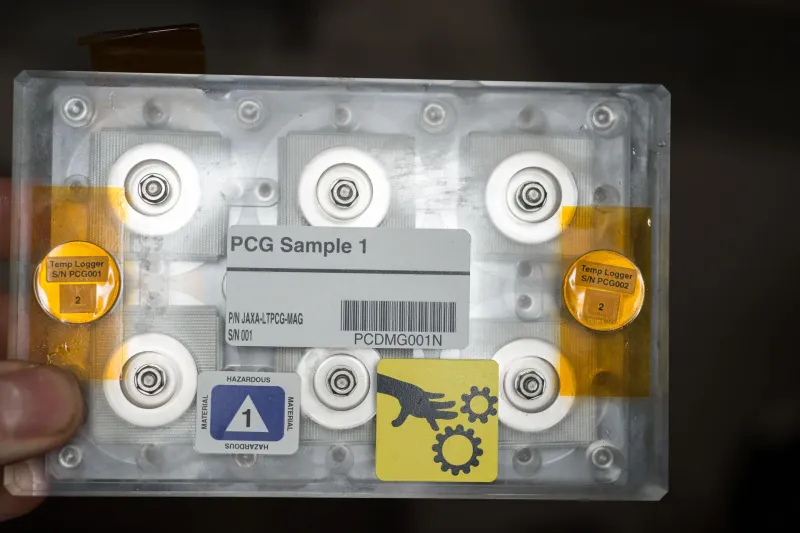
39 µm
Uniform pembrolizumab crystals grown in orbit
Ground controls: 13 and 102 µm populations (Merck, 2019)
Setcoin Intelligence · Space Infrastructure · In-Space Manufacturing · Updated October 2026
Which products are actually better made in microgravity, what does it cost to make and return a kilogram, and is demand large enough to support capsules and stations? Eighty-nine chapters on the physics, thirteen products, the ISS and its successors, free-flying capsules, regulation of space-made medicines and the economics, built on peer-reviewed results, regulators' records and Setcoin's capsule catalogue analysis.
Open to everyone: the first 3 chapters in full, with exhibits and models; a free account adds their Excel models. Space subscription: all 92 chapters, every model and Excel file, 7-day free trial, then €199 a month. Already a reader? Sign in.
In short
Microgravity helps a short list of products, and the best-proven business is not a product at all. After more than 1,000 sponsored ISS payloads, the clearest commercial outcome is insight replicated on Earth: Merck's space-grown pembrolizumab crystals informed a subcutaneous Keytruda approved in September 2025, made on the ground. Varda has returned capsules repeatedly since 2024 and raised about $598 million, much of its flown work being hypersonic re-entry tests for the US military. On Setcoin's arithmetic a capsule mission costs about $8 million, or about $2.7 million per usable kilogram, which only products such as biologic crystals, implant films and ZBLAN fibre can bear. No regulator has approved a space-made medicine; the UK set out a pathway in March 2026.
01 · The answer
In orbit, convection and sedimentation almost vanish. Crystals grow more uniformly, three-dimensional cell cultures behave differently and some glasses resist crystallising. These effects are real and documented, but they help only processes limited by gravity, and ground techniques keep catching up.
The clearest commercial result so far is knowledge. Merck grew pembrolizumab crystals on the ISS as a uniform 39-micrometre population, against two sizes on the ground, and used the insight in a subcutaneous Keytruda the FDA approved in September 2025. The medicine is made on Earth. After more than 1,000 ISS National Lab payloads, no product made in orbit is sold at scale.
Free-flying capsules have changed access. Varda has landed capsules repeatedly since February 2024, built its own bus and heat shield and raised about $598 million. Much of its flown work has been hypersonic re-entry testing for the US military, the one service in Setcoin's scorecard with proven, repeat demand.
On Setcoin's reference, a capsule mission costs about $8.1 million and returns about 5 kg, roughly $2.7 million per usable kilogram. Biologic crystals, implant films such as artificial retinas and ZBLAN fibre are worth more than that per kilogram; wafers and metals are not. No regulator has approved a medicine made partly in orbit; the UK set out a pathway in March 2026.
89 chapters + 3 appendices · 180 min · updated 2026-10-26
02 · The evidence
39 µm
Ground controls: 13 and 102 µm populations (Merck, 2019)
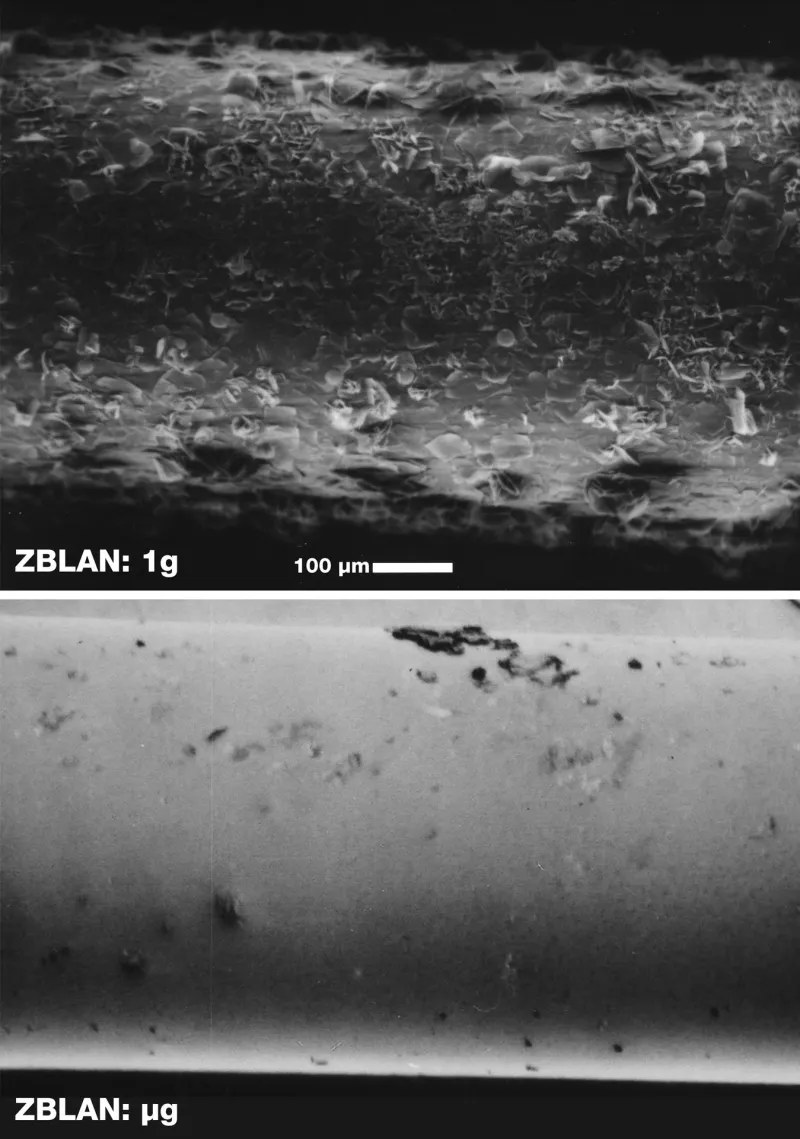
11.9 km
Orders reported at ~$1,000 a metre; glass purity still limits loss
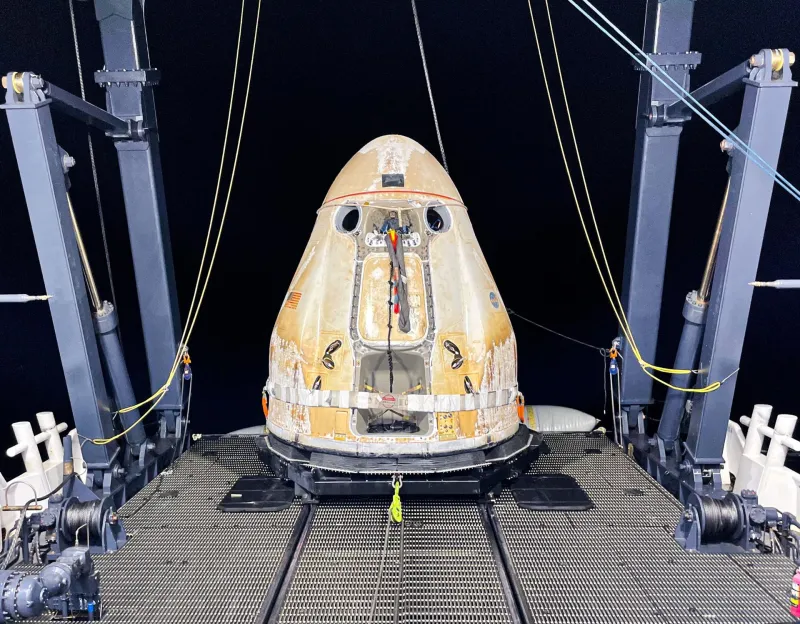
$40,000
Plus $20,000/kg up and $130,000 per crew hour (2021 list)
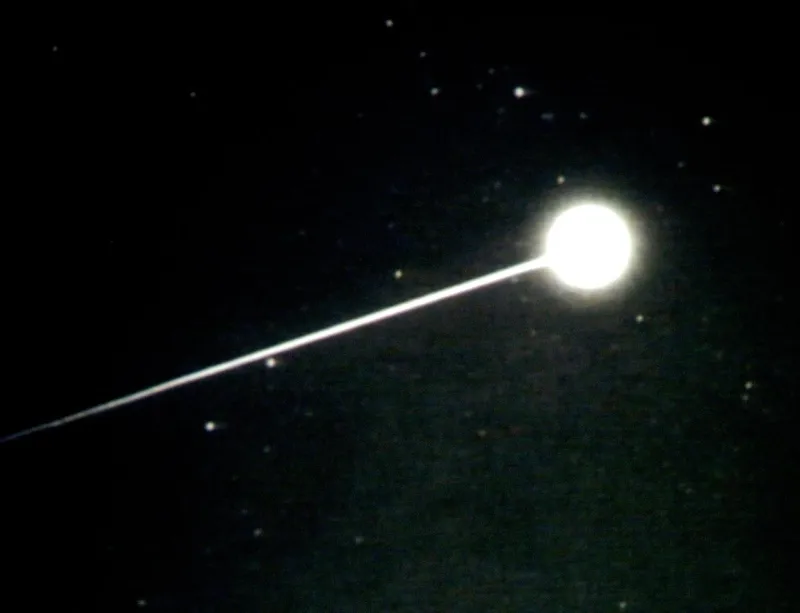
~$598M
Including a $251M Series D in September 2026
03 · The scorecard
Setcoin scores each on evidence of microgravity advantage, value per kilogram, difficulty of replicating it on Earth, regulatory path and demand that could fill flights, weighted 25/20/25/15/15 and scaled to 100.
score, 0–100
Setcoin scorecard, October 2026; evidence in the product chapters.
Try the model
Start from Setcoin's reference mission: a 300 kg spacecraft on a rideshare, $4 million of bus and capsule, $2 million of operations and recovery, 5 kg of product of which 60% is usable. Return more product, reuse the hardware or lose half the batch, and compare the result with what real products are worth per kilogram.
Interactive model
What does a free-flying capsule mission cost, per kilogram returned and per usable kilogram, and which products can bear it?
| Item | Value |
|---|---|
| Launch ($M) | 2.1 |
| Bus and capsule ($M) | 4 |
| Operations, licensing, recovery ($M) | 2 |
| Mission cost ($M) | 8.1 |
| Product returned (kg) | 5 |
| Usable (kg) | 3 |
| Cost per kg returned ($M) | 1.62 |
| Cost per usable kg ($M) | 2.7 |
What moves “Cost per usable kg” most: each input 20% lower (left of a pair) and 20% higher
This is one of 5 interactive models in the report. The first 3 chapters of the report are open to everyone; a Space subscription, with a 7-day free trial, opens every model and its Excel file.
04 · Three findings
Mission records from Setcoin's catalogue analysis and company statements; arithmetic as labelled in the study.
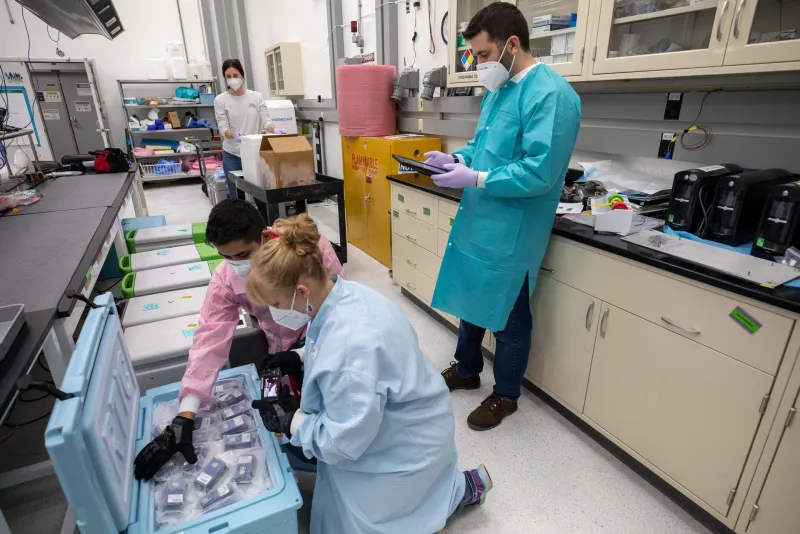
Pembrolizumab's space crystals informed a subcutaneous product made on the ground. For pharma, orbit is mostly a laboratory: valuable, repeatable, but not a factory.
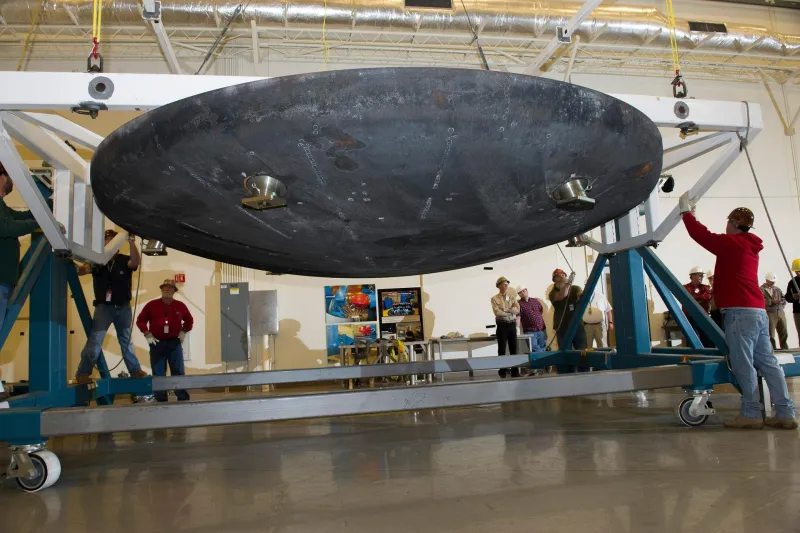
Defence buys re-entry flights to test materials and guidance at hypersonic speed. That demand gives capsule companies cadence while manufacturing customers develop.
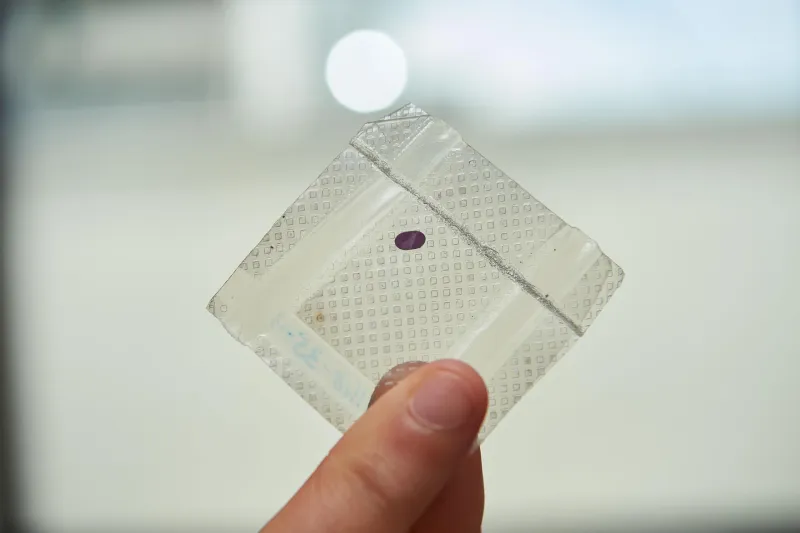
Implant films and specialist fibre are worth millions per kilogram and hard to copy on Earth. Wafers and alloys are not, however good the physics.
Try the model
A blockbuster antibody at 200 mg a dose needs about 514 kg of drug a year. If a tenth needed a step in orbit, that is about ten capsule missions and about $320 per dose. Change the dose, the share or the capsule size, or try a rare-disease drug or space-grown seeds.
Interactive model
If part of a medicine’s production needed a step in orbit, how many missions a year would it take and what would they add to each dose?
| Item | Value |
|---|---|
| Doses a year (M) | 2.57 |
| Drug per dose (mg) | 200 |
| Drug substance (kg a year) | 514 |
| Space-processed (kg a year) | 51.4 |
| Missions a year | 10.28 |
| Space cost ($M a year) | 83.3 |
| Doses from space share (M) | 0.257 |
| Added cost per dose ($) | 324 |
What moves “Capsule missions a year” most: each input 20% lower (left of a pair) and 20% higher
This is one of 5 interactive models in the report. The first 3 chapters of the report are open to everyone; a Space subscription, with a 7-day free trial, opens every model and its Excel file.
05 · Geography
Capsule builders and landing ranges, product and process companies, and the customers and agencies behind them. Ringed: single points of reliance in October 2026. Switch between world, North America, Europe and Asia-Pacific.
Single point of reliance (Setcoin) · hover or tap a site for detail
Capsule builders and landing ranges
Product and process companies
Customers and agencies
Company statements, agencies and reporting; examples, not a complete list.
Try the model
At NASA's list prices, a 50 kg experiment returning 10 kg with 10 crew hours costs about $3.2 million on the ISS; a quarter share of a capsule costs about $2.0 million. Mark the process as needing crew and capsules drop out.
Interactive model
For an experiment or production run, which is cheaper: the ISS or a commercial station at list prices, a shared capsule or a dedicated one?
| Route | Cost ($M) | Possible |
|---|---|---|
| ISS at NASA list prices | 3.2 | Yes |
| Commercial station | 3.2 | Yes |
| Shared capsule (25%) | 2.02 | Yes |
| Dedicated capsule | 8.1 | Yes |
What moves “Its cost” most: each input 20% lower (left of a pair) and 20% higher
This is one of 5 interactive models in the report. The first 3 chapters of the report are open to everyone; a Space subscription, with a 7-day free trial, opens every model and its Excel file.
06 · Signals to watch
07 · Check it yourself
Every figure in this study comes from the public record. These Setcoin services let you check the companies, contracts and counterparties behind it yourself.
Cited R&D awards and prime contracts in space and aerospace, by organisation and readiness gate, from public procurement and grant records.
Open the space sector record →A company's round, filings and statements checked against the public record, to the same standard as this study.
Check a company →Registrations, ownership, sanctions listings and court records on a counterparty, cross-referenced and scored in one report the same day.
See what Verify checks →08 · The full study
Thirteen products and services scored on evidence, value per kilogram, replication risk, regulatory path and demand, with weights you can change.
Launch, capsule, operations and the share of product that is usable, turned into cost per usable kilogram against the value of real products.
How many capsule missions a medicine would need if part of its production moved to orbit, and what that adds to each dose.
Free data tools
The study's findings move with launches, contracts and filings. These free Setcoin tools show the current public record behind them, refreshed from the catalogues and procurement registers.
607 new US federal space awards and European tenders from the last twelve months, by part or service bought, buyer, country and stage, with the tenders still open.
See which agencies are buying space R&D, payloads and platforms, and which tenders are open.
Open the radar →Type an operator’s name and see what the public satellite catalogues record: satellites launched, in orbit, operating and re-entered. The full check adds US contracts, SBIR awards, UK and NOAA licences and list screening.
Check a capsule or platform company’s flight record in the catalogues before relying on its stated missions.
Check an operator →Questions
Making things in orbit, either for use on Earth (drug crystals, implant films, optical fibre) or for use in space (printed parts), and using orbit as a laboratory whose results are applied on Earth. The economics differ: products for Earth must pay for both the trip up and the trip home.
Only small lots. Flawless Photonics drew 11.9 km of ZBLAN fibre on the ISS in a month in 2024 and has reported orders at about $1,000 a metre. No product made in orbit is sold at scale, and no regulator has approved a medicine with a manufacturing step in orbit.
ISS experiments by Merck grew pembrolizumab as a uniform crystal population about 39 micrometres across, informing a subcutaneous formulation approved by the FDA in September 2025. The approved product is made on Earth; the space work contributed knowledge, not manufacturing.
On Setcoin's reference mission, about $8.1 million for a 300 kg capsule spacecraft returning 5 kg of product, or about $1.6 million per kilogram returned and $2.7 million per usable kilogram. NASA's ISS list price for returning cargo is $40,000 per kilogram, plus $20,000 per kilogram up and $130,000 per crew hour.
Varda flies small spacecraft on rideshare launches that process payloads in orbit and return them in capsules. It has landed capsules repeatedly since February 2024, in Utah and at Australia's Koonibba range, flown many US Air Force Research Laboratory re-entry test payloads and raised about $598 million, including a $251 million Series D in September 2026.
Setcoin's readiness scorecard ranks hypersonic re-entry test flights first (94 of 100), then artificial retina films (72), organoid disease models (70) and ZBLAN fibre (69). Making biologic drug substance in orbit ranks last (42), because a blockbuster antibody needs hundreds of kilograms a year and ground production works.
Not at the scale needed for most medicines. A space step could fit a small, high-value part of a process, such as crystals or seeds, ideally a stable intermediate tested on Earth. No regulator has approved one; the UK's medicines and space regulators set out a supportive pathway in March 2026.
NASA plans to retire the ISS at the end of 2030. Research is expected to move to commercial stations, the first of which, Vast's Haven-1, is targeted for no earlier than early 2027, and to free-flying capsules. NASA's commercial station awards are expected in spring 2027.
Published 2026 estimates range from about $1.4 billion to $7.6 billion because definitions differ. Setcoin's narrow market, products and processing for Earth plus re-entry testing, is a few hundred million dollars in 2026 and about $1–3 billion by 2035 in the base case.
The first three chapters are open to everyone in full, with no account; the rest can be previewed. A space sector subscription, with a free trial, opens all 89 chapters, the five interactive models and their Excel files.
Setcoin Research analyses public markets, filings and programmes for information only. It is not investment advice and does not recommend any security.
1. Read the first 3 chapters in full, no account needed. 2. Create a free account (two minutes, no card) to download their Excel models. 3. Subscribe to Space for every chapter, model and Excel download: 7-day free trial, then €199 a month or €1,490 a year.