
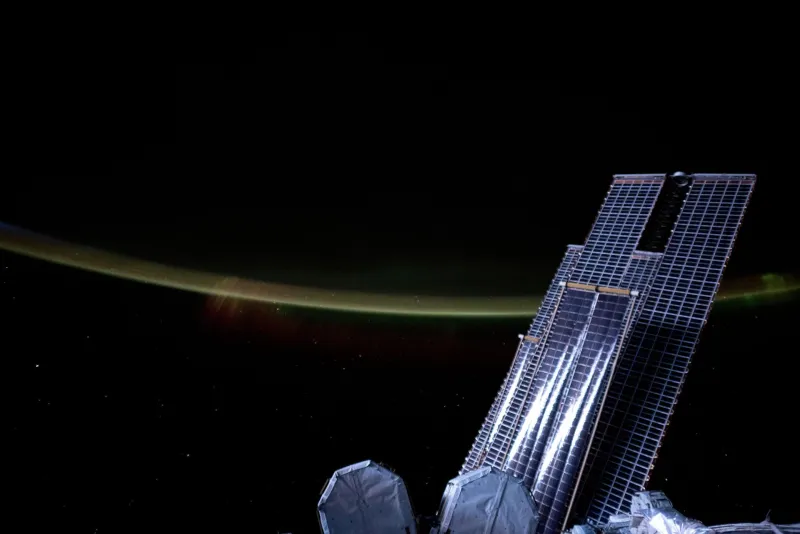
~99%
Share of the year a GEO collector is in sunlight
Short eclipses only around the equinoxes, up to ~72 minutes a day
Setcoin Intelligence · Space Infrastructure · Energy · Updated October 2026
Could solar power collected in orbit and beamed to Earth supply firm, clean electricity at a competitive cost, and what would have to fall for it to? Ninety-eight chapters on beam physics, efficiency, mass, launch, assembly, cost, markets, regulation and safety, built on agency studies, demonstration results, company disclosures and Setcoin's own cost model.
Open to everyone: the first 3 chapters in full, with exhibits and models; a free account adds their Excel models. Space subscription: all 101 chapters, every model and Excel file, 7-day free trial, then €199 a month. Already a reader? Sign in.
In short
The physics of space-based solar power works; the economics do not yet. A collector in geostationary orbit is lit about 99% of the year, and power has been beamed wirelessly in orbit (Caltech, 2023) and by laser over 8.6 km on the ground (DARPA, 2025). But only about 18% of the sunlight collected reaches the grid with microwaves, and a 2 GW plant at 10 kg per kilowatt weighs about 20,000 tonnes, needing some 200 heavy launches. On Setcoin's reference ($1,000/kg launch, $2/W hardware) power costs about $357/MWh, with launch 92% of capital; at $200/kg it falls to about $95/MWh. Space hardware at hundreds of dollars a watt is the second gap. Early customers are defence, remote sites and data centres, not grids.
01 · The answer
A solar collector in geostationary orbit is lit about 99% of the year, against roughly a quarter of the time for good ground solar. Beaming the power down is proven at small scale: Caltech beamed power wirelessly in orbit in 2023, and DARPA sent more than 800 watts by laser over 8.6 km on the ground in 2025. Diffraction sets the size: a 1 km transmitter at 5.8 GHz makes a spot about 4.5 km across from geostationary orbit.
Most of the energy is lost on the way. In Setcoin's reference microwave chain about 18% of the sunlight collected reaches the grid; with lasers about 5.5%. That makes plants large. At 10 kg in orbit per kilowatt delivered, a 2 GW plant weighs about 20,000 tonnes, roughly fifty space stations, and needs about 200 launches of 100 tonnes.
Launch dominates the cost. At $1,000 per kilogram to low orbit and $2 per watt of hardware, Setcoin's model gives about $27 per watt of capital, 92% of it launch and orbit transfer, and about $357 per MWh. At $200 per kilogram the cost falls to about $95 per MWh; with half the mass and $1-per-watt hardware, to about $50. Qualified space hardware costs hundreds of dollars a watt today, so hardware is the second gap.
The first buyers will pay for something other than cheap energy: defence bases and remote sites that value delivered power, data centres that want round-the-clock clean supply, and satellites in orbit. Meta reserved up to 1 GW from Overview Energy in April 2026. Setcoin sees gigawatt plants on grids in the 2040s at the earliest, and only if launch, mass and hardware cost all fall together.
98 chapters + 3 appendices · 180 min · updated 2026-10-27
02 · The evidence
~99%
Short eclipses only around the equinoxes, up to ~72 minutes a day
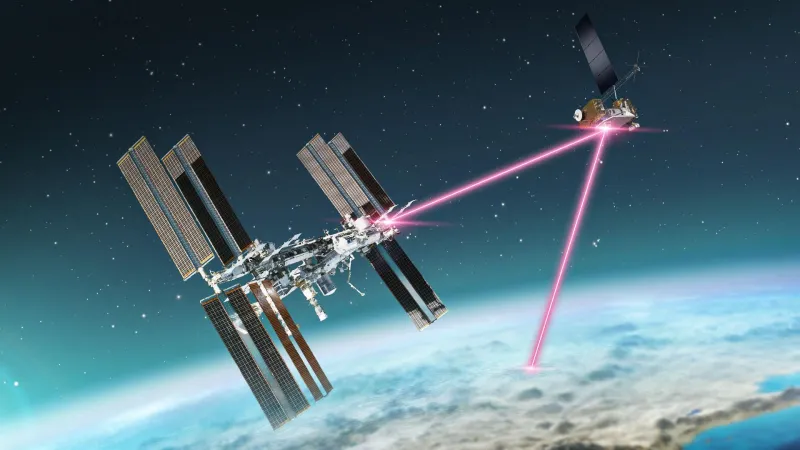
>800 W
DARPA POWER record, 2025; grid plants need about two million times more
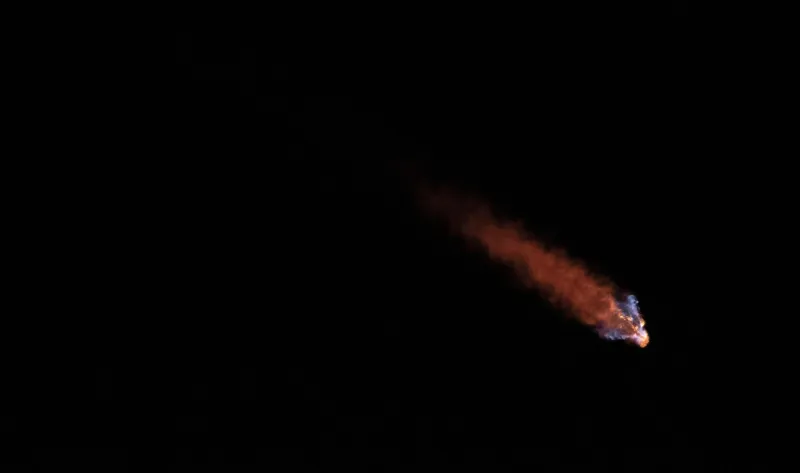
~200
20,000 t at 10 kg/kW and 100 t a launch; 324 orbital attempts worldwide in 2025
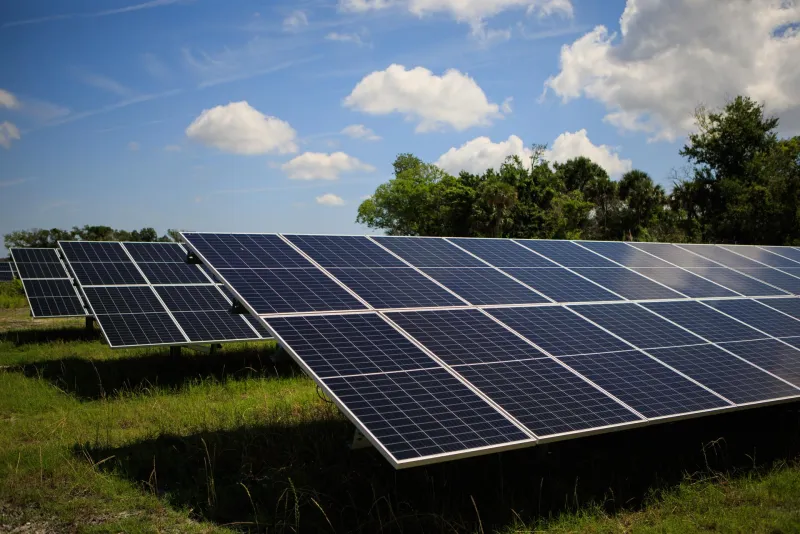
~25–40 km²
Against ~150–400 km² for ground solar with storage (Setcoin estimate)
03 · The cost
Setcoin's cost model with 30-year life, 8% cost of capital, 95% capacity factor and $0.3/W rectenna, against the top of Lazard's 2025 unsubsidised ranges and NASA's 2024 estimates.
$ per MWh
Setcoin model (study ch. 28 and Appendix C); Lazard LCOE+ 2025; NASA OTPS 2024.
Try the model
Start from Setcoin's reference plant: 10 kg in orbit per kilowatt delivered, $1,000 per kilogram to low orbit, a 2.5× factor to reach geostationary orbit and $2 per watt of hardware. Cut the launch price, halve the mass or put today's space hardware prices in, and compare the result with gas, nuclear and NASA's estimates.
Interactive model
What does electricity from a space solar plant cost per MWh once you set mass, launch price, hardware and finance your way?
| Item | Value |
|---|---|
| Launch and transfer ($/W) | 25 |
| Space hardware ($/W) | 2 |
| Rectenna and ground ($/W) | 0.3 |
| Capital ($/W) | 27.3 |
| Capital recovery factor | 0.089 |
| Annual MWh per kW | 8.32 |
| Cost of electricity ($/MWh) | 357 |
What moves “Cost of electricity” most: each input 20% lower (left of a pair) and 20% higher
This is one of 5 interactive models in the report. The first 3 chapters of the report are open to everyone; a Space subscription, with a 7-day free trial, opens every model and its Excel file.
04 · Three findings
Setcoin's reading of the agency studies, demonstrations and cost model; arithmetic as labelled in the study.
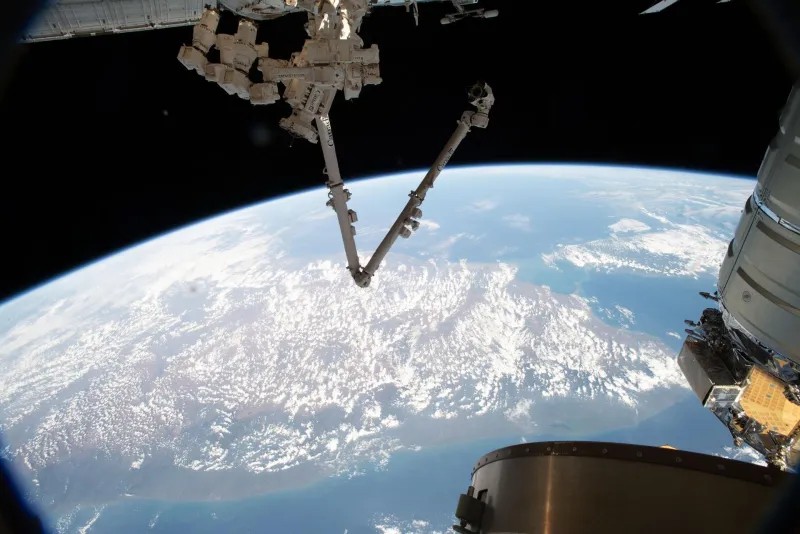
At $1,000/kg, launch and orbit transfer are almost all of the capital. Halving launch price, mass per kilowatt or the transfer factor each cuts the cost of power by 46%.
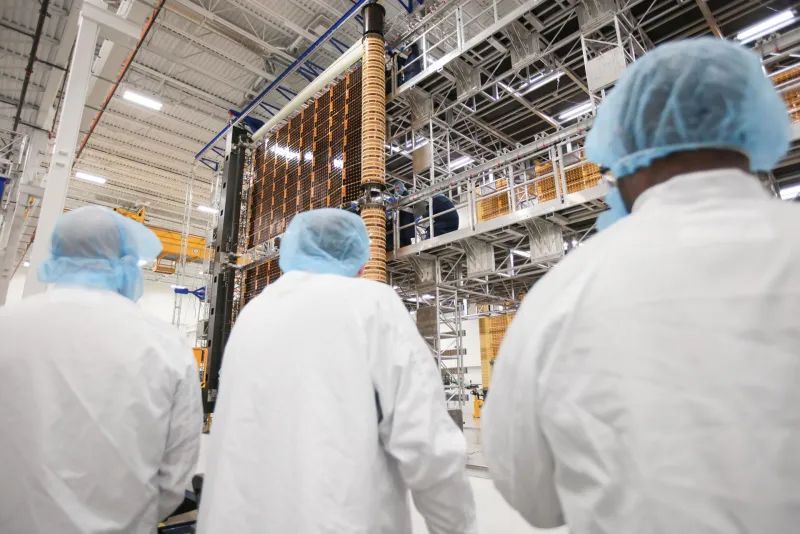
Qualified space arrays cost about €200–350 per watt; plants need about $2. Once launch falls below about $200/kg, hardware decides the cost.
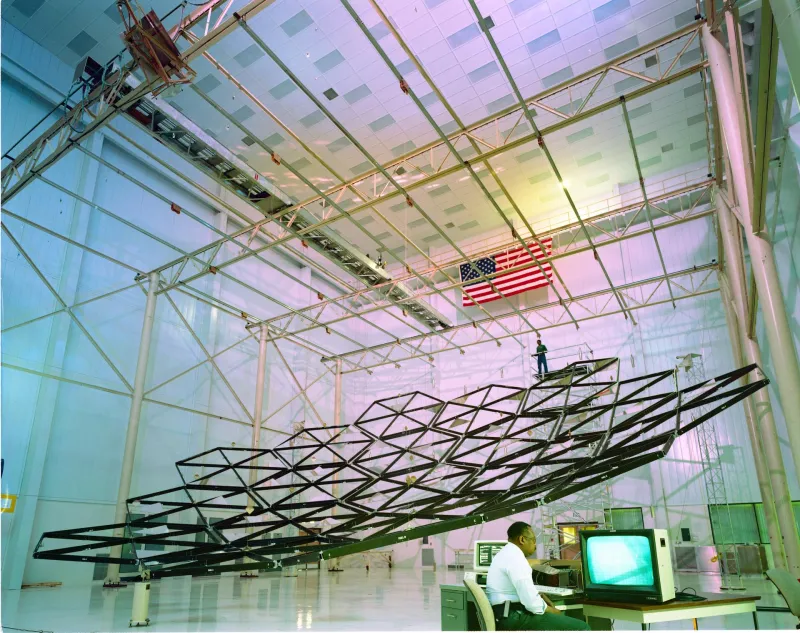
The largest structure ever assembled in orbit is about 109 m across. A plant is kilometres across and must be assembled by robots, about 7 tonnes a day.
Try the model
Pick a target cost of power and see the launch price a plant would need. At $2 per watt of hardware and 10 kg/kW, matching new nuclear at $141/MWh needs about $339/kg; matching gas at $70/MWh about $122/kg. Halve the mass or the hardware cost and the bar moves.
Interactive model
For a target cost of electricity, what launch price to low orbit would a space solar plant need?
| Target ($/MWh) | Launch needed at $1/W ($/kg) | Launch needed at $2/W ($/kg) | Launch needed at $4/W ($/kg) |
|---|---|---|---|
| 50 | 101 | 61 | 0 |
| 70 | 162 | 122 | 42 |
| 100 | 254 | 214 | 134 |
| 141 | 379 | 339 | 259 |
| 164 | 450 | 410 | 330 |
| 200 | 560 | 520 | 440 |
| 250 | 713 | 673 | 593 |
| 300 | 866 | 826 | 746 |
| 400 | 1,172 | 1,132 | 1,052 |
What moves “Launch price needed” most: each input 20% lower (left of a pair) and 20% higher
This is one of 5 interactive models in the report. The first 3 chapters of the report are open to everyone; a Space subscription, with a 7-day free trial, opens every model and its Excel file.
05 · Geography
Government and university programmes, landmark beaming tests and the first commercial offtakers. Ringed: the only programme to have beamed power in orbit by October 2026. Switch between world, North America, Europe and Asia.
Power beamed in orbit (to date) · hover or tap a site for detail
Government and university programmes
Landmark beaming tests
First offtakers
Agencies, universities, companies and reporting; examples, not a complete list.
Try the model
A 1 km transmitter at 5.8 GHz in geostationary orbit spreads 2 GW over a spot about 4.5 km across, an average of about 125 W/m², an eighth of peak sunlight. Switch to 2.45 GHz, move to low orbit or try a laser and watch spot and intensity change.
Interactive model
How wide is the beam where it lands, and how intense is it, for your choice of wavelength, transmitter and orbit?
| Item | Value |
|---|---|
| Wavelength (m) | 0.052 |
| Transmitter diameter (m) | 1,000 |
| Distance (km) | 35,786 |
| Spot diameter (m) | 4,514 |
| Spot area (km²) | 16.006 |
| Average intensity (W/m²) | 125 |
What moves “Spot diameter” most: each input 20% lower (left of a pair) and 20% higher
This is one of 5 interactive models in the report. The first 3 chapters of the report are open to everyone; a Space subscription, with a 7-day free trial, opens every model and its Excel file.
06 · Signals to watch
07 · Check it yourself
Every figure in this study comes from the public record. These Setcoin services let you check the companies, contracts and counterparties behind it yourself.
Cited R&D awards and prime contracts in space and aerospace, by organisation and readiness gate, from public procurement and grant records.
Open the space sector record →A company's round, filings and statements checked against the public record, to the same standard as this study.
Check a company →How long data-centre and industrial sites wait for grid connections today, the firm-power problem space solar claims to solve.
Open Time-to-Power →08 · The full study
Mass per kilowatt, launch price, orbit transfer, hardware, rectenna, capacity factor, life and cost of capital turned into dollars per MWh, against gas, nuclear, firmed renewables and NASA's estimates.
For any target cost of power, the launch price to low orbit a plant would need, at three hardware costs.
Diffraction sets the spot: choose a frequency or laser, transmitter size and orbit to see spot diameter and intensity against sunlight and exposure guidance.
Free data tools
The study's findings move with launches, contracts and filings. These free Setcoin tools show the current public record behind them, refreshed from the catalogues and procurement registers.
607 new US federal space awards and European tenders from the last twelve months, by part or service bought, buyer, country and stage, with the tenders still open.
See public demand for space power: solar arrays, batteries and power R&D, awarded and open.
Open the radar →Type an operator’s name and see what the public satellite catalogues record: satellites launched, in orbit, operating and re-entered. The full check adds US contracts, SBIR awards, UK and NOAA licences and list screening.
Check what the catalogues record for a company’s demonstration missions.
Check an operator →Questions
Collecting sunlight in orbit, where a collector in geostationary orbit is lit about 99% of the year, and sending the energy to Earth as a microwave or laser beam, or as reflected sunlight. A receiving antenna on the ground, a rectenna, converts microwaves back into electricity for the grid.
At very small scale. Caltech's MAPLE experiment transmitted power wirelessly in orbit in 2023 and detected a signal at a receiver on Earth. On the ground, NASA beamed 34 kW over 1.6 km at Goldstone in 1975, and DARPA sent more than 800 W by laser over 8.6 km in 2025. No system has yet delivered useful power from orbit to the ground.
On Setcoin's reference case, 10 kg in orbit per kilowatt, $1,000 per kilogram to low orbit and $2 per watt of hardware, about $357 per MWh, with launch 92% of capital. At $200 per kilogram it falls to about $95 per MWh, and with half the mass and $1-per-watt hardware to about $50. NASA's 2024 study estimated $610 and $1,590 per MWh for its reference designs.
Designs keep intensity low: a 2 GW beam over a 4.5 km spot averages about 125 W/m², with a design peak of about 230 W/m² at the centre, below peak sunlight, falling to public exposure guidance of about 10 W/m² at the edge. Beams are steered by a pilot signal from the ground and spread out harmlessly if it stops. Lasers need stricter controls because they can harm eyes.
Diffraction. The spot size is about 2.44 × wavelength × distance ÷ transmitter diameter. From geostationary orbit, a 1 km transmitter at 5.8 GHz makes a spot about 4.5 km across; at 2.45 GHz about 10.7 km. Lasers make spots under 100 m but are blocked by clouds.
At 10 kg per kilowatt delivered, a 2 GW plant weighs about 20,000 tonnes, which is about 200 launches of 100 tonnes each. That compares with 324 orbital launch attempts worldwide in 2025. At 25 launches a year the campaign would take about eight years.
Agencies and universities including ESA (SOLARIS), NASA, Caltech, the US Air Force Research Laboratory, DARPA, JAXA and Chinese institutions such as Xidian University, and companies including Cowboy Space (formerly Aetherflux), Overview Energy, Space Solar, Star Catcher and Reflect Orbital. Setcoin analyses public markets and programmes for information only and does not recommend any security.
In April 2026 Meta agreed with Overview Energy for early access to up to 1 GW from Overview's planned geostationary system, which would beam near-infrared light to existing solar farms so they can produce at night. Financial terms were not disclosed; Overview targets an orbital demonstration in 2028. It is a reservation, not a purchase of delivered power.
Setcoin's roadmap places orbital demonstrations delivering 100 W to 1 kW in 2026–2028, megawatt demonstrators in the 2030s, a grid-connected demonstration plant of tens to hundreds of megawatts in 2034–2040 and gigawatt commercial plants in the 2040s, provided launch, mass and hardware cost all fall.
The first three chapters are open to everyone in full, with no account; the rest can be previewed. A space sector subscription, with a free trial, opens all 98 chapters and 3 appendices, the five interactive models and their Excel files.
Setcoin Research analyses public markets, filings and programmes for information only. It is not investment advice and does not recommend any security.
1. Read the first 3 chapters in full, no account needed. 2. Create a free account (two minutes, no card) to download their Excel models. 3. Subscribe to Space for every chapter, model and Excel download: 7-day free trial, then €199 a month or €1,490 a year.