
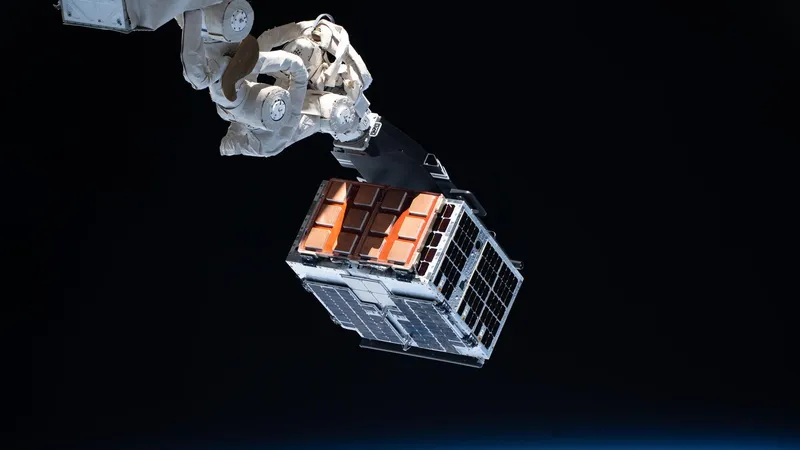
637
Starlink direct-to-cell satellites in orbit
663 launched on 52 launch days; 26 re-entered; ~357 km
Setcoin Intelligence · Space Infrastructure · Direct-to-Device · Updated October 2026
How much spectrum and how many satellites does direct-to-device need, who will provide it, and what can it earn? Fifty-five chapters on the physics, the providers, spectrum and its price, operator economics, Europe and emerging markets, emergencies, IoT and scenarios to 2035, built on regulatory filings and Setcoin's own satellite-catalogue analysis.
Open to everyone: the first 3 chapters in full, with exhibits and models; a free account adds their Excel models. Space subscription: all 58 chapters, every model and Excel file, 7-day free trial, then €199 a month. Already a reader? Sign in.
In short
Direct-to-device is a coverage product today: messaging, emergency alerts and light data outdoors, used occasionally and priced at zero to about $10 a month. SpaceX has 637 direct-to-cell satellites in orbit and about 7.4 million devices a month on its mobile services, but satellite traffic is about 0.0002% of T-Mobile's network. D2D becomes a capacity product only with very large antennas and much more spectrum, and the industry is buying both: SpaceX paid about $17 billion for 65 MHz and won approval for 15,000 satellites; Amazon is buying Globalstar for about $11.6 billion. Setcoin's base case is about $9 billion of D2D revenue in 2030 and $20 billion in 2035, concentrated among a few providers.
01 · The answer
Ordinary phones can now talk to satellites. SpaceX launched 663 direct-to-cell satellites between January 2024 and June 2025, of which 637 remain in orbit (Setcoin catalogue analysis), and reports about 7.4 million devices a month on its mobile services in about 30 countries. T-Mobile sells the service for about $10 a month; Apple offers emergency messaging free on every iPhone since 2022.
Use is real but light. T-Mobile said in May 2026 that satellite traffic was about 0.0002% of its network, mostly in national parks. Physics explains why: a phone's antenna and power are fixed, so capacity depends on the satellite's antenna area and the spectrum in each beam. First-generation beams carry a few megabits per second shared over tens of kilometres.
The industry is buying its way out of that limit. SpaceX paid about $17 billion for 65 MHz of EchoStar spectrum, about $0.8 per MHz-pop, close to terrestrial values, and on 6 October 2026 won FCC approval for 15,000 next-generation D2D satellites. AST SpaceMobile flies arrays of 223 m². Amazon is buying Globalstar, and with it Apple's satellite partner, for about $11.6 billion.
Setcoin's base case puts D2D revenue at about $9 billion in 2030 and $20 billion in 2035, with SpaceX taking about 45% by 2035. The largest uncertainty is whether SpaceX becomes a mobile operator in its own right; the next decisions are Starship's cadence, phone support for new bands, WRC-27 in November 2027 and Europe's 2 GHz selection.
55 chapters + 3 appendices · 180 min · updated 2026-10-22
02 · The market
Setcoin's satellite-catalogue analysis (CelesTrak SATCAT, 18 October 2026) and company disclosures.
637
663 launched on 52 launch days; 26 re-entered; ~357 km

~7.4M
In about 30 countries (S-1/A); paying users not disclosed
0.0002%
May 2026; mostly in national parks
~$1.3B
~12 BlueBirds in orbit; ~45 targeted by early 2027
03 · The fleets
Satellites in orbit that serve phones or D2D-capable devices, October 2026, from Setcoin's catalogue analysis and company counts.
satellites in orbit
Setcoin space engine (CelesTrak SATCAT), 18 October 2026; Iridium and Globalstar operational counts from the companies; AST from company statements.
Try the model
Start from AST's 223 m² array at 520 km, then shrink the antenna, lower the orbit, widen the channel or move indoors, and watch the signal and throughput change. The defaults are the study's figures; your changes stay in your browser.
Interactive model
How large must a satellite antenna be, and how low its orbit, for an unmodified phone to get a usable signal?
| Step | Value |
|---|---|
| Wavelength (m) | 0.158 |
| Slant range (km) | 710 |
| Satellite antenna gain (dBi) | 48.3 |
| Free-space path loss (dB) | 155.03 |
| Signal at satellite (dBm) | -86.74 |
| Noise in channel (dBm) | -102.01 |
| Uplink SNR (dB) | 15.27 |
| Spectral efficiency (bit/s/Hz) | 3.07 |
| Throughput (Mbps) | 15.35 |
What moves “Uplink signal-to-noise ratio” most: each input 20% lower (left of a pair) and 20% higher
This is one of 5 interactive models in the report. The first 3 chapters of the report are open to everyone; a Space subscription, with a 7-day free trial, opens every model and its Excel file.
04 · The providers
Satellite counts from Setcoin's catalogue analysis; transactions as reported.
637 first-generation satellites with T-Mobile and ~30 partner countries; ~$17B for 65 MHz of EchoStar spectrum; next generation on Starship. Could sell mobile service directly.
223 m² BlueBird arrays in partners' spectrum; >60 operators incl. AT&T, Verizon, Vodafone (SatCo in Europe); $150–200M 2026 revenue guidance; >$3.7B pro forma cash.
Amazon agreed in April 2026 to buy Globalstar, whose new satellites Apple largely funded for iPhone emergency and messaging services; D2D on Amazon Leo from ~2028 as reported.
Try the model
Price per MHz-pop for SpaceX's EchoStar purchase, the earnings it implies and the paying users needed to justify it. Compare AT&T's terrestrial purchase or change the cost of capital.
Interactive model
What does a spectrum deal cost per MHz-pop, and how many paying users must it support?
| Item | Value |
|---|---|
| Price ($B) | 17 |
| MHz | 65 |
| Population (M) | 335 |
| $ per MHz-pop | 0.781 |
| Earnings needed ($B a year) | 1.7 |
| Paying users needed (M) | 56.7 |
What moves “Price per MHz-pop” most: each input 20% lower (left of a pair) and 20% higher
This is one of 5 interactive models in the report. The first 3 chapters of the report are open to everyone; a Space subscription, with a 7-day free trial, opens every model and its Excel file.
05 · Partnerships
Operator D2D agreements by country, October 2026. SpaceX signed first across large, thinly populated countries; AST is the partner operators choose when they want one that does not sell to consumers. Switch between the world, North America, Europe and Asia-Pacific.
Authorised next-generation system · hover or tap a site for detail
SpaceX (Starlink Direct to Cell)
AST SpaceMobile / SatCo
Skylo, Lynk/Elveo, Apple–Globalstar
State system (China)
Operator and company announcements as reported; ringed: the system authorised for 15,000 next-generation satellites.
Try the model
Add-on revenue shared with the satellite partner, and the larger value of customers kept through lower churn. Bundle it free, price it at $5 for a fifth of customers, or switch off the churn effect.
Interactive model
How much revenue does D2D add, how is it shared, and how much does lower churn matter?
| Item | Value |
|---|---|
| Subscribers (M) | 100 |
| Paying users (M) | 2 |
| Add-on revenue ($M a year) | 240 |
| Operator share ($M) | 120 |
| Satellite partner share ($M) | 120 |
| Customers retained after one year (M) | 1.2 |
| Retained revenue run-rate ($M a year) | 576 |
| Operator value ($M a year) | 696 |
What moves “Operator value a year (add-on share + retained revenue)” most: each input 20% lower (left of a pair) and 20% higher
This is one of 5 interactive models in the report. The first 3 chapters of the report are open to everyone; a Space subscription, with a 7-day free trial, opens every model and its Excel file.
06 · Signals to watch
07 · Check it yourself
Every figure in this study comes from the public record. These Setcoin services let you check the companies, contracts and capital behind it yourself.
More than a thousand cited R&D awards and prime contracts in space and aerospace, by organisation and readiness gate, from public procurement and grant data.
Open the space record →A company's round, filings and statements checked against the public record, to the same standard as this study.
Check a company →Registrations, ownership, sanctions listings and court records on a counterparty, cross-referenced and scored in one report the same day.
See what Verify checks →08 · The full study
Antenna area, orbit, band and bandwidth turned into the signal an ordinary phone can deliver to a satellite, and the throughput that follows.
Spectrum per beam and signal quality shared among active users, showing which services each load can support.
Price per MHz-pop and the earnings, and paying users, a spectrum purchase must support.
Free data tools
The study's findings move with launches, contracts and filings. These free Setcoin tools show the current public record behind them, refreshed from the catalogues and procurement registers.
8 large constellations against what they are licensed or filed for: satellites launched, re-entered and net pace over twelve months, and the date each milestone is reached at that pace.
Follow AST SpaceMobile’s and Starlink’s deployment pace from the catalogue, launch by launch.
Open the monitor →Type an operator’s name and see what the public satellite catalogues record: satellites launched, in orbit, operating and re-entered. The full check adds US contracts, SBIR awards, UK and NOAA licences and list screening.
Check an operator’s stated satellite count against the catalogue record before a spectrum or carrier deal.
Check an operator →607 new US federal space awards and European tenders from the last twelve months, by part or service bought, buyer, country and stage, with the tenders still open.
See public buyers of satcom services and terminals.
Open the radar →Questions
Satellites that connect directly to ordinary mobile phones or IoT devices, without a dish or a special satellite phone. In 2026 it mainly provides messaging, emergency alerts and light data outdoors where there are no mobile towers.
SpaceX's 2026 filing reports about 7.4 million unique devices a month on its mobile services in about 30 countries. Use is light: T-Mobile said in May 2026 that satellite traffic was about 0.0002% of its network. No provider discloses how many people pay separately for D2D.
A phone transmits about 0.2 watts through an antenna with almost no gain, hundreds of kilometres from the satellite. Capacity therefore depends on very large satellite antennas and on spectrum per beam. First-generation beams carry a few megabits per second shared by everyone in an area tens of kilometres across.
About 65 MHz of spectrum, AWS-4, H-block and unpaired AWS-3, for about $17 billion in cash and SpaceX stock, plus about $2 billion of interest payments. That is roughly $0.8 per MHz-pop on Setcoin's calculation. The FCC authorised SpaceX's 15,000-satellite next-generation D2D system on 6 October 2026.
AST builds fewer, much larger satellites, with arrays of 223 m² on its Block 2 BlueBirds, that use mobile operators' own spectrum, and it sells only through operators such as AT&T, Verizon and Vodafone. It had about 12 BlueBirds in orbit in October 2026 and targets about 45 by early 2027.
For its globally coordinated satellite spectrum, its new satellites and its relationship with Apple, which funded most of Globalstar's satellite upgrade and uses it for iPhone emergency and messaging services. Amazon agreed the roughly $11.6 billion purchase in April 2026 and plans D2D on Amazon Leo from about 2028, as reported.
No. Even next-generation satellites deliver roughly a tenth of a rural tower's capacity per square kilometre and a ten-thousandth of an urban cell's. Satellites complement towers in remote areas, at sea and in disasters.
Setcoin's base case is about $9 billion of D2D revenue in 2030 and about $20 billion in 2035, with a low case of about $7 billion and a high case of about $44 billion in 2035. Published forecasts range from Omdia's ~$12 billion in 2030 to SatNxt's ~$27.7 billion in 2035; most of the difference lies in how users and revenue are defined.
The ITU's World Radiocommunication Conference in Shanghai, 18 October to 12 November 2027. Its agenda item 1.13 considers new mobile-satellite allocations so that satellites can connect directly to phones in bands from about 694 MHz to 2.7 GHz, which would give D2D international rules instead of national permissions.
The first three chapters are open to everyone in full, with no account; the rest can be previewed. A space sector subscription, with a free trial, opens all 55 chapters, the five interactive models and their Excel files.
Setcoin Research analyses public markets, filings and programmes for information only. It is not investment advice and does not recommend any security.
1. Read the first 3 chapters in full, no account needed. 2. Create a free account (two minutes, no card) to download their Excel models. 3. Subscribe to Space for every chapter, model and Excel download: 7-day free trial, then €199 a month or €1,490 a year.