
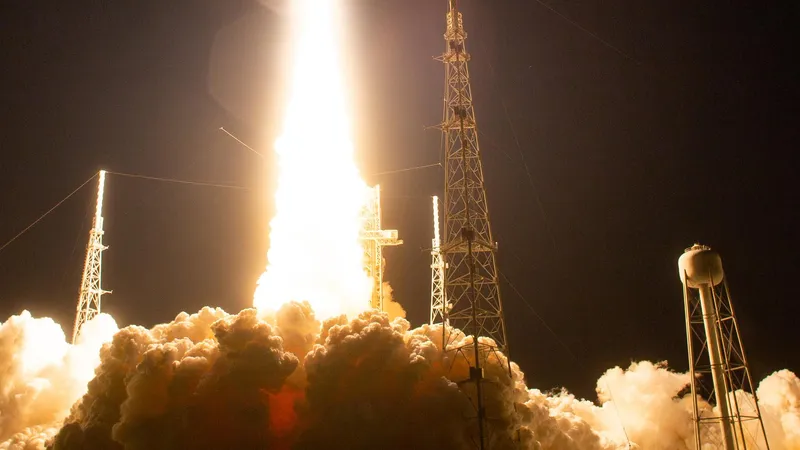
329
Launch attempts, 2025
Up from 87 in 2015; 245 in 2026 to mid-October
Setcoin Intelligence · Space Infrastructure · Launch · Updated October 2026
What will a kilogram to orbit cost in 2030 and 2035, who will supply it, and can Europe close its sovereign gap? Forty-five chapters built on Setcoin's launch dataset and SpaceX's own 2026 filing: the market, Falcon 9 reuse, Starship, the challengers, China, Europe's Ariane 6 and Launcher Challenge, spaceports, demand, supply and prices to 2035.
Open to everyone: the first 3 chapters in full, with exhibits and models; a free account adds their Excel models. Space subscription: all 48 chapters, every model and Excel file, 7-day free trial, then €199 a month. Already a reader? Sign in.
In short
The price of launch is set by one company's choices, not by a competitive market. SpaceX flew 165 of the world's 329 launches in 2025, 122 of them for its own Starlink, and earned about $60 million per customer launch while its costs fell with booster reuse. Starship reached orbit with its first operational payload in September 2026; whether customers see its lower costs depends on competition that is still late. Europe has recovered sovereign access with Ariane 6 and pays about €0.4–0.6 billion a year for it on Setcoin's estimate.
01 · The answer
The world attempted 329 orbital and deep-space launches in 2025, four times as many as in 2015. SpaceX flew 165 of them. By its own 2026 filing, 122 carried its own Starlink satellites and 43 carried external customers, who paid about $60 million per launch on average (Setcoin calculation), a price that has barely moved while booster reuse cut SpaceX's costs. One booster has now flown 37 times.
Starship reached orbit with its first operational payload, 26 Starlink V3 satellites, on 28 September 2026. If both stages are reused many times, its cost per kilogram could fall below $100–200. Its reported dedicated price is about $90 million, or $900 per kilogram. Cost is not price: customers will see the fall only if someone can compete.
The challengers are late. Vulcan's solid boosters failed twice in four flights; New Glenn stranded a customer's satellite in April 2026; Neutron, Nova and Terran R had not flown by mid-October. China's LandSpace landed a Zhuque-3 booster in 2026, but Chinese rockets serve Chinese demand.
Europe has recovered: Ariane 6 has succeeded on all nine flights and Isar's Spectrum reached orbit in September 2026 as the first Launcher Challenge company. Europe pays about €0.4–0.6 billion a year for its sovereignty on Setcoin's estimate, affordable by budget, expensive per kilogram, and rising if Europe stays expendable.
45 chapters + 3 appendices · 180 min · updated 2026-10-21
02 · The market
Setcoin's launch dataset, from the GCAT launch log, data to 16 October 2026, and SpaceX's own filing.
329
Up from 87 in 2015; 245 in 2026 to mid-October
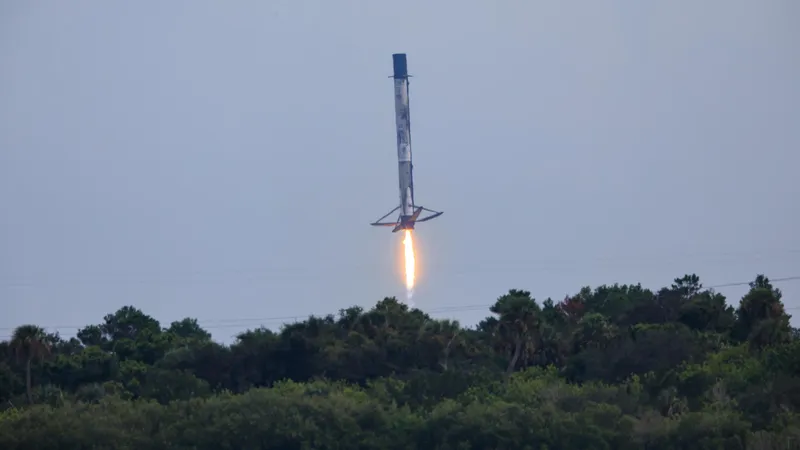
165
50% of all attempts; 157 on flight-proven boosters
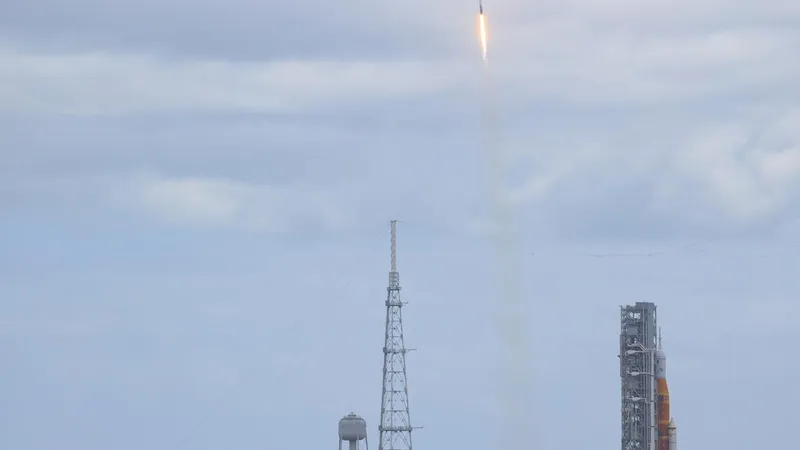
74%
122 internal launches against 43 for customers (S-1/A)
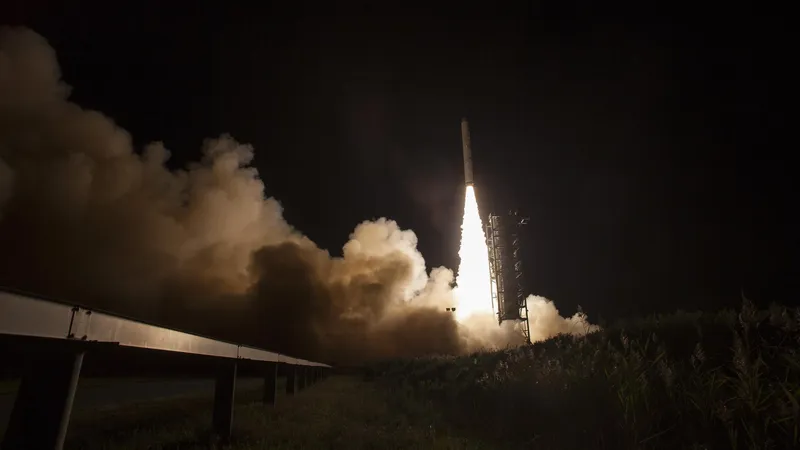
92
69 Long March, 23 commercial; a Zhuque-3 booster landed in August 2026
03 · Who launches
Orbital and deep-space launch attempts in 2025 by country of the launch vehicle, from Setcoin's launch dataset (GCAT).
329 attempts worldwide
Setcoin space engine (GCAT launch log), data to 16 October 2026. Electron launches from New Zealand are counted under New Zealand.
Try the model
Start from an early Starship with its ship expended, then reuse both stages, raise the cadence or change the margin, and compare with Falcon 9's customer price. The defaults are the study's figures; your changes stay in your browser.
Interactive model
What does one launch cost, and what price per kilogram follows from reuse, cadence and margin?
| Element | $M per launch | Share of cost |
|---|---|---|
| Booster, amortised | 9 | 12.3% |
| Upper stage, amortised | 40 | 54.8% |
| Refurbishment and recovery | 5 | 6.8% |
| Propellant | 1.5 | 2.1% |
| Operations and overhead | 17.5 | 24.0% |
| Cost per launch | 73 | 100% |
| Price per launch | 91.25 | — |
| Cost per kg ($) | 730 | — |
| Price per kg ($) | 913 | — |
What moves “Cost per launch” most: each input 20% lower (left of a pair) and 20% higher
This is one of 5 interactive models in the report. The first 3 chapters of the report are open to everyone; a Space subscription, with a 7-day free trial, opens every model and its Excel file.
04 · The vehicles
Payloads are manufacturer figures to low Earth orbit; prices are reported or estimated, because most are not published.
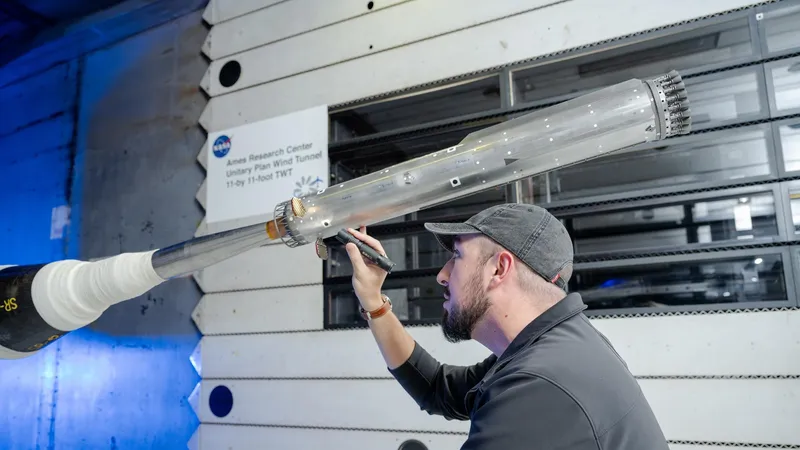
100 t (V3), fully reusable by design. 14 flight tests; booster caught by the tower; ship recovery and propellant transfer not yet shown. Reported dedicated price ~$90M.
~17.5 t with booster recovery. 1 failure in ~500 attempts since 2023. Customer average ~$60M per launch (Setcoin calculation from the S-1/A).
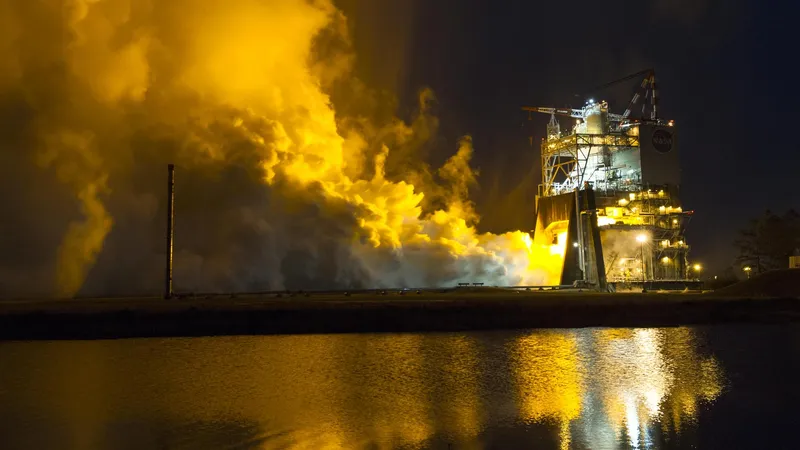
New Glenn (~45 t) landed boosters but lost a customer satellite in April 2026; Vulcan (~27 t) paused over booster anomalies; Neutron (~13 t) not yet flown.
Try the model
Open, non-captive Western launch demand against Falcon customer launches, the second tier and Starship's customer flights. Delay the challengers or wind Falcon down early and watch the balance move.
Interactive model
When does supply for non-captive Western launch catch up with demand?
| Year | Demand | Falcon | Second tier | Starship | Supply | Balance |
|---|---|---|---|---|---|---|
| 2,026 | 75 | 45 | 12 | 0 | 57 | -18 |
| 2,027 | 80 | 44 | 24 | 0 | 68 | -12 |
| 2,028 | 84 | 43 | 36 | 3 | 82 | -2 |
| 2,029 | 89 | 41 | 48 | 7 | 96 | 7 |
| 2,030 | 95 | 40 | 60 | 10 | 110 | 15 |
| 2,031 | 100 | 36 | 63 | 14 | 113 | 13 |
| 2,032 | 106 | 32 | 66 | 18 | 116 | 10 |
| 2,033 | 113 | 28 | 69 | 22 | 119 | 7 |
| 2,034 | 120 | 24 | 73 | 26 | 123 | 3 |
| 2,035 | 127 | 20 | 77 | 30 | 127 | -0 |
What moves “First year supply meets demand” most: each input 20% lower (left of a pair) and 20% higher
This is one of 5 interactive models in the report. The first 3 chapters of the report are open to everyone; a Space subscription, with a 7-day free trial, opens every model and its Excel file.
05 · Europe
Ariane 6 has flown nine times without a failure; the Launcher Challenge has signed three start-ups; Setcoin estimates the sovereignty premium at €0.4–0.6 billion a year.
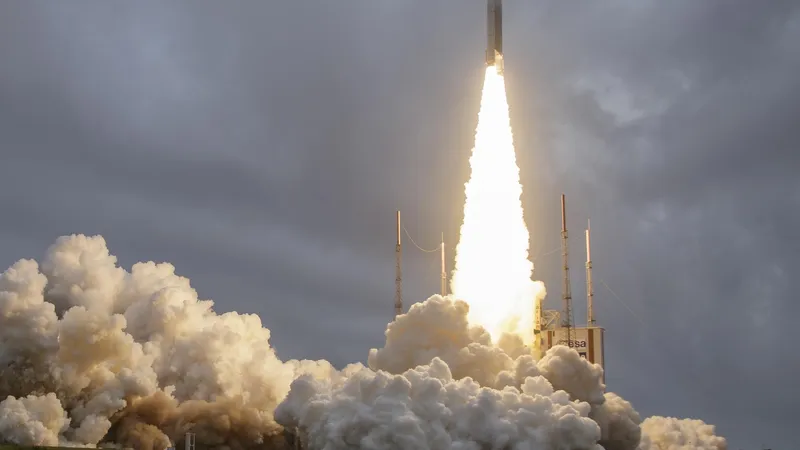
Ariane 62 and 64; 18 launches booked by Amazon; €290–340M a year of operating support to ~2031; estimated €80–100M per Ariane 62 launch.
Isar (€197.8M), RFA (€186.9M) and PLD Space (€158.9M) signed in August 2026; MaiaSpace pending; orbit required by about end-2027. Isar reached orbit on 5 September 2026.
Prometheus, Themis and Callisto are demonstrators; no reusable successor to Ariane 6 is funded. The 2028 ESA ministerial is the next decision point.
Try the model
Operating support plus the price gap on institutional launches, per launch, per kilogram and as a share of ESA's budget. Try a reusable European successor, or a cheap Starship.
Interactive model
What does Europe pay each year to keep its own access to space?
| Item | Value |
|---|---|
| Operating support (€M) | 315 |
| Institutional launches a year | 6 |
| Price gap per launch (€M) | 35 |
| Price gap total (€M) | 210 |
| Premium (€M a year) | 525 |
| Per kg (€) | 13,125 |
| Premium to 2035 at this rate (€B) | 5.25 |
What moves “Sovereignty premium a year” most: each input 20% lower (left of a pair) and 20% higher
This is one of 5 interactive models in the report. The first 3 chapters of the report are open to everyone; a Space subscription, with a 7-day free trial, opens every model and its Excel file.
06 · Spaceports
Thirty launch sites: operating, approved for expansion, and new or planned. Ringed sites are the only one of their kind in their region. Switch between the world, the United States, Europe and Asia.
ringed: the only site of its kind in its region · hover or tap a site for detail · launch counts from the Setcoin space engine (GCAT)
Operating
Approved expansion
New or planned
Launch counts from the Setcoin space engine (GCAT); approvals from FAA and Department of the Air Force decisions; company announcements.
07 · Signals to watch
08 · Check it yourself
Every figure in this study comes from the public record. These Setcoin services let you check the companies, contracts and capital behind it yourself.
More than a thousand cited R&D awards and prime contracts in space and aerospace, by organisation and readiness gate, from public procurement and grant data.
Open the space record →244 tracked capital profiles on one ladder, from seed to construction loan, by stage, ticket size and sector, including space.
Open the explorer →Registrations, ownership, sanctions listings and court records on a counterparty, cross-referenced and scored in one report the same day.
See what Verify checks →09 · The full study
A launch rebuilt from booster, upper stage, refurbishment, propellant, operations and margin, from expendable rockets to a fully reused Starship.
Non-captive Western demand against Falcon customer launches, the second tier and Starship's customer flights, year by year to 2035.
What Europe pays each year for its own launch: operating support plus the price gap on institutional launches, per launch and per kilogram.
Free data tools
The study's findings move with launches, contracts and filings. These free Setcoin tools show the current public record behind them, refreshed from the catalogues and procurement registers.
8 large constellations against what they are licensed or filed for: satellites launched, re-entered and net pace over twelve months, and the date each milestone is reached at that pace.
Constellation build-out is most of the launch demand in this study: see each fleet’s twelve-month pace and what its milestones still require.
Open the monitor →607 new US federal space awards and European tenders from the last twelve months, by part or service bought, buyer, country and stage, with the tenders still open.
See which agencies are buying launch services and which launch tenders are open.
Open the radar →Type an operator’s name and see what the public satellite catalogues record: satellites launched, in orbit, operating and re-entered. The full check adds US contracts, SBIR awards, UK and NOAA licences and list screening.
Check what the catalogues record for a launch customer or satellite operator.
Check an operator →Questions
It depends on the rocket and on whether you fill it. A full Falcon 9 costs a customer roughly $3,400 per kilogram of capacity to low Earth orbit; SpaceX's own filing implies customers paid about $8,300 per kilogram of their own payload in 2025, because most rockets fly part-full. Rideshare costs about $7,000 per kilogram, and a dedicated small launch on Electron about $28,000 per kilogram of capacity.
Because one company flies most of the launches open to Western customers and prices against more expensive alternatives. SpaceX's customer launch revenue averaged about $60 million per launch in 2023–2025 (Setcoin calculation from its S-1/A) while booster reuse cut its costs; it used the difference to build Starlink and fund Starship.
Most of it. SpaceX's filing reports 165 Falcon launches in 2025, of which 122 launched its own Starlink satellites and 43 carried external customers; 86% of the mass it launched in 2025 was its own.
With its ship expended, about $700–750 per kilogram on Setcoin's cost stack; with both stages reused many times, below $100–200. Its reported price for a dedicated launch is about $90 million, or $900 per kilogram at 100 tonnes. What customers pay will depend on competition.
Blue Origin's New Glenn, the only other Western rocket to land an orbital booster; ULA's Vulcan, certified for national security launches but paused in 2026 over booster anomalies; and new reusable medium rockets such as Rocket Lab's Neutron, Relativity's Terran R and Stoke's Nova, none of which had flown by mid-October 2026.
China is the only country other than the United States where a company has landed an orbital booster: LandSpace recovered a Zhuque-3 first stage at sea in July 2026 and on land in August 2026. China flew 92 launches in 2025, but its rockets serve Chinese constellations and government programmes and are closed to most Western customers.
Yes. Ariane 6 has succeeded on all nine flights since July 2024 and Vega C on six in a row. ESA's European Launcher Challenge signed contracts with Isar Aerospace, Rocket Factory Augsburg and PLD Space in August 2026, and Isar's Spectrum reached orbit on 5 September 2026.
About €0.4–0.6 billion a year on Setcoin's estimate: €290–340 million of Ariane 6 operating support plus the price gap on European institutional launches compared with SpaceX. That is roughly 5–8% of ESA's annual budget but about €10,000–15,000 per kilogram of institutional payload.
Not for everyone in 2026–2028. Challengers are late while Amazon Leo, the Space Development Agency and Europe need capacity; Amazon asked the FCC for more time in 2026 citing a shortage of launches. Setcoin's base case has supply for non-captive Western launch catching up around 2029.
The first three chapters are open to everyone in full, with no account; the rest can be previewed. A space sector subscription, with a free trial, opens all 45 chapters, the five interactive models and their Excel files.
Setcoin Research analyses public markets, filings and programmes for information only. It is not investment advice and does not recommend any security.
1. Read the first 3 chapters in full, no account needed. 2. Create a free account (two minutes, no card) to download their Excel models. 3. Subscribe to Space for every chapter, model and Excel download: 7-day free trial, then €199 a month or €1,490 a year.