
$185B
DoD objective architecture
Acquisition of the Department's own architecture out to about 2035 (March 2026, up from $175B)
Setcoin Intelligence · Space Infrastructure · Defence & Missile Defence · Updated October 2026
Where will defence-space money flow from 2026 to 2035, which layers are funded rather than announced, and which suppliers sit on the critical path? Thirty-two chapters on the budget, the cost estimates, the Space Development Agency's constellation, interceptors, launch, suppliers, Europe and the adversaries, with five interactive models. Figures as of 21 October 2026.
Open to everyone: the first 3 chapters in full, with exhibits and models; a free account adds their Excel models. Space subscription: all 34 chapters, every model and Excel file, 7-day free trial, then €199 a month. Already a reader? Sign in.
In short
Golden Dome is funded to see and to talk, not yet to shoot. Tracking satellites, moving-target indication, a space data network and launch are on contract; space-based interceptors are 20 prototype agreements whose place in the final architecture is undecided. The money is the weak link: about $24.4 billion came from a one-off 2025 reconciliation law, and about 97% of the $17.5 billion FY2027 request depends on a second one that has not passed.
01 · The answer
In January 2025 the President ordered a national missile shield, soon named Golden Dome for America. By March 2026 the Department's estimate for its objective architecture was $185 billion, delivering out to around 2035, with an initial capability planned for 2028. Congress has provided about $24.4 billion, all of it through the one-off 2025 reconciliation law, and about 90% of that was on contract by August 2026.
The sensing and data layers are real and on contract: about $3.5 billion for 72 Tranche 3 tracking satellites, $1.75 billion for 36 accelerated missile-defence tracking satellites, $4.16 billion for the first satellites that track aircraft and cruise missiles from space, and $2.29 billion for the backbone of a military space data network. These layers continue in every budget scenario because they serve missions beyond homeland defence.
The interception layer is not decided. Twelve companies hold space-based interceptor prototype agreements with a combined ceiling of $3.2 billion, and the programme's director has said boost-phase interceptors may not make the final architecture. That layer is why estimates range from $185 billion to $1.2 trillion (CBO) and $3.6 trillion (AEI): they price different systems.
The money is the weakest link. About 97% of the $17.5 billion FY2027 request depends on a second reconciliation law, and with no FY2026 appropriation, a continuing resolution gives Golden Dome nothing to roll forward. One supplier, SpaceX, holds a large share of every newly funded layer.
32 chapters + 2 appendices · 162 min · updated 2026-10-21
Try the model
Start from the October 2026 position, then pass the second reconciliation law or move the money into the regular budget and see what FY2027 looks like. The defaults are the study's figures; your changes stay in your browser.
Interactive model
How much of Golden Dome is actually funded, and what happens if the second reconciliation law does or does not pass?
| Item | $B |
|---|---|
| 2025 reconciliation (enacted) | 24.4 |
| FY2027 request | 17.5 |
| FY2027 base budget | 0.4 |
| FY2027 contingent on reconciliation | 17.1 |
| FY2027 funded (your case) | 0.4 |
| Funded FY2025–27 | 24.8 |
| Objective architecture | 185 |
What moves “FY2027 funded” most: each input 20% lower (left of a pair) and 20% higher
This is one of 5 interactive models in the report. The first 3 chapters of the report are open to everyone; a Space subscription, with a 7-day free trial, opens every model and its Excel file.
02 · Cost
The estimates are not competing guesses at one system. They differ in scope, horizon and above all in the size of the interceptor layer.
$185B
Acquisition of the Department's own architecture out to about 2035 (March 2026, up from $175B)
$471B
20 years; a limited boost-phase interceptor layer; fits $175B for the first five years
$1.19T
20 years to develop, deploy, replace and operate; space interceptors about 70% of acquisition
$3.6T
The most expensive of six illustrative architectures over 20 years
03 · The architecture
Sensing, data and launch are funded and awarded. Interception from space is a set of prototypes.
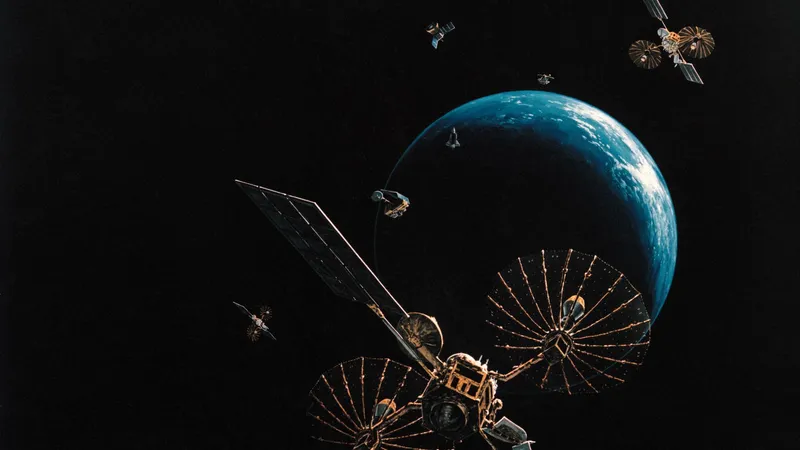
Next-Gen OPIR replaces SBIRS in geostationary orbit; its first satellite slipped to no earlier than October 2026, and the polar segment is proposed for cancellation.
The Space Development Agency buys tracking satellites in competed, fixed-price tranches: 72 in Tranche 3 and 36 accelerated for Golden Dome.
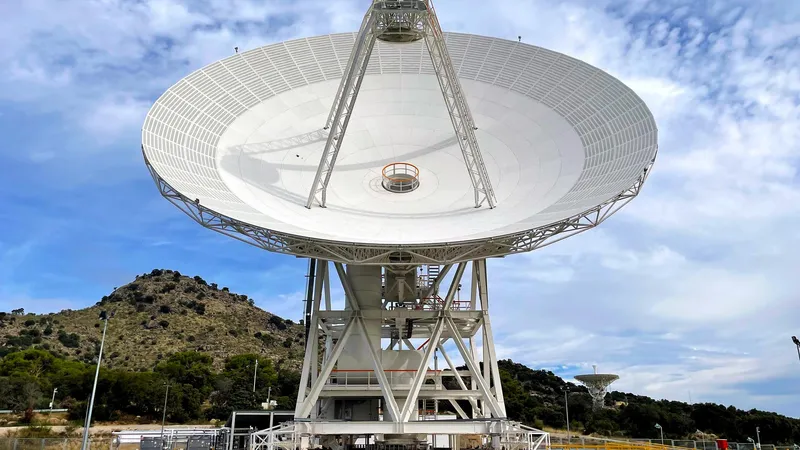
The SDA transport layer plus a $2.29B Starshield-based backbone, operational prototype due by end-2027; moving-target indication ($4.16B) shares the network.
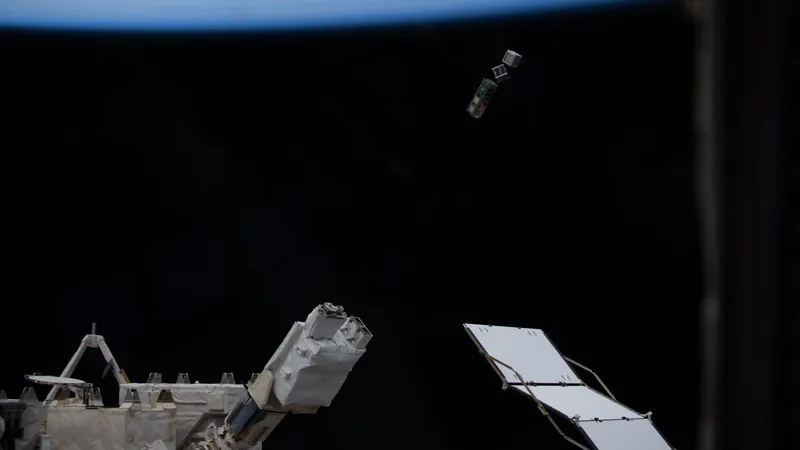
Twenty prototype agreements across twelve companies; initial capability aimed at 2028; the director says boost-phase interceptors may not make the final architecture.
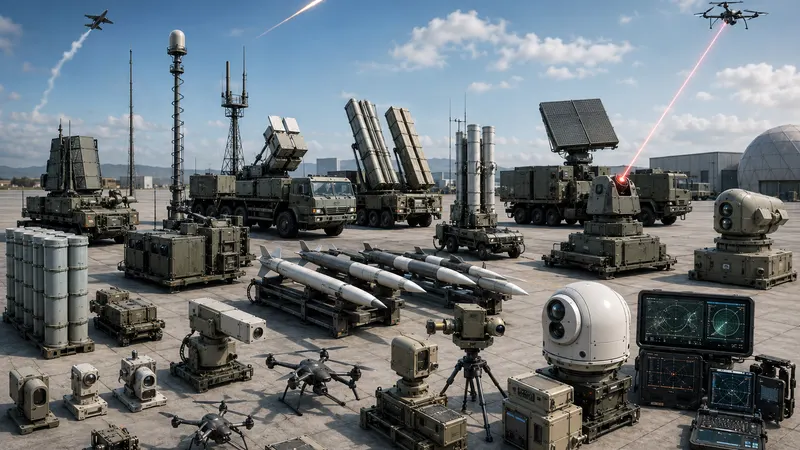
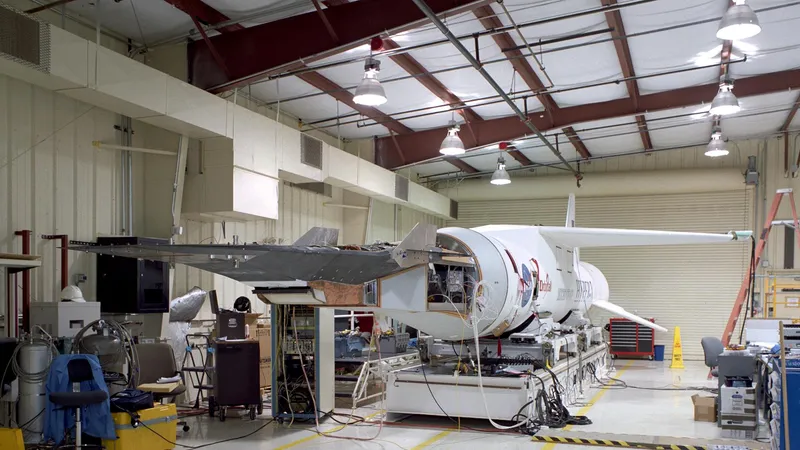
The Next Generation Interceptor heads for critical design review by end-2026 and fielding by 2030; Aegis, THAAD and Patriot defend regions and points.
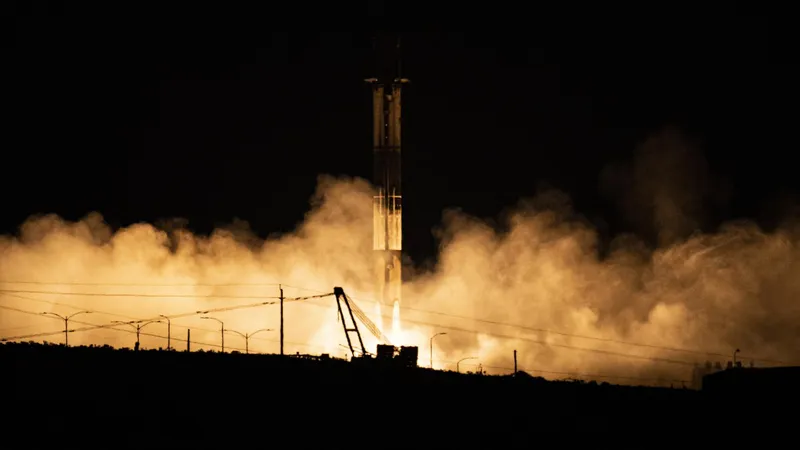
National Security Space Launch Phase 3: SpaceX holds 28 of 54 Lane 2 missions, ULA 19, Blue Origin 7; SDA tranches fly about 21 satellites per launch.
Try the model
Satellites in low orbit move constantly, so for every interceptor within reach of a launch, many more are elsewhere. Change the salvo, the reach and the unit cost and see the constellation and its 20-year bill against the CBO's figures.
Interactive model
How many interceptors must be in orbit to have enough overhead when missiles launch, and what does that cost over 20 years?
| Item | Value |
|---|---|
| Area within reach (km²) | 2,007,979 |
| Absentee ratio | 149.4 |
| Interceptors needed overhead | 20 |
| Constellation | 2,989 |
| Generations in 20 years | 4 |
| Build cost ($B) | 263 |
| Launch cost ($B) | 17.9 |
| Launches a year at 15 t each | 40 |
| APS 2003 benchmark: one solid ICBM | >1,600 interceptors |
What moves “Interceptors in orbit” most: each input 20% lower (left of a pair) and 20% higher
This is one of 5 interactive models in the report. The first 3 chapters of the report are open to everyone; a Space subscription, with a 7-day free trial, opens every model and its Excel file.
04 · Where the demand lands
Fifty-four sites in the United States, Europe and allied countries, by layer: satellites and sensors, propulsion and interceptors, launch and operations. Ringed sites are single or near-single sources.
ringed: single or near-single source · hover or tap a site for detail · locations are public company and government sites; not every facility is shown
Satellites, sensors and terminals
Propulsion and interceptors
Launch, ground and operations
Company and government announcements; Setcoin compilation (October 2026).
05 · Signals to watch
06 · Suppliers
Disclosed awards as of October 2026. Tracking is spread across five primes; the newest layers are concentrated.
Data backbone, SB-AMTI, launch, SBI prototype
$6.45B (May 2026 awards)
Tracking, transport, OPIR, NGI, SBI prototype
$1.1B T3 tracking
Tracking incl. HBTSS-like, rocket motors
$843M T3 + AMDT3
Tracking, transport, motors, SBI prototype
$764M T3 tracking
Tracking prime
$805M T3 tracking
Missile warning and tracking variant
AMDT3 (18 satellites)
National security launch, Lane 2
19 of 54 missions
National security launch, Lanes 1 and 2
7 of 54 missions
07 · The wars
Ukraine and the 2026 Iran war are the largest tests of layered missile defence ever fought. Space-based warning held; interceptor stocks did not.
>1,500
By the United States and partners in the 2026 Iran war, to May 2026 (CENTCOM testimony, via CRS).
½–⅔
Patriot, THAAD and Standard Missile since June 2025, on CBO's estimate; at least five years to rebuild.
$13.1B
CBO, September 2026: three-quarters of Golden Dome's whole FY2027 request.
2,000 a year
Up from about 600; the same motor and seeker suppliers any interceptor in orbit would need.
08 · Europe
Secure communications and reconnaissance first, missile warning by about 2030, a home-grown interceptor not before about 2035. The EU's IRIS² grew to 348 satellites at an estimated €15.6 billion; SAFE lends €150 billion; NATO launched the HALO constellation initiative in July 2026.
About €35 billion for space security to 2030: SATCOMBw Stage 4 (~200 satellites), SPOCK radar reconnaissance from Rheinmetall and ICEYE, and Europe's first Arrow 3 interceptors.
More than €10 billion for military space by 2030, patrol satellites from 2027, and with Germany the JEWEL missile-warning satellites targeted for 2030.
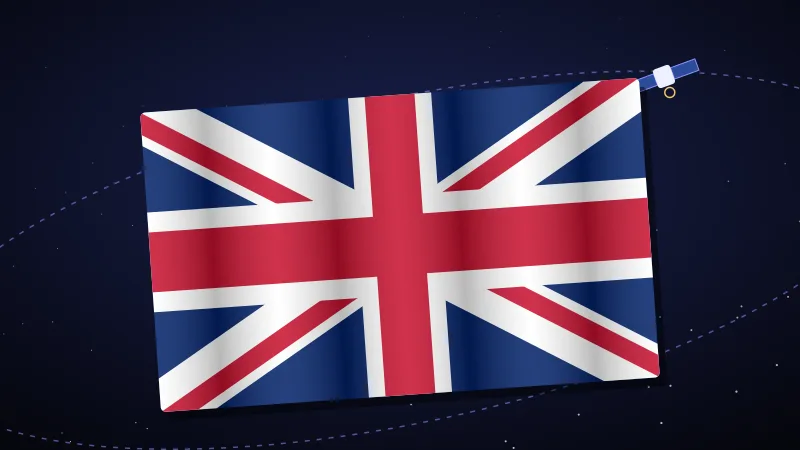
A £7.8 billion space strategy to 2030 with £2.3 billion for defence satellite communications; Skynet 6A launches in 2027.
09 · Price tags
Published estimates of what Golden Dome will cost, from the Department of Defense's objective architecture to the most capable variant studied.
US$ billions
DoD; AEI; CBO (2026), as reported (study chapter 6).
Try the model
Reconcile the published price tags: change the interceptor layer, the horizon and operations, and see which assumption moves the total most.
Interactive model
How do $185 billion, $1.2 trillion and $3.6 trillion relate, and what does the interceptor layer do to the total?
| Component | $B |
|---|---|
| Acquisition excluding interceptors | 308 |
| Interceptors: build | 686 |
| Interceptors: launch | 47 |
| Operation and support | 166 |
| Total | 1,207 |
What moves “Total over 20 years” most: each input 20% lower (left of a pair) and 20% higher
This is one of 5 interactive models in the report. The first 3 chapters of the report are open to everyone; a Space subscription, with a 7-day free trial, opens every model and its Excel file.
10 · Check it yourself
Every figure in this study comes from the public record. These Setcoin services let you check the companies, contracts and capital behind it yourself.
About ten thousand cited defence contracts and awards by organisation, so supplier claims can be checked against programmes of record.
Open the defence record →More than a thousand cited R&D awards and prime contracts in space and aerospace, by organisation and readiness gate, from public procurement and grant data.
Open the space record →Registrations, ownership, sanctions listings and court records on a counterparty, cross-referenced and scored in one report the same day.
See what Verify checks →11 · The full study
Every dollar traced from source (2025 reconciliation, FY2027 base, FY2027 reconciliation) to agency and layer, with the second reconciliation law switched on or off.
The DoD's $185B, the CBO's $1.191T and AEI's $3.6T rebuilt from one set of components: acquisition, interceptors, replacement, launch and operation.
How many interceptors must orbit for enough to be overhead when missiles launch, from the geometry of reach, latitude and salvo size.
Free data tools
The study's findings move with launches, contracts and filings. These free Setcoin tools show the current public record behind them, refreshed from the catalogues and procurement registers.
8 large constellations against what they are licensed or filed for: satellites launched, re-entered and net pace over twelve months, and the date each milestone is reached at that pace.
Track the SDA’s Tranche 1 launches against its aim of finishing the tranche in 2027, from the satellite catalogue.
Open the monitor →607 new US federal space awards and European tenders from the last twelve months, by part or service bought, buyer, country and stage, with the tenders still open.
Follow new US defence space awards, led by the Department of the Air Force, and space surveillance tenders as they are published.
Open the radar →Type an operator’s name and see what the public satellite catalogues record: satellites launched, in orbit, operating and re-entered. The full check adds US contracts, SBIR awards, UK and NOAA licences and list screening.
Check a supplier’s or new entrant’s satellite record before a teaming or investment decision.
Check an operator →Questions
Golden Dome for America is the US programme, ordered by executive order in January 2025, to defend the homeland against ballistic, hypersonic and cruise missiles and other aerial attacks. It combines space-based sensors, a space data network, ground and sea interceptors and possibly interceptors in orbit, run by a direct-reporting programme manager, General Michael Guetlein.
It depends on what is built. The Department's estimate for its objective architecture is $185 billion of acquisition out to about 2035. The CBO estimated about $1.2 trillion over 20 years for an architecture built from the executive order, including a large space-based interceptor layer. AEI's six illustrative architectures run from $471 billion to about $3.6 trillion over 20 years.
Because it prices a different system over a longer period. The CBO covers 20 years of development, deployment, replacement and operation, assumes full US coverage and includes several thousand space-based interceptors with five-year lives, which make up about 70% of its acquisition cost. The Department's $185 billion is acquisition only, to about 2035, and the Department has not committed to a large interceptor layer.
Not as of 21 October 2026. The FY2027 request is about $17.5 billion, but only about $400 million is in the base budget; the rest depends on a second reconciliation law that has not passed. Golden Dome has no FY2026 appropriation, so a continuing resolution provides nothing for it.
Small satellites that would destroy missiles during boost phase or midcourse. Because satellites in low orbit move constantly, a constellation needs a hundred or more interceptors for each one within reach of a launch. Twelve companies hold prototype agreements with a $3.2 billion ceiling, aimed at an initial capability in 2028, but the programme's director has said boost-phase interceptors may not make the final architecture.
A constellation of missile-tracking satellites in low Earth orbit bought in two-year tranches from several manufacturers on fixed-price terms. Tranche 3 bought 72 satellites for about $3.5 billion (about $49 million each) for launch in FY2029, and an accelerated tranche bought 36 more for about $1.75 billion, ready for launch in 2028.
SpaceX holds the data-network backbone ($2.29 billion), the first space-based moving-target-indication award ($4.16 billion), an interceptor prototype slot and the largest share of national security launch. Lockheed Martin, L3Harris, Northrop Grumman, Rocket Lab and Sierra Space build tracking satellites; Lockheed builds the Next Generation Interceptor; ULA and Blue Origin share national security launch.
The programme plans an initial capability in 2028, tied to the accelerated tracking satellites, the first moving-target-indication satellites and interceptor prototypes. The full objective architecture extends to around 2035. Funding for FY2027 and the FY2028 decision on interceptors will determine whether those dates hold.
Building secure communications and reconnaissance first. The EU's IRIS² constellation was expanded in August 2026 to 348 satellites, including a 66-satellite defence and security layer, at an estimated €15.6 billion with first launches by 2029, and the EU's SAFE programme lends €150 billion for defence procurement. Germany has committed about €35 billion to space security by 2030, France more than €10 billion and the United Kingdom £7.8 billion of space spending to 2030; NATO's HALO initiative aims to link allied satellites for communications and missile tracking.
That interceptor magazines run out before sensors do. In the 2026 Iran war the United States and its partners intercepted more than 1,500 ballistic missiles, and the CBO estimates the United States used between one-half and two-thirds of its inventory of certain interceptors, with at least five years needed to rebuild. Ukraine shows that cheap threats must be defeated cheaply and that attackers adapt their missiles within months.
Not yet. Europe has no missile-warning satellites and relies on US data through NATO. France and Germany launched the JEWEL early-warning initiative in October 2025, targeting 2030 for its geostationary satellites, building on the EU-funded ODIN'S EYE studies. Germany fielded Israel's Arrow 3 interceptor in December 2025; a European hypersonic interceptor is not expected before about 2035.
Both call it destabilising and are expected to answer with more and more varied missiles rather than a matching shield. China is on course for more than 1,000 nuclear warheads by 2030, launched 91 orbital missions in 2025 and operates about 167 Yaogan reconnaissance satellites. Russia has fielded weapons designed to evade missile defence, parks inspector satellites near US satellites and is assessed to be developing a nuclear anti-satellite weapon.
It is the ally closest to it. Japan pays about a third of the US-Japanese Glide Phase Interceptor and builds half of it, hosts US space-surveillance sensors on its QZSS navigation satellites, and plans satellites to track hypersonic glide vehicles. It is the most likely ally to add tracking sensors to the architecture rather than only consume US data.
The first three chapters are open to everyone in full, with no account; the rest can be previewed. A space sector subscription, with a free trial, opens all 34 chapters, the five interactive models and their Excel files.
Setcoin Research analyses public budgets, contracts and programmes for information only. It is not investment advice and does not recommend any security.
1. Read the first 3 chapters in full, no account needed. 2. Create a free account (two minutes, no card) to download their Excel models. 3. Subscribe to Space for every chapter, model and Excel download: 7-day free trial, then €199 a month or €1,490 a year.