
Cyber and secure communications: 24 records in 4 other sectors
Research partners, licensors or licensees for the same technology outside this sector
NATO 5% GDP Target Analysis & Country-by-Country Budget Trajectories 2026–2035. The definitive institutional guide to the largest European rearmament since the Cold War — covering €2.7 trillion in cumulative additional spending, 23 country profiles, fiscal sustainability analysis, and defence industrial transformation across four tiers of NATO allies.
Executive Summary
At The Hague Summit in June 2025, 31 of 32 NATO members (Spain exempted) committed to spending 5% of GDP on defence and security by 2035 — comprising 3.5% core defence plus 1.5% security-related spending. This represents the most ambitious collective rearmament commitment since NATO's founding, requiring an additional €254 billion annually to reach the core 3.5% target alone, and approximately €500 billion annually for the full 5%.
The European Commission's ReArm Europe/Readiness 2030 plan, unveiled in March 2025, aims to mobilize up to €800 billion through 2030 via the SAFE instrument (€150B in EU-backed procurement loans), fiscal rule flexibility (1.5% GDP national escape clause activated by 16 member states), European Investment Bank defence eligibility, and private capital mobilization.
EU member states spent €343 billion on defence in 2024 — a 19% increase from 2023 — and are projected to reach €381 billion in 2025, surpassing 2% GDP collectively for the first time. The trajectory to 3.5–5% demands unprecedented fiscal commitment: Germany requires an increase from €90B to €329B (+266%), France from €62B to €221B (+256%), and Italy from €33B to €158B (+379%), against sovereign debt levels of 62.5%, 112%, and 135% of GDP respectively.
This analysis provides complete country-by-country budget trajectories, fiscal sustainability assessments, defence industrial transformation requirements, and four scenario models from steady ramp-up through crisis mobilization, supported by expert interviews with defence ministry officials, NATO representatives, and industry executives.
Country-by-Country Analysis
Comprehensive budget trajectories, key procurement programmes, fiscal challenges, and industrial priorities for each NATO European ally.

Constitutional debt brake lifted. €400B+ defence & security. Rheinmetall ammunition expansion. F-35 procurement, European Sky Shield leadership.

Nuclear triad modernization. SCAF with Germany/Spain. Carrier renewal. LPM 2024-2030. Targeting 3.5% GDP. Debt: 112% GDP — Moody's downgrade risk.

Strategic Defence Review 2025. AUKUS partnership. Dreadnought SSBN (£31B). Tempest 6th-gen fighter. PM Starmer: 5% by 2035 commitment.

NATO's #1 spender by GDP (4.48%). 1,000 K2 tanks ordered. HIMARS, Patriot, F-35A. Ukraine support hub. Already surpassing 3.5% target.

Suwalki Gap frontline. Estonia targeting 5%+ from 2026. Lithuania pledged 5–6% by 2026. Latvia 4%+ in 2026. Baltic Defense Line construction.
Plans to double defence spending to 3% GDP. Leonardo expansion. FREMM frigates, F-35 participation. Mediterranean security focus. Debt: 135% GDP.
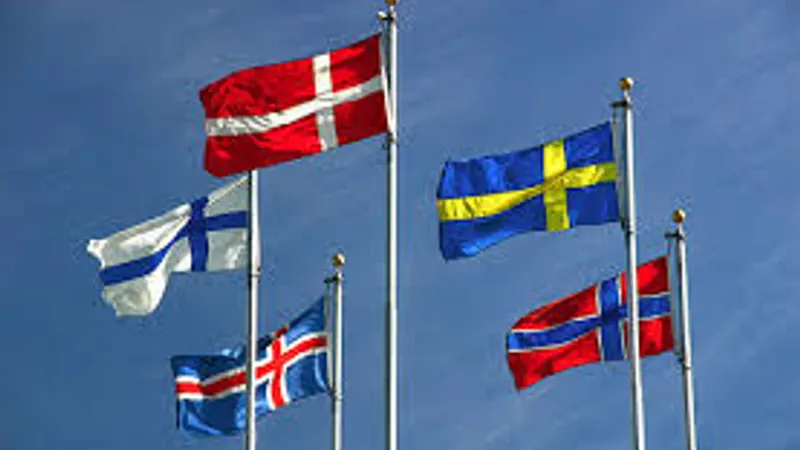
NATO's newest members Sweden & Finland. Sweden: 3.5% by 2030. Finland: 1,300km Russian border, total defence concept. Norway: Arctic security & oil-funded expansion.

Netherlands: €30B by 2029, 3.5%+1.5% structure. Czech Republic: F-35 procurement, ammunition hub. Romania: Black Sea security, Patriot systems.

Spain: sole 5% exemption (PM Sánchez cap at 2.1%). Belgium: reaching 2% a decade early. Portugal, Greece: varying trajectories. Political & fiscal constraints detailed.
Sectoral Impact Analysis
Defence industrial base transformation requirements and technology procurement priorities driving €2.7T in investment.
European ammunition production capacity must reach 2M+ rounds/year (from 1–1.7M current). The €513M ASAP programme is accelerating capacity, with Rheinmetall targeting 1.1M shells/year. The 30-day war standard demands massive stockpile investment.
Integrated air and missile defence is the highest-priority capability area. European Sky Shield Initiative under German leadership. Patriot backlog mitigation, SAMP/T expansion, and counter-drone layered systems across NATO's eastern flank.
IRIS² constellation (€10.6B) plus national programmes cumulating €50–60B. Space Shield initiative, tactical ISR constellations, quantum communications, and space-based early warning. Germany alone: €35B in space capabilities 2026–2030.
The rearmament demands 760,000 new defence workers under a 3% GDP scenario, growing the sector from 1M to 1.46M jobs by 2030. Critical shortages in CNC operators, welders, and electronics technicians. EU target: reskill 600,000 workers by 2030.
Proprietary Methodologies
Advanced proprietary frameworks developed for European defence spending and fiscal sustainability analysis.
Proprietary model projecting annual defence budgets for each NATO European ally through 2035, incorporating GDP growth forecasts, political cycle analysis, coalition government stability, and historical compliance patterns with NATO pledges. Calibrated against the Wales 2% experience to assess commitment credibility.
23 Countries · Annual Through 2035
Comprehensive framework evaluating each country's capacity to sustain defence increases against sovereign debt levels, deficit trajectories, social spending obligations, and EU fiscal rule compliance. Identifies the "fiscal ceiling" where defence spending triggers credit rating actions or debt sustainability warnings.
FR 112% · IT 135% · ES 110% · DE 62.5%
Evaluates how quickly the European defence industrial base can convert budget increases into deployed capability. Assesses production line constraints, workforce availability, supply chain bottlenecks, and historical learning curves. Identifies the "absorption ceiling" where spending outpaces industrial capacity.
760K Workers · 2M Rounds/Year · Surge Capacity
Sophisticated scoring system quantifying how Russia's reconstitution timeline, US burden-sharing shifts, and China competition impact European investment urgency. Models deterrence credibility thresholds where NATO's conventional posture achieves the capability to deny Russia a fait accompli on the eastern flank.
Russia ~6% GDP · US 68% → 50% Share Shift
Scenario Planning
Probabilistic models ranging from steady ramp-up to emergency mobilization, with annual trajectory data.
Base Case
€635B
All countries (exc. Spain) reach 3.5% by 2032–2035. ReArm Europe fully funded.
Optimistic
€750B
Most exceed 3.5%, average 4%+. Spain joins by 2030. Accelerated procurement.
Pessimistic
€530B
Only frontline states reach 3.5%. Western Europe stalls at 2.5%. Bottlenecks persist.
Crisis Case
€800B
Russia-NATO incident 2027–28. Emergency authorization. 5% by 2030. War economy.
Strategic Insights
In March 2025, German lawmakers approved a Basic Law amendment enabling the most massive rearmament since WWII — approximately €400B for defence and security plus €500B for infrastructure. Germany's 2026 budget allocates €377B for new military procurement, aiming to build "the strongest conventional army in Europe."
In 2014, the US accounted for 68% of total NATO spending. If European allies achieve 3.5% GDP, the US share falls to 50–55% — fundamentally reshaping transatlantic burden-sharing dynamics. This shift redefines EU strategic autonomy, reduces dependency on American systems, and creates a sovereign European defence industrial base.
Conscription is returning across Europe: Denmark extended service to women (July 2025), Croatia restored mandatory service after 18 years, Latvia reintroduced it in 2024, Poland launched 400,000-person voluntary training, and Germany targets 270,000 recruits by 2035. This workforce mobilization underpins the industrial transformation.
Report Contents
Setcoin Crosslink · cross-sector reads
The same technologies, supply chains and capital show up in other sectors on the Atlas. Leads to explore, not findings.
Research partners, licensors or licensees for the same technology outside this sector
Research partners, licensors or licensees for the same technology outside this sector
Research partners, licensors or licensees for the same technology outside this sector
114 grants, trials or patents in materials, fusion work on it
123 grants, trials or patents in materials, quantum work on it
271 grants, trials or patents in quantum, biotech work on it
Frequently Asked Questions
In June 2025, 31 of 32 NATO members (Spain exempted) committed to 5% of GDP on defence and security by 2035 — 3.5% core defence plus 1.5% security-related spending — requiring roughly €254B more per year for the core target alone and about €500B per year for the full 5%.
EU member states spent €343B in 2024 (+19% on 2023) and are projected to reach €381B in 2025, collectively surpassing 2% of GDP for the first time. Germany (€90B), the UK (€68B) and France (€62B) are the largest budgets.
The European Commission plan unveiled in March 2025 to mobilise up to €800B through 2030 via the €150B SAFE procurement-loan instrument, a 1.5%-of-GDP national escape clause activated by 16 member states, European Investment Bank defence eligibility and private capital mobilisation.
Four: a €635B base case (all but Spain reach 3.5% by 2032–2035), a €750B optimistic case (average 4%+), a €530B pessimistic case (only frontline states reach 3.5%) and an €800B crisis case triggered by a Russia-NATO incident in 2027–28.
Ammunition (2M+ rounds/year from 1–1.7M today, €513M ASAP programme), integrated air and missile defence (€50–70B over 2026–2035, 500+ systems), space capabilities (€50–60B including the €10.6B IRIS² constellation) and a defence workforce needing 760,000 new workers.
Qualified institutional investors and fund LPs. Access is requested through the form on this page and granted at the sole discretion of Setcoin Group.
Get exclusive access to the complete institutional analysis with country-by-country trajectories, fiscal models, scenario planning, and defence industrial transformation assessment.
Available for qualified institutional investors and fund LPs