Skip to content
Setcoin Group
ADVANCED MATERIALS • CRITICAL MINERALS

DSE Material Science Fund

Next-generation technologies — EVs, AI chips, renewable energy, defence systems — are deployment-ready, but materials supply chains are 3–5 years behind demand curves. This creates a $180–240B investment opportunity in enabling materials infrastructure that must be built immediately to prevent industrial stagnation by 2028–2029. From ultra-pure silicon and battery-grade lithium to rare earth separation and advanced deposition equipment, first movers who solve these bottlenecks will dominate the next decade.

Fund type: EquityStatus: Actively Investing

Setcoin Atlas · live pipeline

The pipeline behind the fund

Companies and programmes on the public record in the sectors DSE Material Science Fund invests in, each placed on the sector’s own gate ladder: from R&D award to contract, raise and production.

150companies past the R&D stage: resource defined or strategic status, or further
964companies and programmes on the record
$3.3bnpublic awards, contracts and raises
21,965new records in the last 90 days

By stage (sector gate ladder)

  • R&D award290
  • Resource defined39
  • Strategic status58
  • Permitted0
  • Financed0
  • Offtake signed0
  • In production53

Highlighted rows are in play. Bars on a square-root scale.

By region

  • United States16,118
  • Global / unsited2,512
  • Europe & UK1,173
  • Latin America1,123
  • Asia-Pacific842
  • Canada823

Source: Setcoin sector registers — R&D awards, contracts, clearances, raises and facility records. Figures update with each Atlas build. Named projects, sponsors and evidence are available to registered investors in the LP workspace.

Market Context

The Catastrophic Bottleneck Paradox: Technologies Ready, Materials Not

Supply chains for advanced materials are 3–5 years behind demand curves across semiconductors, batteries, magnets, and photonics. The gap between technology readiness and materials availability has never been wider. Total addressable investment to close these gaps: $79–120B across 2026–2030.

$180-240B
Materials infrastructure investment opportunity
$42-56B
High-purity silicon capacity deficit
$35-50B
Lithium processing build required
90%
China share of graphite & rare earth processing
  • Ultra-Pure Materials Bottleneck

    AI chips require 13-nines purity silicon — only 5 suppliers globally. SiC wafer shortages delaying EV production (GM/Ford 6-month delays). GaN-on-silicon at 15% of 2028 5G needs. 700,000 MT polysilicon shortfall by 2030.

  • Battery Materials Crisis

    Lithium processing at 40% of 2028 requirements. Graphite: 70% supply from China, 90% processing in China. Western capacity <5% of global graphite processing. 1.8–2.0M tonnes new lithium capacity needed by 2030.

  • Rare Earth Separation Emergency

    China controls 90% of global separation capacity. NdFeB permanent magnets: 90% of EV motors and wind turbines. 2030 demand: 600,000+ tonnes vs 250,000 today. Only 6 commercial-scale separation plants globally.

  • Silicon Photonics Inflection

    AI datacenter interconnects need 800G–1.6T per lane by 2028. SOI wafer gap: 6–8M wafers = $4–6B expansion. InP laser production at 50K wafers/year vs 300K+ needed.

Dual-Track Model

The Fund is Currently Raising & Actively Investing

Whether you're an institutional investor seeking exposure to critical materials infrastructure, or a materials venture seeking growth capital, we want to hear from you.

For Ventures & Projects

Submit Your Project

We actively seek advanced materials ventures, processing facilities, and critical mineral projects. If you have proven technology closing a materials supply chain gap, we want to hear from you.

  • Capital at critical development stages
  • Growth equity, project finance, and facility builds
  • Value-add: strategic offtake agreement facilitation
  • Access to automotive OEM and semiconductor networks
  • Technical advisory with PhD-level materials scientists
  • Government grant and IRA benefit navigation
For Investors

Invest in the Fund

Join institutional investors positioning for the materials infrastructure buildout — targeting the processing, refining, and manufacturing capacity that every technology leader needs but cannot source.

  • Diversified across semiconductors, batteries, magnets, and photonics
  • First-mover margin premium during 2027–2029 shortage window
  • Long-term supply contracts with Fortune 500 offtakers
  • IRA/CHIPS Act benefits reducing capex by 20–40%
  • Co-investment opportunities on select deals

Investment Strategy

Closing the Gap Between Technology Readiness and Materials Availability

The DSE Material Science Fund targets the critical infrastructure layer where $180–240B in technology deployment is bottlenecked by materials constraints. AI chips, EVs, renewable energy, and defence systems are ready — but ultra-pure silicon, battery-grade lithium, rare earth magnets, and photonic substrates don't exist at the scale needed. Companies that build this capacity in 2026–2027 will capture first-mover premiums during the 2027–2029 shortage window and lock in decade-long supply contracts with technology leaders.

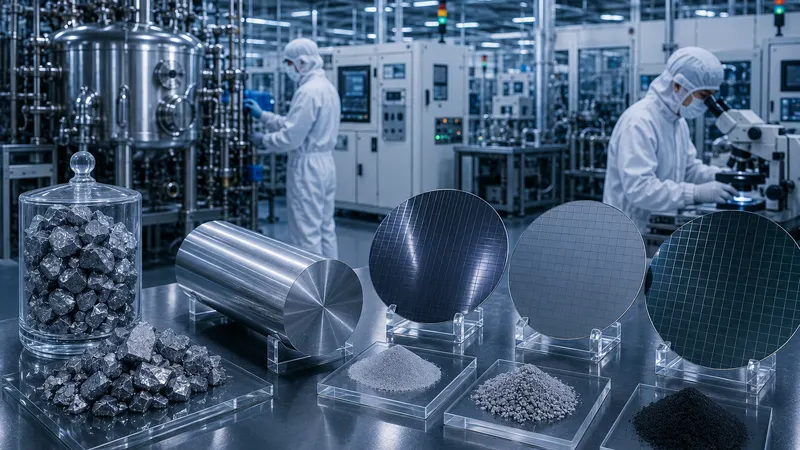
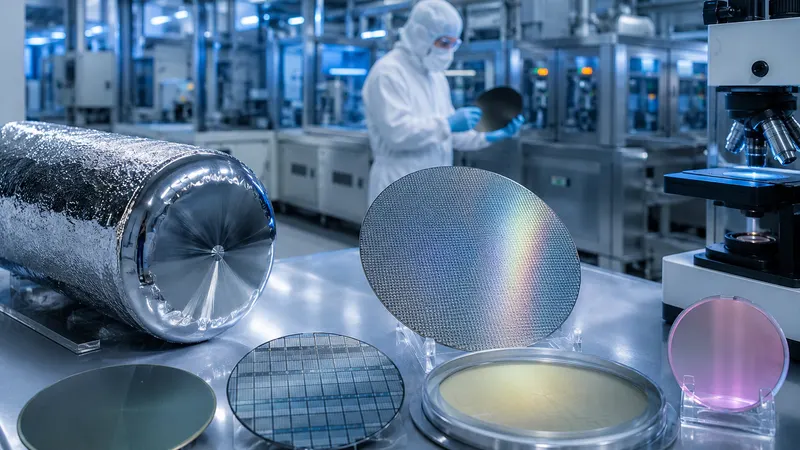
  • Polysilicon ingots and wafers in an ultra-pure materials facility

    Ultra-Pure Semiconductor Materials

    Polysilicon (13-nines purity), SiC substrates (150→200mm transition), GaN-on-silicon, SOI wafers, InP laser substrates. Closing the $42–56B capacity deficit.

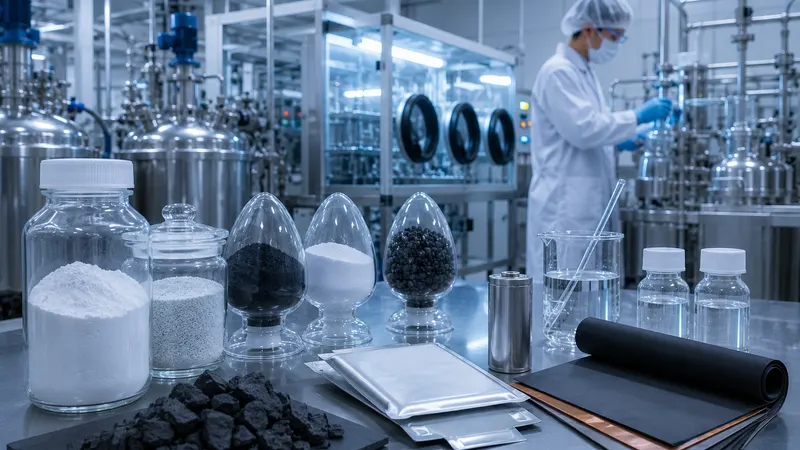
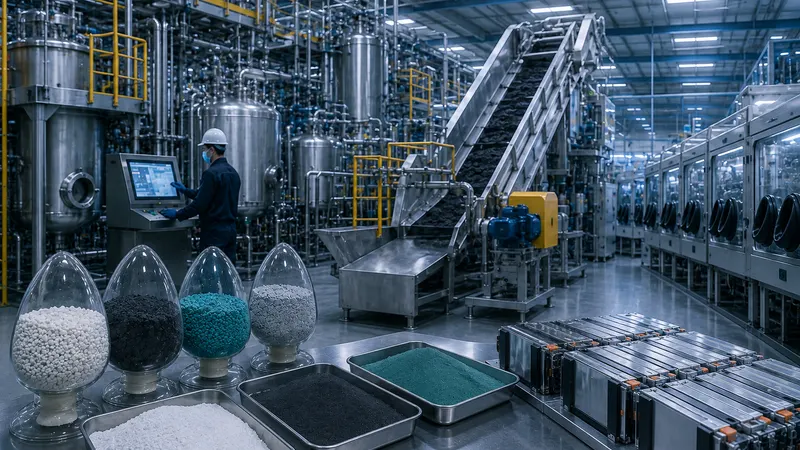
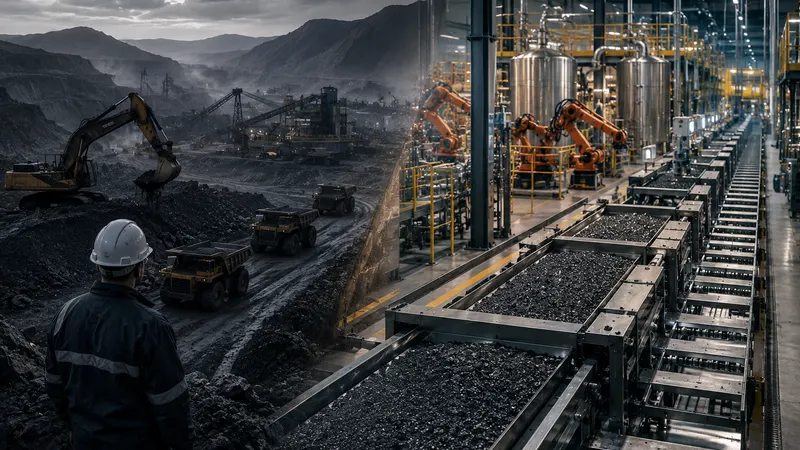
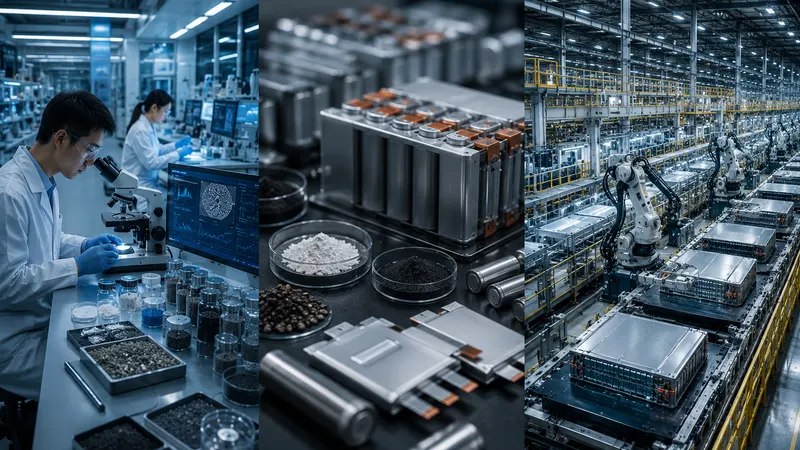
  • Battery electrode materials on a processing line

    Battery & Energy Storage Materials

    Lithium hydroxide processing, graphite spheroidization and purification, LiPF₆ electrolyte production, solid-state battery electrolytes, silicon anode materials.

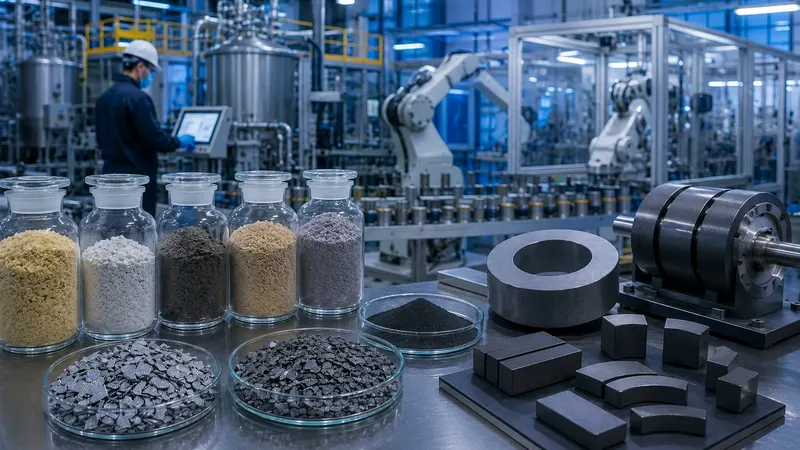
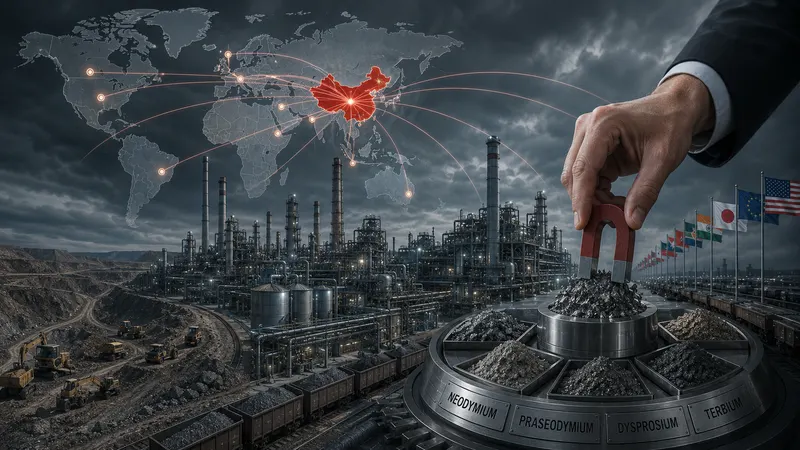
  • Rare earth separation and magnet manufacturing facility

    Rare Earth & Permanent Magnets

    Rare earth separation facilities (Western capacity), NdFeB magnet manufacturing, heavy RE recycling, alternative magnet technologies (iron nitride Fe₁₆N₂).

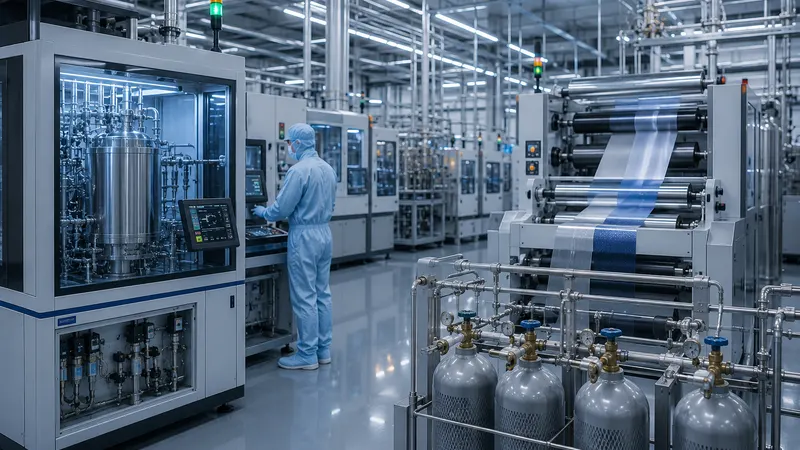
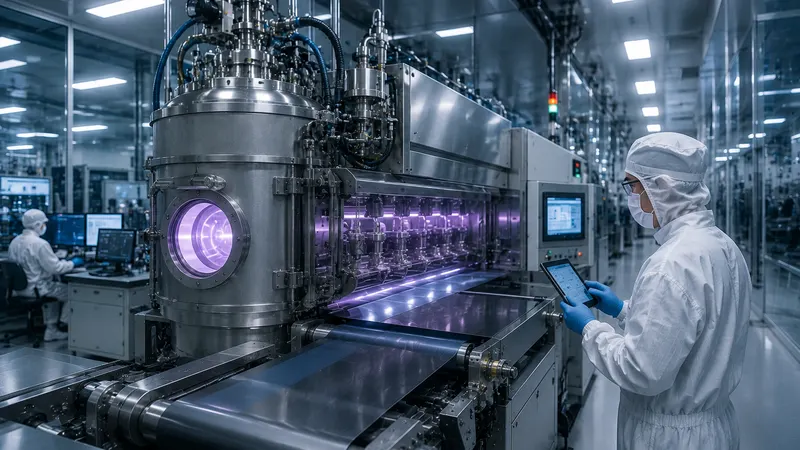
  • Deposition and coating equipment in a materials plant

    Manufacturing Equipment & Tools

    Spatial ALD for battery and solar manufacturing, ultra-high purity gas production, roll-to-roll coating systems, inert atmosphere infrastructure for gigafactories.

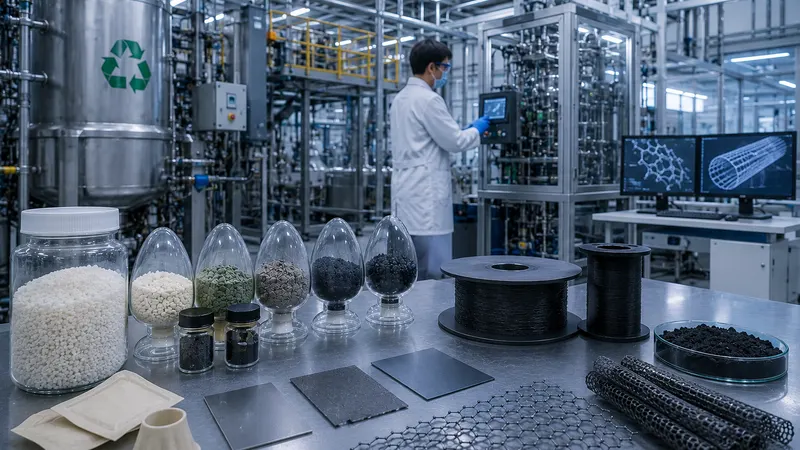
  • Graphene and carbon materials production

    Sustainable & Carbon Materials

    Biodegradable polymers, earth-abundant substitutes for indium/cobalt, CCU materials, graphene and CNT production scale-up, advanced recycling processes.

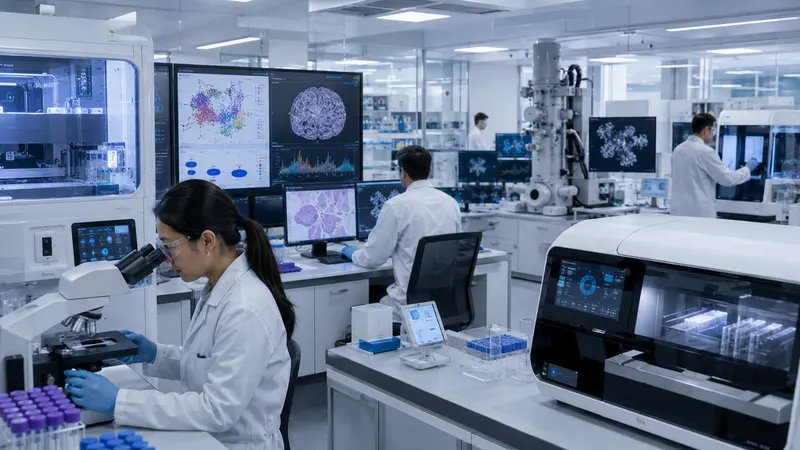
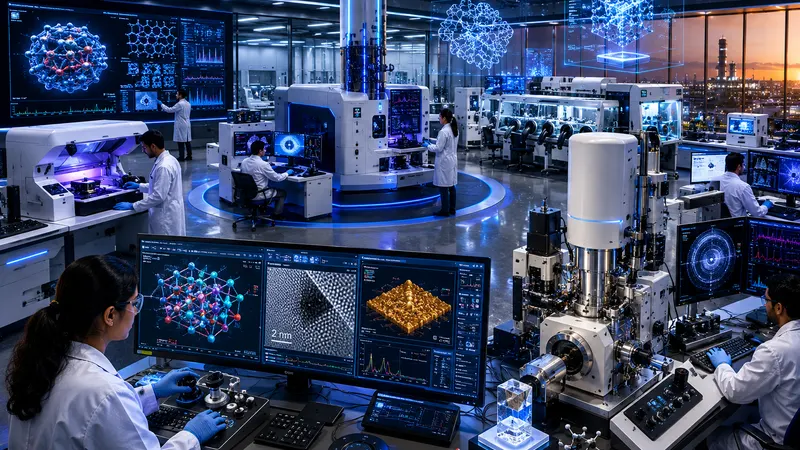
  • Materials characterisation instruments in a research lab

    Characterisation & Testing Infra

    Synchrotron beamlines (5–10x oversubscribed), cryo-EM facilities, high-throughput automated characterisation for AI-driven materials discovery.

Geographic Focus:

  • United States
  • European Union
  • United Kingdom
  • Japan
  • Australia
  • Israel
  • Middle East

Supply Chain Intelligence

Critical Bottlenecks We're Targeting

The fund thesis is built on deep analysis of the materials industry's most constrained nodes — where demand visibility is highest and first-mover advantage creates durable competitive moats.

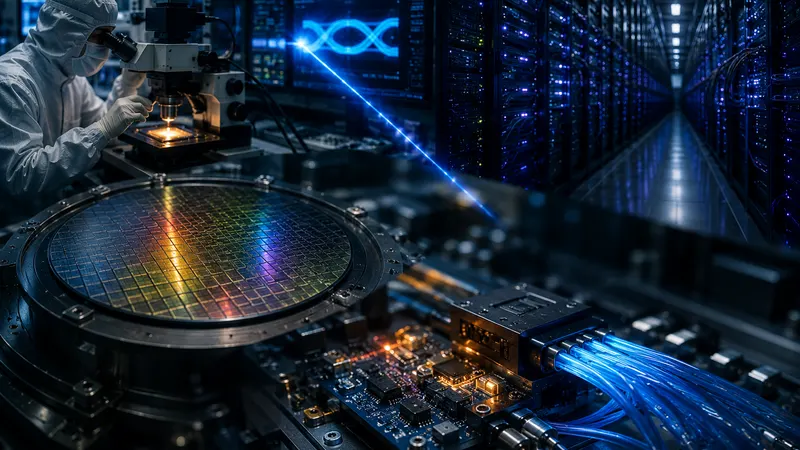
Ultra-pure silicon wafers in a compound semiconductor fab

Ultra-Pure Silicon & Compound Semiconductors

Catastrophic Gap

700,000 MT polysilicon shortfall by 2030. AI chips need 13-nines purity — only 5 suppliers globally. SiC yield rates stuck at 60–70%. GaN-on-silicon at 15% of 2028 needs. Entire semiconductor expansion stalls without this.

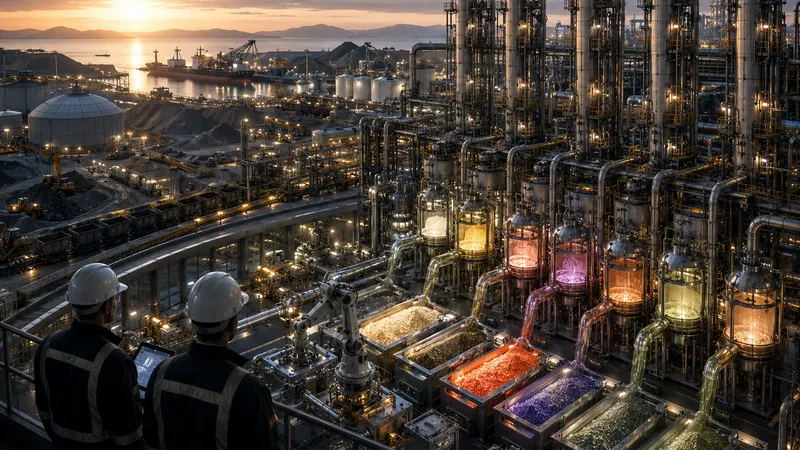
Battery-grade lithium processing plant

Battery Materials Processing

Acute Crisis

Lithium processing at 40% of 2028 requirements. Raw reserves sufficient for 50+ years — but conversion to battery-grade is the bottleneck. Graphite processing 90% concentrated in China. LiPF₆ needs 3x capacity expansion.

Rare earth separation facility

Rare Earth Separation Monopoly

Geopolitical Risk

China controls 90% of global rare earth separation. Only 6 commercial-scale plants worldwide. NdFeB magnet demand doubling by 2030 (EVs + wind). Environmental permitting takes 5–7 years in US/EU — fast-track pathways needed.

Atomic layer deposition equipment

Advanced Deposition & Coating

Equipment Gap

ALD equipment: 18–24 month lead times. Must scale from 300mm wafers to 1m+ rolls for batteries. Solid-state battery manufacturing needs 50–100 alternating layers at ±2% thickness. Current throughput 100x below requirement.

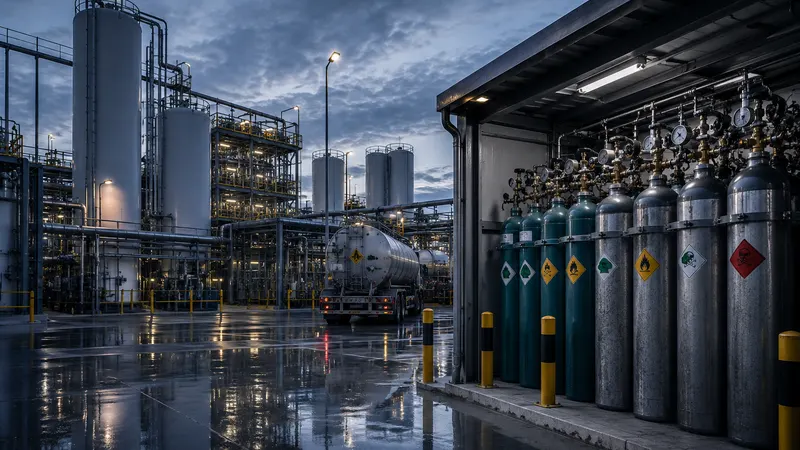
Ultra-high purity specialty gas cylinders and pipework

Specialty Gas & Chemical Supply

Hidden Bottleneck

4 suppliers control 80% of ultra-high purity semiconductor gases. LiPF₆ electrolyte: 60% from China. A single fab needs 500–1,000 tonnes of silane per year. New supply contracts have 12–18 month lead times.

Synchrotron beamline and characterisation instruments

Characterisation Infrastructure

Measurement-Limited

Materials development is measurement-limited, not invention-limited. 6–18 month queue for synchrotron beamtime. 15–30% proposal success rate. Only 200 cryo-EM systems globally. AI materials discovery blocked by testing throughput.

Infrastructure Investment Priorities

Infrastructure Priority Matrix

Total addressable investment: $79–120B (2026–2030). Setcoin target allocation: $8–15B across Tier 1 and Tier 2.

TIER 1 — CRITICAL

Close Catastrophic Supply Gaps

12-24 month deployment windows

InfrastructureTimelineMarket Impact

Mega-Polysilicon Facilities (3–4 Plants)

18 mo

50,000 MT each. 13-nines purity for AI chips. Co-locate with solar/wind for low-cost power. Partners: Wacker, Hemlock, OCI, REC Silicon. FBR technology for 90% energy reduction.

$42-56B Gap

Lithium Processing Capacity

18-24 mo

1.8–2.0M tonnes new LCE capacity needed. Spodumene conversion plants (Australia, US). DLE technology scale-up from pilot to 10x capacity. Battery-grade hydroxide at 99.9%.

$35–50B total need — acute shortage

Graphite Processing (Western Capacity)

18-24 mo

5–6 natural graphite plants (100K ton/year each) + 3–4 synthetic facilities (50K ton/year). Currently 90% processed in China. 3.8–4.2M tonnes needed by 2030 for battery anodes alone.

China +1

SiC Wafer Capacity Expansion

24-36 mo

1M wafer/year capacity (200mm equivalent). Current yield 60–70% vs 95%+ silicon. Wolfspeed and Coherent leading 200mm transition 2027–2028. Directly unblocking EV power electronics.

EV Critical

Rare Earth Separation Plants (4–5)

24-36 mo

Modular container-based units. 10,000 ton/year each. Plus RE recycling capacity (20–30K ton/year by 2028). Continuous ion exchange vs batch solvent extraction. Break China's 90% monopoly.

Strategic
TIER 2 — EMERGING DEMAND

Manufacturing Equipment & Specialty Chemicals

18-36 month deployment windows

InfrastructureTimelineMarket Impact

Spatial ALD & Deposition Equipment

18-24 mo

Scale ALD from 300mm wafers to 1m+ electrode rolls. 10–100x throughput increase for solid-state batteries and perovskite solar. Equipment + manufacturing lines + validation.

Ultra-High Purity Gas & Chemical Plants

24-36 mo

Semiconductor gases (SiH₄, NH₃, NF₃ at 99.9999%+). LiPF₆ electrolyte (250–300K ton/year needed, from 80K). ALD precursors. Currently 4 suppliers control 80%.

Inert Atmosphere Manufacturing Infra

24-36 mo

Solid-state batteries need <0.1ppm O₂/H₂O. Perovskite solar at <1ppm H₂O. Dry room facilities (10–12 plants, 100K m² each). Scaling from lab gloveboxes to gigafactory volumes.

Enabling
TIER 3 — STRATEGIC SCALE-UP

Characterisation, Photonics & Next-Gen Materials

24-60 month deployment windows

InfrastructureTimelineMarket Impact

Silicon Photonics Materials (SOI + InP)

36-48 mo

SOI wafer capacity: 6–8M wafer gap. InP lasers: need 300K+ wafers/year from 50–80K. Enabling AI datacenter 800G–1.6T interconnects. 18–24 months to new capacity.

AI Enabling

Characterisation Centres (5–7 Hubs)

30-36 mo

Synchrotron beamlines 5–10x oversubscribed. 200 cryo-EM systems globally, need 1,000+. High-throughput automated testing for AI materials discovery (1,000+ samples/day).

PPP Model

Breakthrough Materials Commercialisation

36-60 mo

Silicon anodes, solid-state battery variants, metamaterials for 6G, iron nitride magnets (rare-earth-free). Lab-to-pilot-to-production pathway with strategic corporate co-investment.

  • TIER 1 — CRITICAL

    5 priority targets

    12-24 month windows

  • TIER 2 — HIGH PRIORITY

    3 priority targets

    18-36 month windows

  • TIER 3 — MEDIUM PRIORITY

    3 priority targets

    24-60 month windows

What We're Looking For

Investment Criteria for Ventures

  • Proven Technology at FEED/FID Stage

    Validated material properties with clear scale-up pathway. Commercial-ready or pilot-proven processes with credible engineering fundamentals.

  • Strong IP & Competitive Moat

    Robust patent portfolios, trade secrets in process engineering, or regulatory barriers creating durable competitive advantages.

  • Strategic Offtake or Partnerships

    Pre-committed customers (automotive OEMs, semiconductor fabs, battery gigafactories). Long-term supply agreements providing revenue visibility.

  • Clear Commercialisation Pathway

    Validated market demand. Credible path from pilot to full production. Cost curves that beat incumbent alternatives at scale.

  • Government Support & Subsidies

    IRA Section 45X benefits, CHIPS Act, EU Critical Raw Materials Act, or equivalent programmes reducing capex by 20–40%.

  • Supply Chain Resilience (China +1)

    Clear strategy for regulatory approval, early regulatory engagement, and designs that exceed compliance requirements — flexible for evolving standards.

Geographic Focus:

  • United States
  • European Union
  • United Kingdom
  • Japan
  • Australia
  • Israel
  • Middle East

Value Creation Strategy

Beyond Capital: Strategic Value-Add

  • Technical Expertise

    PhD materials scientists and manufacturing engineers on advisory board.

  • Offtake Facilitation

    Long-term supply contracts with Fortune 500 tech and automotive.

  • Government Navigation

    IRA, CHIPS Act, EU CRM Act grant and subsidy applications.

  • Market Intelligence

    Setcoin Intelligence on materials markets and technology trends.

  • Supply Chain Integration

    Cross-portfolio synergies across DSE funds for equipment sourcing.

Risk Management

Comprehensive Risk Mitigation

The fund employs rigorous risk management across regulatory, technical, and geopolitical dimensions

  • Technology Obsolescence

    Modular designs; platform approaches; technology upgrade paths built in.

  • Commodity Price Volatility

    Long-term offtake contracts; hedging; cost-plus pricing structures.

  • Geopolitical & Trade Risk

    Early regulatory engagement; overcompliance; flexible facility designs.

  • Environmental Permitting

    Modular designs; recycling-first approach; fast-track pathways.

  • Demand Timing Mismatch

    Staged investment; milestone-based funding; anchor customer commitments.

  • Talent Scarcity

    Fewer than 500 rare earth engineers globally; workforce development partnerships.

Related Intelligence

Frequently Asked Questions

Fund Questions, Answered

What is the DSE Material Science Fund?

A Luxembourg-domiciled equity fund managed by Setcoin Group that finances the enabling materials infrastructure — ultra-pure silicon, battery-grade lithium and graphite processing, rare earth separation, photonic substrates and deposition equipment — needed to close a $180–240B gap between technology readiness and materials availability.

Which materials bottlenecks are Tier 1 priorities?

Tier 1 (12-24 month windows) covers 3–4 mega-polysilicon facilities (€8–12B), lithium processing capacity (€10-14B), Western graphite processing (€3-5B), SiC wafer capacity expansion (€3-5B) and 4–5 rare earth separation plants (€3-4B).

What kind of projects and ventures does the fund back?

Materials ventures, processing facilities and critical mineral projects with proven technology at FEED/FID stage, strong IP, strategic offtake from automotive OEMs, semiconductor fabs or battery gigafactories, and government support such as IRA Section 45X, CHIPS Act or the EU Critical Raw Materials Act.

Why is the 2027–2029 window important?

Supply chains for advanced materials are 3–5 years behind demand curves. Capacity built in 2026–2027 captures first-mover margin premiums during the 2027–2029 shortage window and can lock in decade-long supply contracts with technology leaders.

Who can invest?

Qualified institutional investors only.

Where does the fund invest?

United States, European Union, United Kingdom, Japan, Australia, Israel and the Middle East.

How to Start

Ready to Invest in the Materials That Enable Everything?

Whether you're looking to invest in the fund or submit a materials science project for funding consideration, we're ready to start the conversation.

Investor Access Request

Invest in DSE Material Science Fund

Request access to participate in the fund targeting critical material infrastructure bottlenecks

Luxembourg
Domicile
Actively Investing
Status

Contact Information

Organization Details

Investment Interest

Anticipated commitment

Additional Information

Compliance & Consent

Important Disclosure

This form is for informational purposes and does not constitute an offer to sell or solicitation of an offer to buy any securities. Investment in the DSE Material Science Fund is available only to qualified investors and involves significant risks including potential loss of principal. Past performance is not indicative of future results. All investments are subject to the terms and conditions set forth in the fund's Private Placement Memorandum (PPM).

Venture & Project Submission

Submit Your Material Science Opportunity

We're actively seeking breakthrough ventures and infrastructure projects addressing critical minerals bottlenecks.

What are you submitting?

Contact Information

Project Overview

Project Stage & Timeline

Current Project Stage

Project Sector

Project Financials

Total Project Cost

Data Room Documentation

Required Documentation for FEED / FID Projects

The following documentation demonstrates project shovel-readiness and enables thorough evaluation with reduced risk and uncertainty. Please confirm availability and provide data room access below.

Documents available in your data room
Risk Assessments: The level of detail and comprehensiveness of your project manual is crucial—it demonstrates shovel-readiness and enables prospective investors and lenders to thoroughly evaluate the opportunity with reduced risk and uncertainty.

Secure link to your existing data room (Intralinks, Datasite, Google Drive, etc.)

PDF or PowerPoint, max 25MB

Submission Consent

Confidentiality Assurance: All submissions are treated as strictly confidential. Your information will only be shared with our investment team for evaluation purposes. We do not share deal flow with portfolio companies or other investors without explicit consent.