Skip to content
Setcoin Group
CLEAN ENERGY REVOLUTION • LIMITLESS POWER

DSE Fusion Energy Fund

Accelerating the commercialisation of fusion power, Small Modular Reactors, and advanced nuclear technologies. The fund targets the critical infrastructure bottlenecks — from HTS superconductor manufacturing and HALEU fuel production to tritium breeding facilities and SMR factory lines — where $15+ billion in cumulative investment is stuck without enabling supply chain capacity. First movers who solve these bottlenecks will dominate a multi-trillion-dollar clean energy market.

Fund type: EquityStatus: Actively Investing

Setcoin Atlas · live pipeline

The pipeline behind the fund

Companies and programmes on the public record in the sectors DSE Fusion Energy Fund invests in, each placed on the sector’s own gate ladder: from R&D award to contract, raise and production.

3companies past the R&D stage: capital raised or regulatory licence, or further
446companies and programmes on the record
$8.4bnpublic awards, contracts and raises
37new records in the last 90 days

By stage (sector gate ladder)

  • R&D award194
  • Capital raised3
  • Regulatory licence0
  • Site consented0
  • Under construction0

Highlighted rows are in play. Bars on a square-root scale.

By region

  • United States1,283
  • Europe & UK239

Source: Setcoin sector registers — R&D awards, contracts, clearances, raises and facility records. Figures update with each Atlas build. Named projects, sponsors and evidence are available to registered investors in the LP workspace.

Market Context

Build or Bust: The 2026–2030 Window for Fusion & SMRs

Fusion has crossed the $15 billion cumulative investment milestone. CFS's SPARC is 60% complete targeting first plasma in 2027. Google, Microsoft, and Eni have signed binding power purchase agreements for fusion electricity. The technologies are feasible — the supply chain is not. Total immediate investment needed across both sectors: $6–9 billion.

$15B+
Cumulative Fusion Investment (35+ Companies)
$350B+
Potential Fusion Market by 2050
$1B+
Eni-CFS Power Purchase Agreement
$6-9B
Immediate Infrastructure Investment Needed
  • Fusion Enters Industrial Phase

    CFS SPARC construction 60% complete with $3B raised. Google PPA for 200 MW from ARC. Eni $1B+ PPA. NVIDIA/Siemens digital twin partnership. First plasma targeted 2027 — this is no longer "always 10 years away."

  • AI Data Centre Power Explosion

    AI training facilities need 100+ MW continuous power. Microsoft, Google, Amazon actively exploring SMR partnerships. 20–30 SMR units could be deployed for data centre power by 2030 — a captive, high-value offtake market.

  • Industrial Heat Decarbonisation

    Steel, cement, and chemicals need 400–800°C heat that renewables cannot provide. High-temperature SMRs (Xe-100, IMSR) are the perfect fit. $50–100B addressable market by 2030.

  • Energy Security & Defence Applications

    DoD Project Pele: mobile micro-reactors for military bases. Arctic/island installations replacing diesel. 50–100 micro-reactor opportunity (2028–2032). Geopolitical urgency accelerating domestic nuclear manufacturing.

Two Ways to Engage

The Fund is Currently Raising & Actively Investing

Whether you're an institutional investor seeking exposure to the clean energy revolution, or a fusion/SMR venture seeking growth capital, we want to hear from you.

For Ventures & Projects

Submit Your Project

We actively seek fusion technology ventures, SMR developers, and enabling infrastructure projects addressing critical supply chain bottlenecks. If you have proven technology solving fusion or nuclear energy gaps, we want to hear from you.

  • Late-stage R&D, FOAK financing, and infrastructure builds
  • Value-add: DOE/government programme navigation
  • Access to CFS, Helion, TerraPower, NuScale networks
  • Technical due diligence with expert advisory panels
  • Supply chain integration across portfolio
For Investors

Invest in the Fund

Join leading institutional investors positioning for the multi-trillion-dollar fusion and advanced nuclear market — targeting the enabling infrastructure that every reactor manufacturer needs.

  • Diversified across fusion, SMR, materials, and manufacturing
  • Near-term SMR revenue bridges long-term fusion returns
  • Government-backed programmes reducing execution risk
  • Binding PPAs from Google, Microsoft, Eni validating demand
  • Co-investment opportunities on select deals

Investment Strategy

Building the Supply Chain for Limitless Clean Energy

DSE Fusion Energy Fund targets the critical infrastructure layer where $15+ billion in fusion investment and the entire SMR industry are bottlenecked. The technologies are proven — the physics and engineering are mostly understood — but HTS magnet manufacturing, HALEU fuel production, tritium breeding facilities, and SMR fabrication plants don't exist at scale. Companies and countries that build this infrastructure in 2026–2027 will capture the 2030s deployment wave.

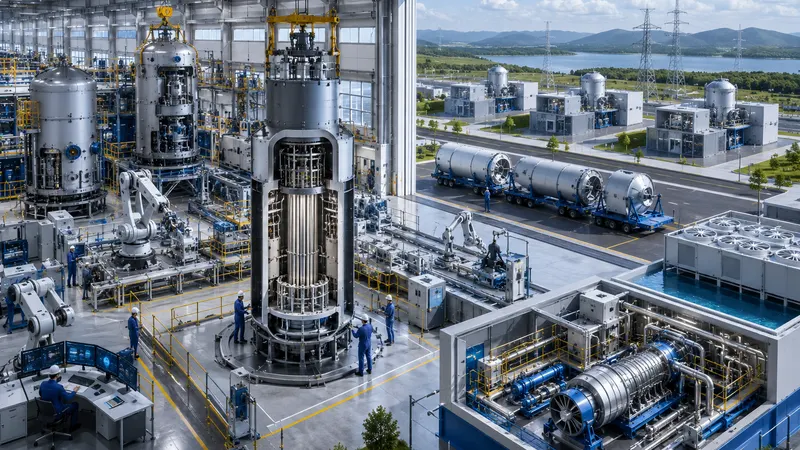
  • Tokamak fusion reactor interior

    Magnetic Confinement Fusion

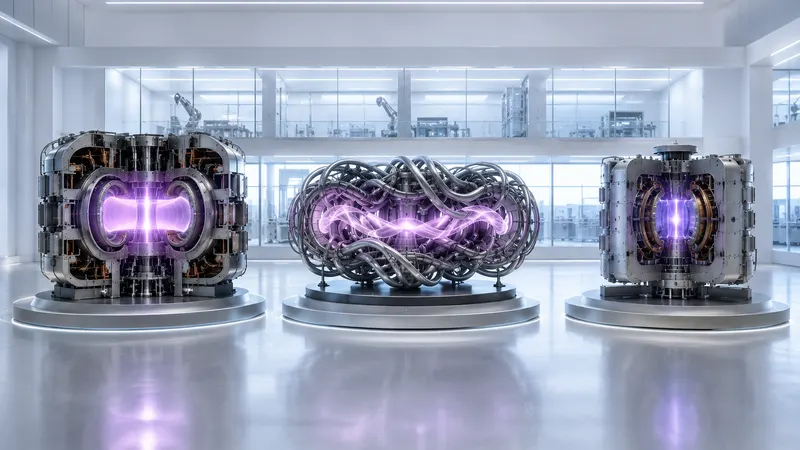
    Tokamaks (CFS SPARC/ARC), stellarators (Type One Energy), and advanced compact designs. HTS magnet-based systems representing 50%+ of funded approaches.

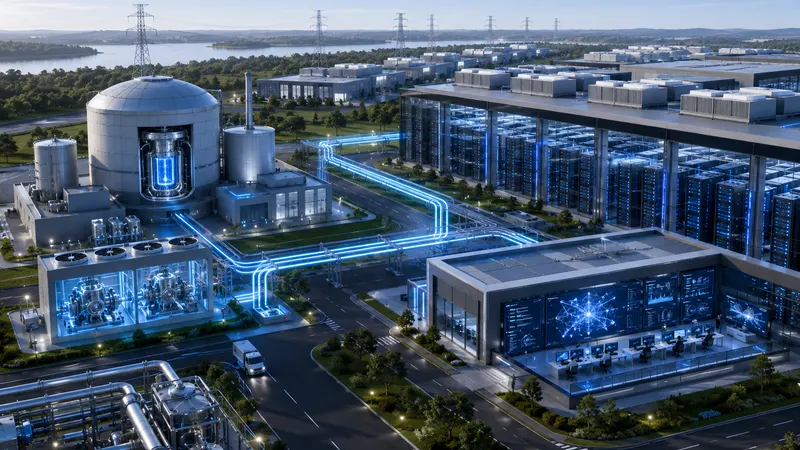
  • Small modular reactor site

    Small Modular Reactors (SMRs)

    Next-generation compact reactors: NuScale, GE Hitachi BWRX-300, Rolls-Royce SMR, TerraPower Natrium, X-energy Xe-100, and Kairos Power. Factory production economics.

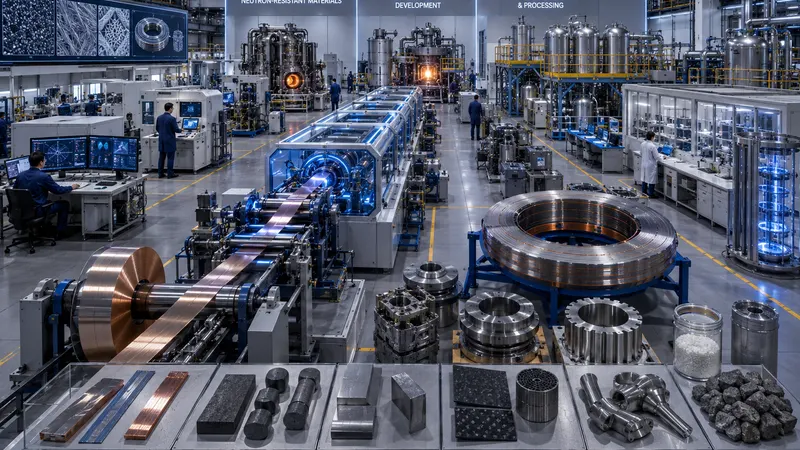
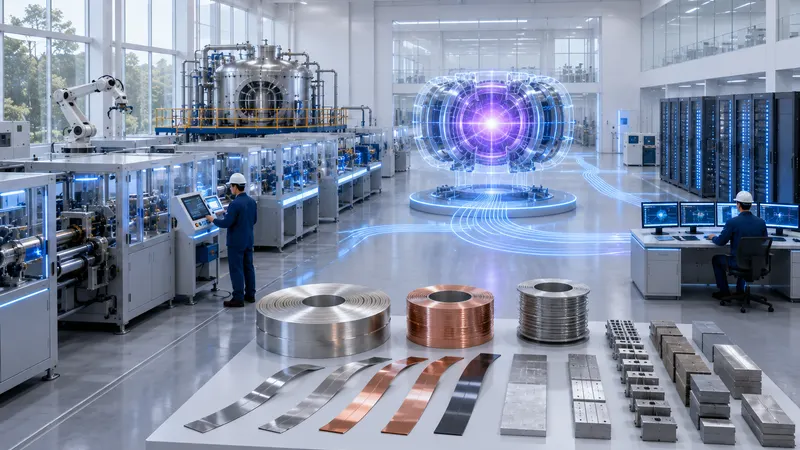
  • High-temperature superconductor tape production

    Materials & Superconductors

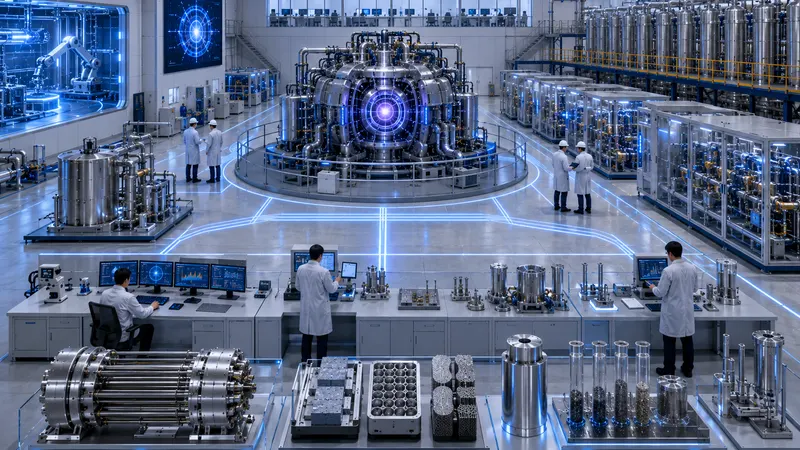
    HTS tape manufacturing (REBCO), neutron-resistant materials (tungsten, RAFM, SiC/SiC), advanced alloys, and Lithium-6 enrichment capacity for tritium breeding.

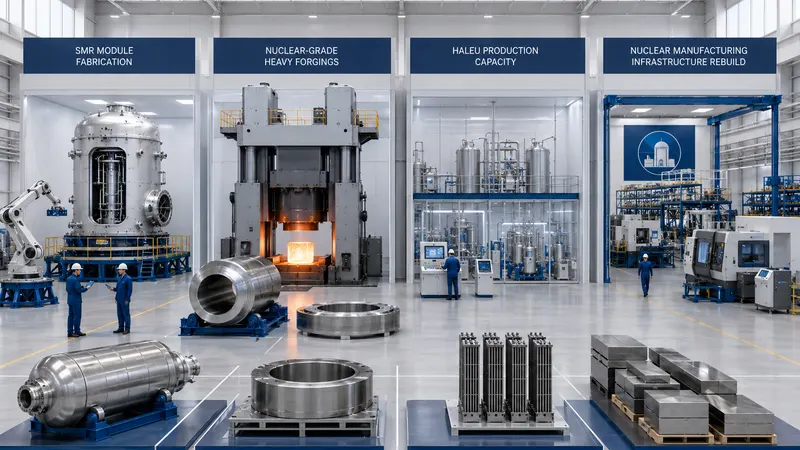
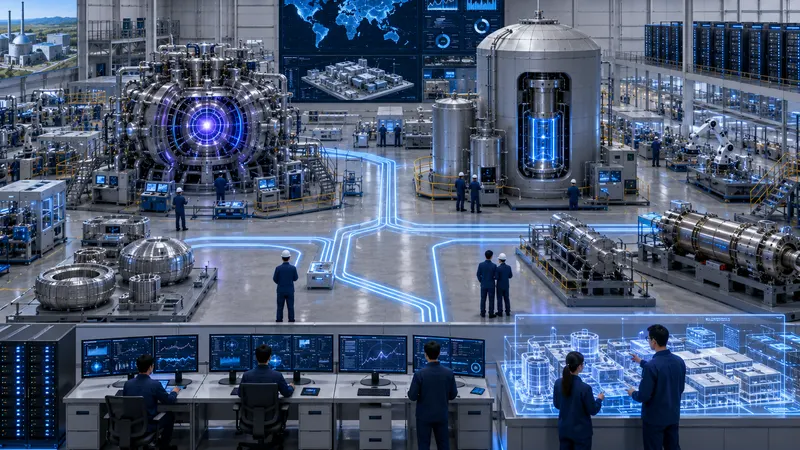
  • Nuclear-grade heavy forging facility

    Manufacturing & Supply Chain

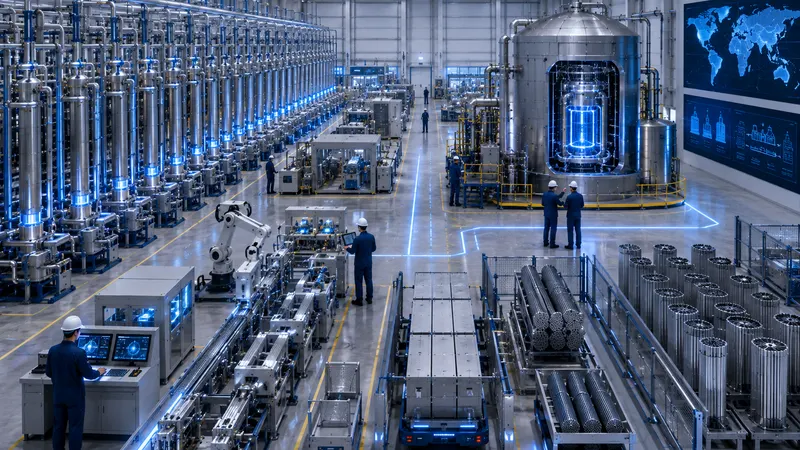
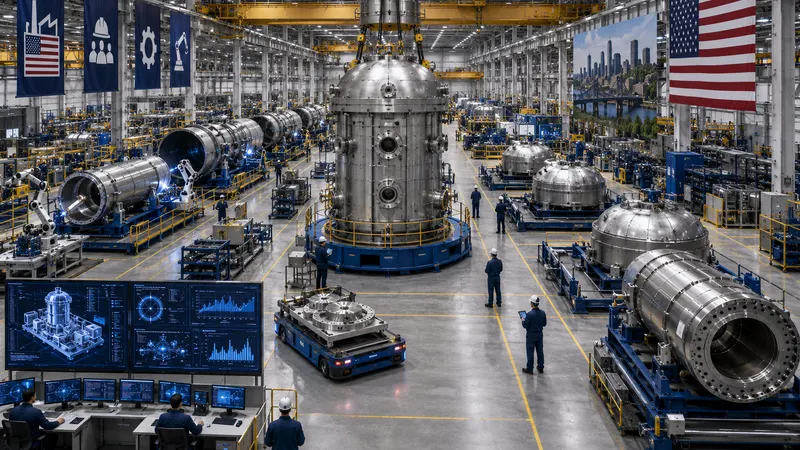
    SMR module fabrication facilities, nuclear-grade heavy forgings, HALEU production capacity, and the rebuild of nuclear manufacturing infrastructure.

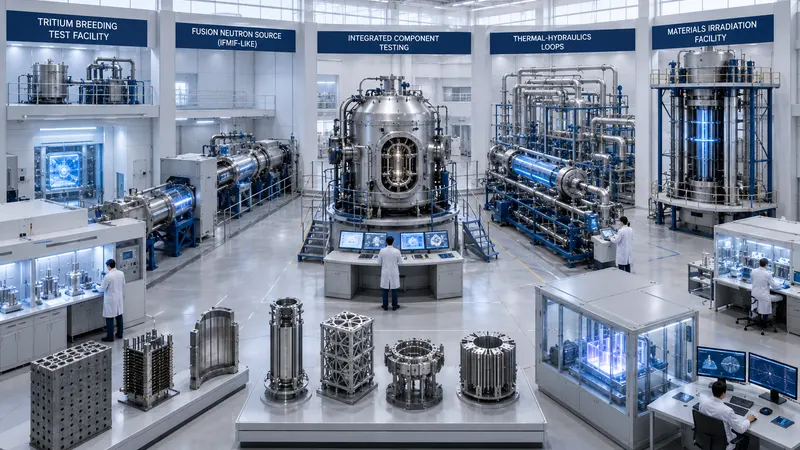
  • Fusion materials test facility

    Test Infrastructure & R&D

    Tritium breeding test facilities, fusion neutron sources (IFMIF-like), integrated component testing, thermal-hydraulics loops, and materials irradiation facilities.

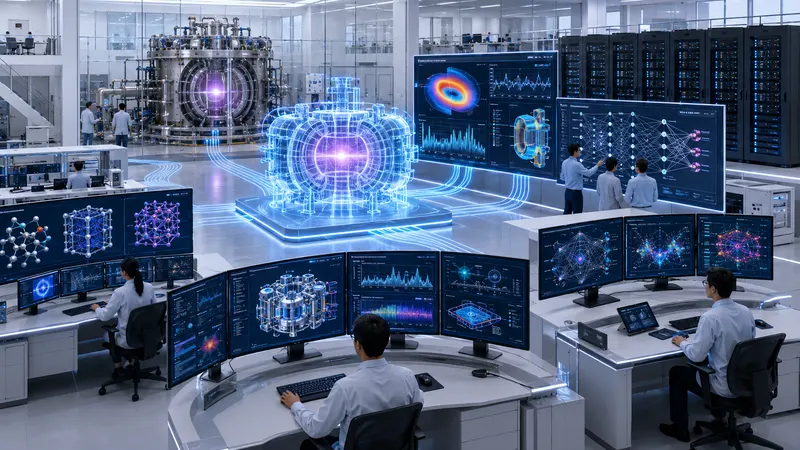
  • Digital twin of a fusion plasma on screen

    AI & Computational Modelling

    AI-driven plasma control, digital twins (CFS-NVIDIA-Siemens model), machine learning optimisation, computational materials design, and predictive analytics.

Geographic Focus:

  • United States
  • European Union
  • United Kingdom
  • Japan
  • Australia
  • Switzerland
  • Singapore
  • Israel

Infrastructure Investment Priorities

Infrastructure Priority Matrix

Total Tier 1 investment needed: $4.15–5.9B. Delays in Tier 1 cascade across the entire industry — these builds cannot wait without risking a decade of delay to commercialisation.

TIER 1 — CRITICAL

Immediate Infrastructure Builds

InfrastructureTimelineMarket Impact

HTS Magnet Manufacturing Scale-Up

24-36 mo

Global REBCO tape production is ~1,000 km/year. A single commercial tokamak needs 500–1,000 km. Industry needs 50,000+ km/year by 2030. Must achieve 10x production capacity by 2028. Unblocks 50%+ of all fusion approaches.

HALEU Fuel Production Facilities

24-30 mo

Most advanced SMRs require HALEU (5–20% enrichment). Global commercial supply: effectively zero outside Russia. Centrus demonstrating 16 kg/year — needs 10+ tonnes/year. Entire advanced reactor industry stalls without this.

Tritium Breeding Test Facility

18-24 mo

Global tritium supply is ~25 kg — a single 500 MW fusion plant consumes 55 kg/year. No commercial breeding blankets exist. Cannot wait for ITER (2035+). Must break the circular dependency NOW.

SMR Module Fabrication Plants (3–4)

18-24 mo

Nuclear manufacturing capacity atrophied since 1980s. Module fabrication facilities don't exist at scale. 3–4 North American + 2–3 European facilities needed producing 4–6 modules/year each.

Fusion Neutron Source (IFMIF-like)

48-60 mo

14 MeV fusion neutrons cause 50x more damage than fission. No materials tested to commercial fusion fluence levels. Without this, component lifetimes are unknown — making project financing impossible.

TIER 2 — HIGH PRIORITY

Prevent 2029–2030 Bottlenecks

InfrastructureTimelineMarket Impact

Nuclear Supply Chain Recapitalisation

60 mo

Heavy forging capacity, nuclear-grade castings, ASME Section III certified manufacturers declined 70% since 1990s. Rebuild inspector/certifier workforce and re-qualify supply chains.

Advanced Manufacturing R&D Centre

72 mo

Additive manufacturing for fusion divertors and SMR heat exchangers, automated welding/assembly, digital twin AI quality control. Shared facility serving both sectors.

Workforce Development Programme

72 mo

Average nuclear engineer age: 48. Nuclear programmes declined 50% since 1990s. Need 5,000+ skilled workers by 2030 including nuclear-qualified welders, advanced reactor operators, and NRC specialists.

TIER 3 — STRATEGIC R&D

Enable Commercial Deployment

InfrastructureTimelineMarket Impact

FOAK Financing Risk Pool

84 mo

First-of-a-kind SMRs cost 2–3x eventual series production. No revenue history for project finance. Federal cost overrun insurance + 10-year PPAs at fixed prices enable the 10–20 unit learning curve.

Grid Integration & Energy Storage Demos

84 mo

Thermal energy storage for load-following, hydrogen co-generation from off-peak capacity, microgrid controllers for distributed SMR/fusion integration.

Materials Science Megafacility

84 mo

Integrated materials research: high-temperature testing, radiation effects, AI-accelerated alloy development. De-risks both fusion and SMR material challenges simultaneously.

  • TIER 1 — CRITICAL

    5 priority targets

  • TIER 2 — HIGH PRIORITY

    3 priority targets

  • TIER 3 — MEDIUM PRIORITY

    3 priority targets

Supply Chain Intelligence

Critical Bottlenecks We're Targeting

The fund thesis is built on deep analysis of the fusion and SMR industry's most constrained infrastructure nodes — where billions in investment are stuck without enabling capacity.

  • Immediate Bottleneck

    HTS Superconductor Manufacturing

    Global REBCO tape production at ~1,000 km/year is 2–3 orders of magnitude below what's needed. Single commercial tokamak needs 500–1,000 km. Delays here cascade across 50%+ of fusion approaches. 10x scale-up required by 2028.

  • Structural Challenge

    Tritium Breeding & Fuel Cycle

    Global tritium supply is ~25 kg, mostly from CANDU reactors. A single 500 MW fusion plant consumes 55 kg/year. No commercial breeding blankets exist. ITER won't test until 2035+ — independent test facilities needed NOW.

  • Manufacturing Gap

    Nuclear Supply Chain Atrophy

    Nuclear manufacturing capacity atrophied since the 1980s. ASME Section III certified manufacturers declined 70%. Module fabrication facilities for SMRs don't exist at scale. The "factory production" promise faces missing factories.

  • Acute Shortage

    HALEU Fuel Supply

    Every advanced SMR requires High-Assay Low-Enriched Uranium. Global commercial supply outside Russia: effectively zero. Centrus capacity at 16 kg/year vs 10+ tonnes/year needed. The entire advanced reactor industry stalls without this.

  • Engineering Gap

    First Wall & Divertor Materials

    14 MeV fusion neutrons cause 50x more damage than fission. No materials tested to commercial fluence levels. Without a high-flux neutron source for qualification, component lifetimes are unknown — making financing impossible.

  • Policy Vacuum

    Regulatory Framework — Fusion vs Fission

    US NRC developing fusion-specific regulations. UK lighter-touch framework (2022). EU treats fusion like fission (overly burdensome). Harmonised international standards could reduce licensing timelines 2–3 years, saving $200–500M per project.

What We're Looking For

Investment Criteria for Projects

  • Scientific & Technical Viability

    Validated research, proven technology milestones, and credible roadmaps to commercialisation. Expert advisory panel assessment before investment.

  • Scalability & Cost Efficiency

    Low-cost production models, factory economics potential, and clear pathway to NOAK (Nth-of-a-kind) cost reduction through learning curves.

  • Government Backing & Subsidies

    Projects with DOE loan guarantees, FOAK cost-sharing, or equivalent national programmes. Government support essential for first-mover risk mitigation.

  • Secured Offtake & Demand Pull

    Binding PPAs from hyperscalers, utilities, or industrial heat customers. DoD/government fleet procurement commitments for micro-reactors.

  • Experienced Leadership Teams

    Renowned physicists, nuclear engineers, and energy industry veterans. Track records in fusion/fission programme execution at national lab or commercial scale.

  • Credible Tritium/Fuel Strategy

    For fusion: projects with integrated breeding blanket R&D, not deferred. For SMR: designs with secured HALEU supply or ability to operate on standard LEU.

Geographic Focus:

  • United States
  • European Union
  • United Kingdom
  • Japan
  • Australia
  • Switzerland
  • Singapore
  • Israel

Value Creation Strategy

Beyond Capital: Strategic Value-Add

  • Technical Acceleration

    Expert advisory panels, R&D partnerships, and supply chain integration

  • Industry Partnerships

    Energy firms, research institutions, and regulatory agency connections

  • Government Navigation

    DOE, NRC, DESNZ programme applications and regulatory strategy

  • Market Intelligence

    Setcoin Intelligence research on energy markets and fusion technology

  • Commercialisation

    Pilot projects, supply chain development, and market entry strategy

Risk Management

Comprehensive Risk Mitigation

  • "ITER-ification" Risk

    Build test infrastructure OUTSIDE mega-projects; milestone-based funding

  • Tritium Dead-End

    Break circular dependency with dedicated test facility; don't defer to ITER

  • Regulatory Capture

    Establish fusion-specific standards; prevent lumping with fission framework

  • FOAK Cost Overruns

    Federal risk-sharing; cost cap insurance; shared learning from first units

  • HALEU Dependency

    Emergency domestic production; avoid Russian fuel monopoly by default

  • Manufacturing Mirage

    Build fabrication facilities BEFORE mass orders; validate factory economics

Related Intelligence

Frequently Asked Questions

Fund Questions, Answered

What is the DSE Fusion Energy Fund?

A Luxembourg-domiciled equity fund managed by Setcoin Group that builds the supply chain for fusion power, Small Modular Reactors and advanced nuclear — HTS superconductor manufacturing, HALEU fuel production, tritium breeding facilities and SMR factory lines.

Why does the fund call 2026–2030 a build-or-bust window?

Fusion has crossed $15B in cumulative investment, CFS's SPARC is 60% complete targeting first plasma in 2027, and Google, Microsoft and Eni have signed binding power purchase agreements — but HTS magnets, HALEU fuel, tritium breeding and SMR fabrication plants don't exist at scale. $6–9B of immediate infrastructure investment is needed.

Which bottlenecks are Tier 1 priorities?

HTS magnet manufacturing scale-up (€750M-1B), HALEU fuel production facilities (€1B-1.5B), a tritium breeding test facility (€400M), 3–4 SMR module fabrication plants (€1.5B-2B) and an IFMIF-like fusion neutron source (€500M) — €4-5.4B in total.

What kind of ventures and projects can apply?

Fusion technology ventures, SMR developers and enabling infrastructure projects with validated technology milestones, factory economics potential, government backing (DOE loan guarantees, FOAK cost-sharing), secured offtake from hyperscalers, utilities or industrial heat customers, and a credible tritium or fuel strategy.

Who can invest?

Qualified institutional investors only.

Where does the fund invest?

United States, European Union, United Kingdom, Japan, Australia, Switzerland, Singapore and Israel.

How to Start

Ready to Power the Future with Fusion?

Whether you're looking to invest in the fund or submit a fusion/SMR project for funding consideration, we're ready to start the conversation.

Investor Access Request

Request Access to DSE Fusion Energy Fund

Request access to participate in the fund targeting critical fusion infrastructure bottlenecks

Luxembourg
Domicile
Actively Investing
Status

Contact Information

Organization Details

Investment Interest

Anticipated commitment

Additional Information

Compliance & Consent

Important Disclosure

This form is for informational purposes and does not constitute an offer to sell or solicitation of an offer to buy any securities. Investment in the DSE Fusion Energy Fund is available only to qualified investors and involves significant risks including potential loss of principal. Past performance is not indicative of future results. All investments are subject to the terms and conditions set forth in the fund's Private Placement Memorandum (PPM).

Venture & Project Submission

Submit Your Fusion/SMR Opportunity

We seek fusion ventures, SMR developers, and enabling infrastructure projects.

What are you submitting?

Contact Information

Project Overview

Project Stage & Timeline

Current Project Stage

Project Sector

Project Financials

Total Project Cost

Data Room Documentation

Required Documentation for FEED / FID Projects

The following documentation demonstrates project shovel-readiness and enables thorough evaluation with reduced risk and uncertainty. Please confirm availability and provide data room access below.

Documents available in your data room
Risk Assessments: The level of detail and comprehensiveness of your project manual is crucial—it demonstrates shovel-readiness and enables prospective investors and lenders to thoroughly evaluate the opportunity with reduced risk and uncertainty.

Secure link to your existing data room (Intralinks, Datasite, Google Drive, etc.)

PDF or PowerPoint, max 25MB

Submission Consent

Confidentiality Assurance: All submissions are treated as strictly confidential. Your information will only be shared with our investment team for evaluation purposes. We do not share deal flow with portfolio companies or other investors without explicit consent.