
Critical-mineral processing: 123 records in 3 other sectors
Research partners, licensors or licensees for the same technology outside this sector
Comprehensive institutional feasibility study analyzing the technical, financial, and competitive landscape of commercial low Earth orbit habitats as the ISS approaches retirement in 2030. First application of traditional EPC methodologies to orbital infrastructure investment analysis. Deep insights into emerging commercial space station market.
Executive Summary
The commercial space station market represents one of the most critical infrastructure transitions in spaceflight history. With NASA's International Space Station set for retirement around 2030, a $3.24 billion market is projected to reach $10.6 billion by 2032—creating both extraordinary opportunity and significant execution risk.
This feasibility study provides institutional investors with the analytical depth required for capital allocation decisions: proprietary Bill of Quantities for all five major competitors, technology readiness assessments, financial modeling, and contrarian insights that challenge conventional market narratives.
By adapting proven terrestrial construction frameworks—ground-based construction, local supply chains, predictable logistics, and established contractor pools—to the unique challenges of orbital assembly, we've created a new analytical paradigm for space infrastructure investment.
Key insight: The difference between 25% IRR and complete capital loss comes down to information advantages—knowing what others miss, understanding what companies don't disclose, and quantifying risks that qualitative analysis obscures.
Coverage Areas
Deep-dive technical feasibility assessments, competitive intelligence, and financial projections for each critical market segment.

Pharmaceutical R&D, materials science, protein crystallization, and biotech applications driving $1.8B+ annual demand from research institutions and pharma companies.
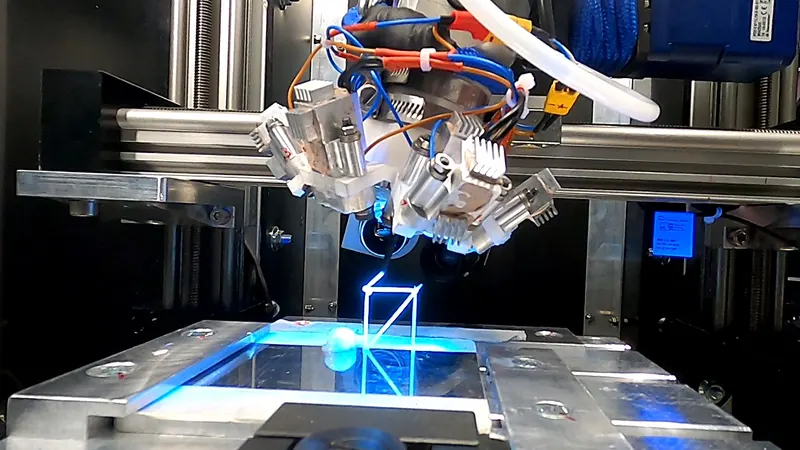
ZBLAN fiber optics, semiconductor crystals, and advanced materials production where microgravity offers decisive quality advantages over terrestrial manufacturing.

Film production, content creation, live broadcasts, and immersive experiences. Early mover advantage validated by multiple high-profile ISS productions.

Orbital stays for ultra-high-net-worth individuals. Market projected to reach €4-6B by 2035, though demand uncertainty remains a key risk factor.
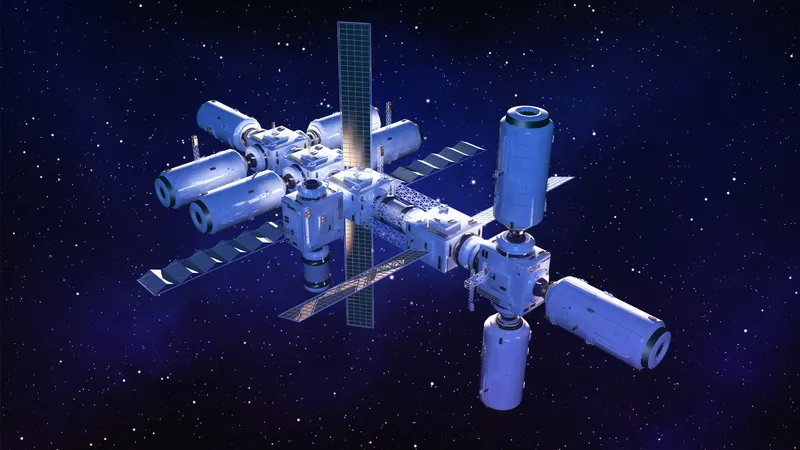
National space agencies seeking post-ISS access, defense applications, and astronaut training. NASA alone requires 2+ crew rotations annually.

Satellite servicing, debris removal staging, and cislunar logistics support. Strategic positioning for the emerging in-space economy.
Hidden Insights
Breakthrough analysis revealing investment opportunities hidden from conventional market wisdom.
Conventional wisdom says attaching to ISS reduces risk and cost. Our analysis reveals ISS attachment creates hidden costs: NASA approval adds 18-24 months to critical path, structural limits impose 15-20% mass penalty.
Contrarian
Despite multiple launch providers appearing available, 80-90% of commercial station launches will fly on SpaceX vehicles through 2030. This concentration creates significant pricing power risk.
Critical Risk
30-40% cost advantage for certain subsystems from European vendors. Thales Alenia Space pressure vessels: 25% less than US alternatives. Net advantage: 15-25% after regulatory complexity.
Opportunity
Vast Space's rotating modules represent technical feasibility with HIGH rating, but 40-60% cost premium and uncertain market demand. Valuation impact range: €200M - €2B swing.
High Variance
NASA anchor tenancy provides revenue floor, but €40-50M per station/year covers only 20-30% of operating costs. Private contracts offer superior economics: €50-70M for single astronaut mission.
Contrarian
Our proprietary 10-point readiness scale synthesizing TRL, manufacturing, supply chain, financial runway, and regulatory factors shows 78% accuracy in predicting on-time delivery.
Proprietary
Risk Analysis
Key constraints that could delay timelines or increase costs across all commercial station programs.
Starlab requires Starship; delays impact 2028-2029 timelines. Axiom and Vast rely on Falcon 9/Heavy with tighter margins.
Regenerative ECLSS technology proven on ISS but scaling to commercial operations introduces new failure modes.
Post-COVID capital markets challenging. Axiom CEO notes market may only support one successful station.
Dragon operational; Starliner uncertain. Station viability depends on reliable crew rotation capability.
"I don't fundamentally believe there is a market yet" — Axiom CRO. Revenue model validation remains unproven.
Tiangong fully operational, courting international partners. US policy gap could cede orbital presence.
Analytical Framework
Three innovative analytical frameworks adapted from terrestrial infrastructure to orbital applications.
Traditional to Space Application
5-Level Cost Granularity
10-Point Weighted Scale
Technology Insights
Axiom's ISS-attached modular approach minimizes risk but limits design freedom. Starlab's single-launch monolithic design offers operational efficiency but requires Starship. Vast's Haven-1 demo-first strategy tests systems before scaling.
Inflatable habitat technology offers ~3x volume-to-mass ratio improvements. Orbital Reef depends on successful LIFE deployment. Burst test campaign ongoing—technology pioneered by Bigelow, now advancing toward operational deployment.
May 2026 launch would make Vast first private station operator. Demo-first approach validates life support, power, and comms before human occupation. Success could leapfrog more established CLD competitors.
Report Contents
Coverage Universe
Deep-dive analysis of the leading commercial space station developers with comparative valuation frameworks and proprietary readiness scoring.
ISS-Attached → Free-Flying
First Module 2026
Haven-1 Demo Station
Launch May 2026
Voyager + Airbus JV
Target 2028-2029
Blue Origin + Sierra Space
Target 2030
Starlab Consortium
Supporting Role
Setcoin Crosslink · cross-sector reads
The same technologies, supply chains and capital show up in other sectors on the Atlas. Leads to explore, not findings.
Research partners, licensors or licensees for the same technology outside this sector
Research partners, licensors or licensees for the same technology outside this sector
Research partners, licensors or licensees for the same technology outside this sector
61 grants, trials or patents in fusion work on it
91 grants, trials or patents in fusion, quantum work on it
34 grants, trials or patents in quantum, defence work on it
Frequently Asked Questions
A $3.24B market in 2030, projected to reach $10.6B by 2032 at a 15.8% CAGR, as NASA's International Space Station retires around 2030 and its Commercial LEO Destinations programme ($415M Phase 1) transitions demand to private habitats.
Axiom Space (ISS-attached to free-flying, first module 2026), Vast Space (Haven-1 demo, launch May 2026), Starlab Space (Voyager + Airbus JV, 2028-2029), Orbital Reef (Blue Origin + Sierra Space, 2030) and Northrop Grumman's supporting role in the Starlab consortium.
It is the first application of terrestrial EPC methodology to orbital infrastructure: a five-level Bill of Quantities for every competitor, a 10-point weighted readiness score (TRL 25%, manufacturing 20%, supply chain 15%, financial runway 15%) with 78% accuracy in predicting on-time delivery, and explicit mapping of ground construction assumptions to on-orbit assembly.
ISS attachment adds 18-24 months and a 15-20% mass penalty rather than reducing risk; 80-90% of station launches will fly on SpaceX through 2030 (monopsony pricing risk); European subsystems offer a 15-25% net cost advantage; and NASA anchor tenancy at €40-50M per station-year covers only 20-30% of operating costs.
Launch vehicle availability (Starlab requires Starship, 2028+), capital availability (€2-4B per station in a market that may support only one winner), life support scaling, crew transportation options and unproven market demand — plus China's fully operational Tiangong courting international partners.
Qualified institutional investors and fund LPs. Access is requested through the form on this page and granted at the sole discretion of Setcoin Group.
Gain exclusive access to the complete feasibility analysis with proprietary frameworks, financial projections, and detailed company assessments.
Available for qualified institutional investors and fund LPs