
Cyber and secure communications: 24 records in 4 other sectors
Research partners, licensors or licensees for the same technology outside this sector
€10B+ C-UAS investment analysis across multi-layered defence architecture — covering detection, soft-kill, hard-kill, and directed energy systems. From the $500 FPV threat to the $1-per-shot laser response, this institutional-grade assessment maps every technology layer, geographic market, competitive landscape, and procurement pathway for Europe's most urgent capability gap.
Executive Summary
Europe faces a cost asymmetry crisis at the heart of modern defence: $500–$50,000 drone threats are being countered by $500,000–$5,000,000 interceptors, creating economic unsustainability at scale. Ukraine's experience — where 14,700+ Shahed drones were launched between September 2022 and December 2024, with massive attacks of 400+ drones designed to overwhelm defences — has demonstrated that traditional air defence paradigms are obsolete for the counter-drone mission.
The European Drone Defence Initiative (EDDI), announced as part of the €800B ReArm Europe plan, aims to build a continent-wide "Drone Wall" with initial capabilities by end 2026 and full functionality by 2027, funded partially through €6B from Russian asset interest. NATO's January 2026 C-UAS Week in Brussels — an 11-day exercise with 20+ nations and 50+ companies — confirmed Secretary General Rutte's assessment that "drones are here to stay" and established a multi-award framework for rapid fielding in 2026.
The UK has only 2 C-UAS regiments (grossly insufficient), the Netherlands announced €1–2.5B in emergency procurement, and every NATO battalion now requires organic counter-drone capability. Meanwhile, 2025 saw drone incidents at Munich Airport, Copenhagen Airport, 20+ incursions in Poland, and overflights at Volkel Air Base — demonstrating that the threat has already migrated from the battlefield to European civilian infrastructure.
This analysis provides comprehensive multi-layered technology assessment across detection, soft-kill, hard-kill, and directed energy systems; geographic market sizing for 15+ European countries; competitive landscape mapping of 50+ systems; and a €10B+ investment priority roadmap spanning immediate procurement through 2030.
Technology Architecture
Comprehensive technology assessment across all four defence layers — from passive acoustic sensors to speed-of-light directed energy weapons.
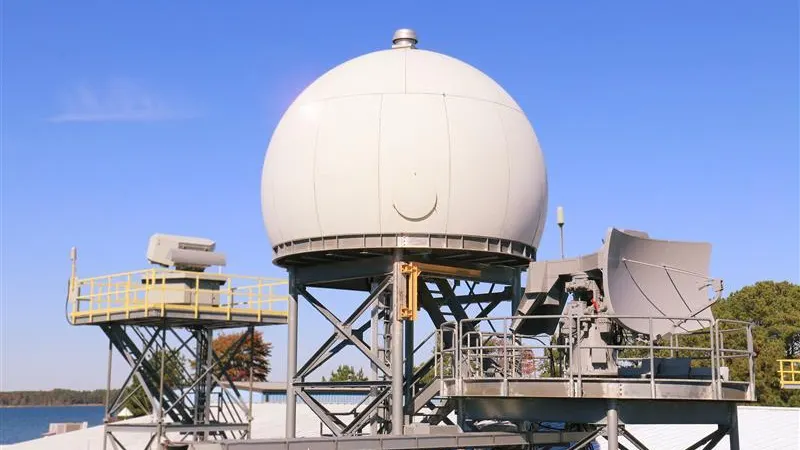
Mobile and fixed radar for small UAS detection. RCS threshold 0.01m². IRIS, Gamekeeper, ELM-2026D. Largest detection segment.
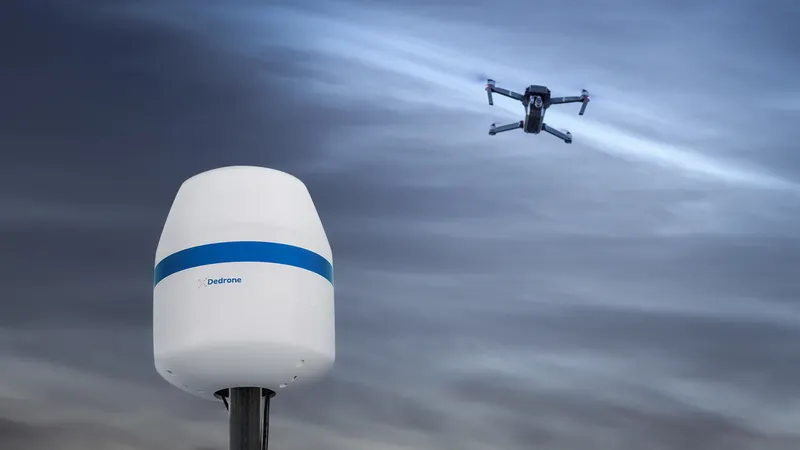
RF intercept, acoustic arrays, EO/IR thermal imaging, AI-powered multi-sensor correlation. 95%+ detection, 80–90% false alarm reduction.

Directional/barrage jamming (90–95% vs consumer drones), GPS spoofing, protocol exploitation. HENSOLDT Xpeller, DroneShield, Sentrycs.

Merops: 95% success, 1,000+ Shahed kills, $15K. Atreyd: reusable FPV. Ukrainian systems: $1,250–2,500. 10,000+ units needed for NATO.
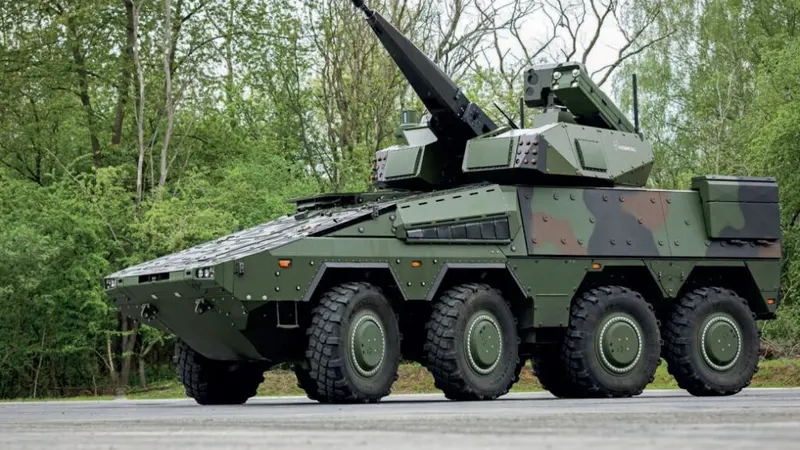
Gepard (60–70% vs Shahed). Skyranger 30 (30mm + missiles). Oerlikon AHEAD 35mm. Battalion-level organic air defence.
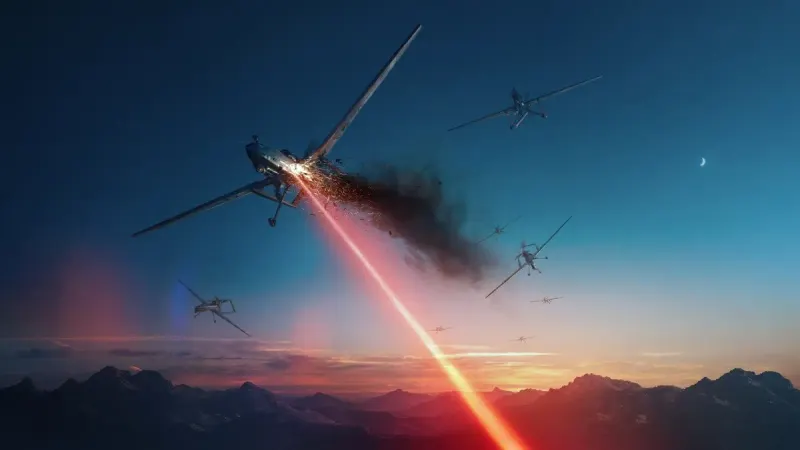
Rheinmetall HEL (20–100kW), DragonFire (UK 50kW+). $1–10/shot, unlimited magazine. HPM for swarm defence. AI C2 with Link 16.
Geographic Markets
Country-by-country market sizing, procurement drivers, and capability requirements across NATO's geographic tiers.

NATO's eastern frontline. 20+ drone incursions. Eastern Shield initiative. 500+ mobile + 100+ fixed systems. Merops procurement, Gepard modernization.

Largest C-UAS commitments. Leading laser DEW (Rheinmetall HEL). Skyranger 30 production. HENSOLDT radars. Bundeswehr + critical infrastructure.

Only 2 C-UAS regiments. No. 2 CUAS Wing (RAF). DragonFire laser 50kW+. Project 6 Army integration. All Task Force C-UAS mandate.

Emergency procurement triggered by Volkel/Eindhoven incidents. IRIS radar, interceptor drones, hard-kill naval. Urgent 2026–2028 timeline.

Suwalki Gap vulnerability. Baltic Defence Line integration. 200+ mobile systems. Networked detection + interceptor drones. Russian border coverage.

Romania: Black Sea (€1.5B). France: EW focus, laser gap (€1–2B). Italy: naval C-UAS (€1.5B). Nordics: €1–2B combined.
Proprietary Methodologies
Advanced proprietary frameworks developed for multi-layered counter-drone technology assessment and investment prioritization.
Proprietary framework mapping the economic tipping point where defender cost-per-engagement falls below attacker drone cost. Evaluates each technology across the engagement cost spectrum — from $5M missiles through $15K interceptor drones to $1 laser shots — identifying where the cost curve inverts and defence becomes economically sustainable at scale.
$1 Laser vs $35K Shahed = 35,000× Advantage
Comprehensive evaluation framework scoring each technology combination against all five NATO drone threat groups. Cross-references detection probability, neutralization effectiveness, weather resilience, autonomous drone capability, and swarm resistance to identify optimal multi-layered architectures for each deployment scenario (military base, airport, nuclear, maritime).
5 Threat Groups × 4 Layers × 4 Scenarios
Methodology ranking C-UAS systems by battlefield performance data from Ukraine, replacing theoretical testing with real-world metrics. Evaluates kill probability (Merops 95%, Gepard 60–70%), target engagement rate, weather performance, EW resilience, and production scalability. Systems with CVAS >80 qualify for immediate NATO procurement.
Merops CVAS: 95 · Gepard: 78 · DragonFire: 72
Framework measuring how quickly each technology can transition from procurement decision to operational deployment. Accounts for production line maturity, supply chain readiness, training requirements, NATO certification timelines, and integration complexity. Interceptor drones score highest (6–12 months); laser DEW lowest (24–36 months).
Interceptor Drones: 6mo · SPAAG: 18mo · DEW: 30mo
Investment Architecture
Phase 1 · 2026–2027
€3–5B
Close critical gaps with combat-proven, rapidly deployable systems.
Phase 2 · 2027–2028
€4–6B
Scale laser DEW, mobile hard-kill, and integrated NATO C2 networks.
Phase 3 · 2029–2030
€3–5B
Deploy next-gen DEW, AI autonomous defence, and swarm-vs-swarm systems.
Technology Insights
High-energy lasers fundamentally invert the cost asymmetry: Rheinmetall's HEL system engages at $1–10 per shot with unlimited magazine depth, versus $200K–5M for traditional interceptors. Germany leads investment; UK's DragonFire achieved successful intercepts at 50kW+. By 2028, laser C-UAS will be the primary engagement method for Groups 1–3 drones, making drone attacks economically futile.
Project Eagle's Merops interceptor drone system has achieved a 95% success rate with 1,000+ confirmed Shahed kills in Ukraine — at $15,000 per interceptor versus $200,000+ for missile alternatives. Meanwhile, Ukrainian FPV interceptors at $1,250–2,500 demonstrate even more radical cost efficiency. These combat-validated systems are now being procured by Poland and Romania for NATO deployment.
2025 demonstrated the threat has arrived in Western Europe: Munich Airport suspensions affecting thousands, Copenhagen Airport 4-hour shutdown, 20+ incursions in Poland, and Volkel Air Base overflights. The Netherlands responded with €1–2.5B emergency procurement. With 500+ airports, 100+ nuclear reactors, and 300+ major ports exposed, Europe's critical infrastructure C-UAS market alone represents €2.5–4B.
Report Contents
Setcoin Crosslink · cross-sector reads
The same technologies, supply chains and capital show up in other sectors on the Atlas. Leads to explore, not findings.
Research partners, licensors or licensees for the same technology outside this sector
Research partners, licensors or licensees for the same technology outside this sector
Research partners, licensors or licensees for the same technology outside this sector
Research partners, licensors or licensees for the same technology outside this sector
Research partners, licensors or licensees for the same technology outside this sector
Research partners, licensors or licensees for the same technology outside this sector
Frequently Asked Questions
The European C-UAS market grows from €1.24B in 2025 to €4.16B by 2030 at a 27.5% CAGR — the fastest-growing defence subsector — with €10–15B of total NATO/EU investment over 2026–2030.
$500–$50,000 drone threats are being countered with $500,000–$5,000,000 interceptors. The report's Cost Asymmetry Inversion Model maps where defender cost-per-engagement falls below attacker cost — interceptor drones at $15K (Merops, 95% success) and lasers at $1–10 per shot invert the curve.
Four: detection (radar €1–2B, RF and multi-sensor fusion €2–3B), soft-kill (jamming, GPS denial, cyber takeover €2–3B), hard-kill (interceptor drones €3–5B, kinetic guns and SPAAG €2–4B) and directed energy plus AI command-and-control (€3–6B, 30%+ CAGR).
Germany (€2–3B), Poland (€1.5–2.5B, 500+ systems), the United Kingdom (€1.5–2.5B), the Netherlands (€1–2.5B emergency procurement), the Baltic states (€500M–1B) and Romania, France, Italy and the Nordics (€5–8B combined).
Phase 1 (2026–2027, €3–5B): 5,000–10,000 interceptor drones, eastern-flank radar networks and EDDI initial capability. Phase 2 (2027–2028, €4–6B): 100–200 laser systems and SPAAGs and an integrated NATO C2 network. Phase 3 (2029–2030, €3–5B): 100kW+ lasers, HPM swarm defence and AI autonomous engagement.
Qualified institutional investors and fund LPs. Access is requested through the form on this page and granted at the sole discretion of Setcoin Group.
Get exclusive access to the complete institutional analysis with multi-layered technology assessment, geographic market sizing, competitive intelligence, and €10B+ investment roadmap.
Available for qualified institutional investors and fund LPs